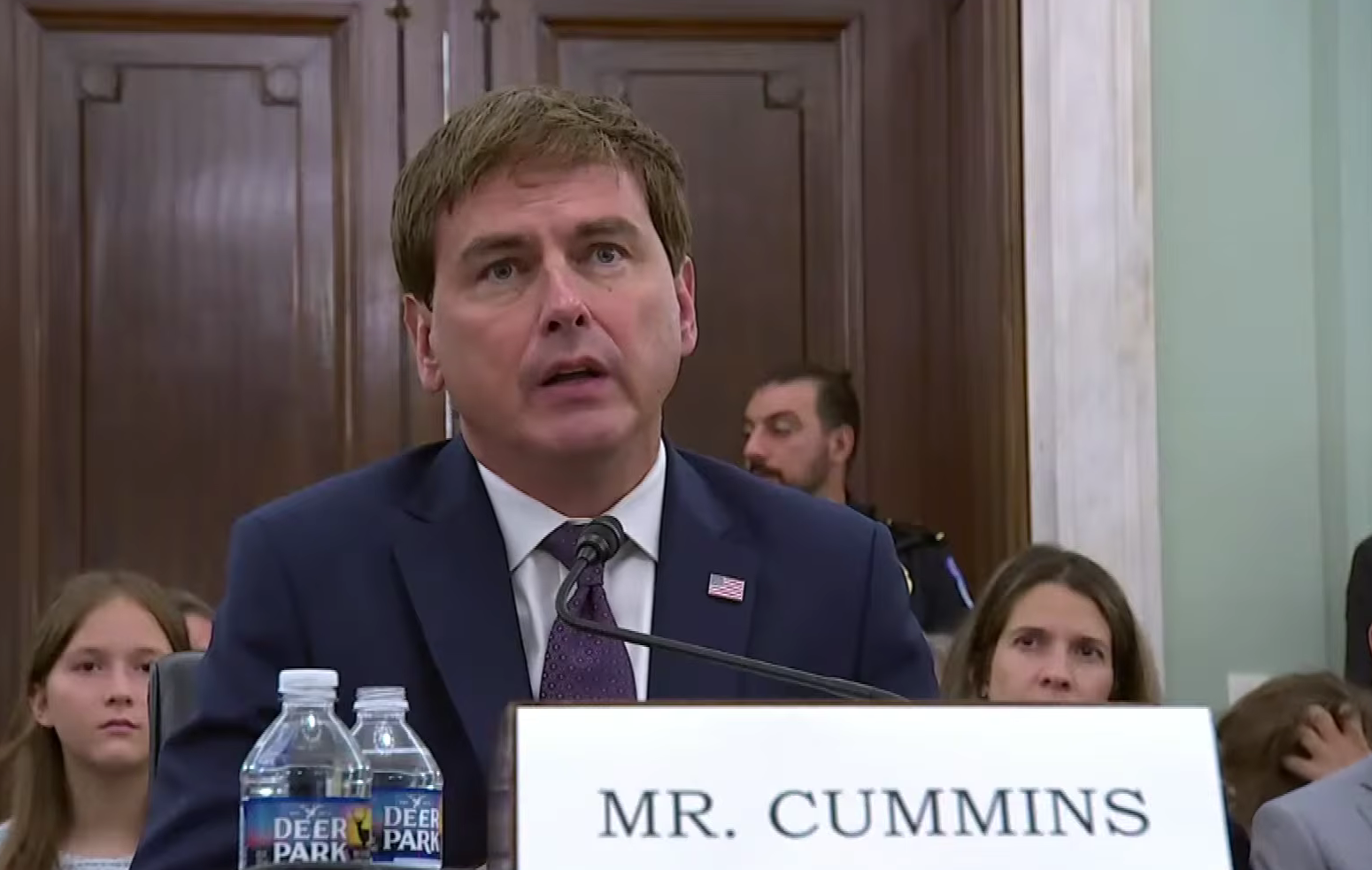
The U.S. Senate has advanced the nomination of David Cummins, a senior executive at British outsourcing company Serco, to lead the Transportation Security Administration (TSA). The move comes as President Donald Trump pushes a major restructuring of airport security that would reduce the agency’s workforce and expand the role of private contractors in passenger screening.
Cummins’ nomination moved forward along party lines in the Senate Homeland Security and Governmental Affairs Committee, setting up a final Senate vote. If confirmed, he would take charge of the TSA after the agency spent 16 months without a permanent administrator following the dismissal of former administrator David Pekoske in January 2025.
The leadership change comes at a particularly important moment for the agency. The Trump administration is seeking substantial reductions in TSA spending and staffing while also proposing a wider role for private companies in airport screening. Supporters say the changes could improve efficiency and provide greater flexibility, while critics argue that aviation security is too important to place under a model primarily focused on reducing government costs.
Trump Administration Pushes TSA Privatization
Trump’s proposed fiscal 2027 budget calls for cutting more than 9,400 TSA positions, representing roughly 16% of the agency’s workforce, while reducing its annual budget by more than $1.5 billion. A major part of the plan would expand the Screening Partnership Program, which allows airports to use private companies for passenger screening under TSA oversight.
The program currently covers only a small number of U.S. airports, with roughly 20 facilities using private screeners compared with approximately 440 airports that rely on federal TSA officers. The administration argues that expanding private screening could reduce costs, improve operational flexibility and encourage innovation while maintaining federal supervision of aviation security.
Under the proposal, more than 4,500 TSA positions would be eliminated initially, while hundreds of millions of dollars would be redirected toward expanding the private screening program. The administration has also proposed TSA Gold Plus, a separate model that would allow airports to use private investment for screening technology while retaining federal oversight.
The privatization push has generated opposition from both labor groups and parts of the aviation industry. Airlines for America has argued that participation in the private screening program should remain optional for airports, while the American Federation of Government Employees, which represents tens of thousands of TSA officers, has warned that reducing the federal workforce could create staffing shortages and weaken security operations.
The debate has also been influenced by disruptions during a lengthy government shutdown, when tens of thousands of TSA employees reportedly went without pay for weeks. Long security lines at some airports were cited by the administration as evidence of weaknesses in the existing system, while opponents argue that staffing and funding problems should not be used as justification for transferring core security responsibilities to private companies.
The broader argument centers on whether airport screening should primarily remain a federal responsibility or become increasingly dependent on private contractors. Supporters of privatization point to potential efficiency gains, while opponents emphasize the importance of consistent federal standards and direct government oversight in an area where security failures can have serious consequences.
The issue carries additional historical significance because the TSA was created after the September 11, 2001, terrorist attacks, replacing the previous system in which passenger screening was largely performed by private contractors. Critics of the current proposal argue that returning more responsibility to private companies could reverse one of the major structural changes made to aviation security after the attacks.
Several airports are already considering or moving toward private screening arrangements, adding urgency to the Senate’s consideration of Cummins’ nomination. If confirmed, his background in the outsourcing industry could become an important part of the debate as he takes responsibility for an agency undergoing major potential changes.
The Senate’s upcoming vote could therefore determine more than just the next leader of the TSA. It comes as the Trump administration attempts to reduce the federal government’s role in airport screening while expanding private sector participation. The outcome could shape how passenger security is managed across the United States and determine the future direction of the TSA for years to come.