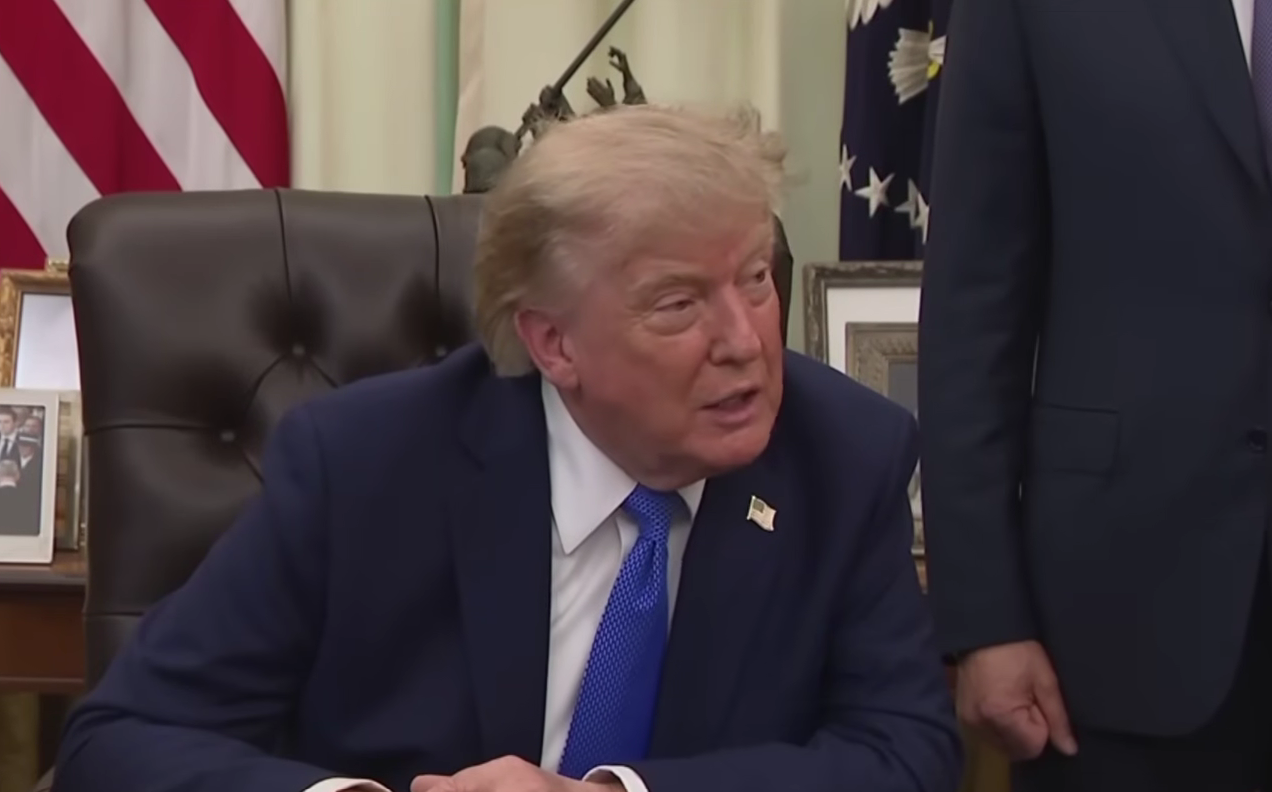
President Donald Trump has signed a sweeping proclamation imposing emergency tariffs on imported drones and their components, declaring that the United States is “too reliant” on foreign sources for unmanned aircraft systems that pose growing security risks. The order establishes a tiered tariff structure that imposes a 100% ad valorem duty on the most capable drones while applying lower rates to smaller devices and imports from key allies. The move represents one of the most aggressive federal interventions in the commercial drone market to date, building on an existing FCC ban against Chinese manufacturer DJI and a Commerce Department investigation that concluded foreign producers dominate the U.S. supply chain.
Under the new rules, drones weighing more than 25 kilograms or equipped with sensitive capabilities such as thermal imaging, along with their docking stations and critical components, will face a 100% tariff. Smaller drones without those sensitive features will be subject to a 25% duty. Imports from the European Union, Japan, Liechtenstein, South Korea, Switzerland and Taiwan will carry a 15% tariff, while qualifying shipments from the United Kingdom will face a 10% rate. To qualify for the lower rates, substantially all hardware, software and technology must originate from the relevant country and the United States. Most tariffs will take effect in 21 days, although duties on components not deemed particularly sensitive, as well as products the Pentagon exempts from the FCC’s “Covered List” within 20 days, will be delayed for 180 days.
The action stems from a Section 232 investigation led by Commerce Secretary Howard Lutnick, who determined that imports from foreign drone producers are substantial and that the domestic industry lacks sufficient capacity to meet national security requirements. The findings echo concerns that have been building for years. Chinese made drones, particularly those from DJI, which was added to the FCC’s Covered List in December 2025, have been restricted from federal procurement amid concerns that data could be transmitted to foreign servers.
U.S. Drone Industry Faces a Major Shift
American alternatives remain comparatively scarce and expensive. Skydio, a leading U.S. manufacturer, primarily serves enterprise and government markets, with platforms starting at around $2,200. At the same time, law enforcement agencies and rural departments have struggled to find cost effective replacements for DJI fleets. Industry analysts have also noted that domestic battery and rare earth supply chains remain important obstacles, potentially keeping production timelines slow and prices elevated as manufacturers expand capacity.
The tariff announcement arrives at a pivotal moment for the U.S. drone market. With the FCC already blocking new DJI product authorizations and customs officials scrutinizing imports for forced labor connections, the new duties could significantly reduce foreign competition across the broader market rather than targeting China alone. General Atomics and other defense contractors may benefit from efforts to expand domestic production, while consumer and commercial operators face a period of uncertainty.
The 180 day window for certain non sensitive components provides manufacturers and importers with a temporary buffer, but the broader policy direction is clear. The Trump administration wants a stronger domestic drone industry built on American soil, and the Trump drone tariffs represent a major effort to encourage that shift by making foreign technology substantially more expensive.