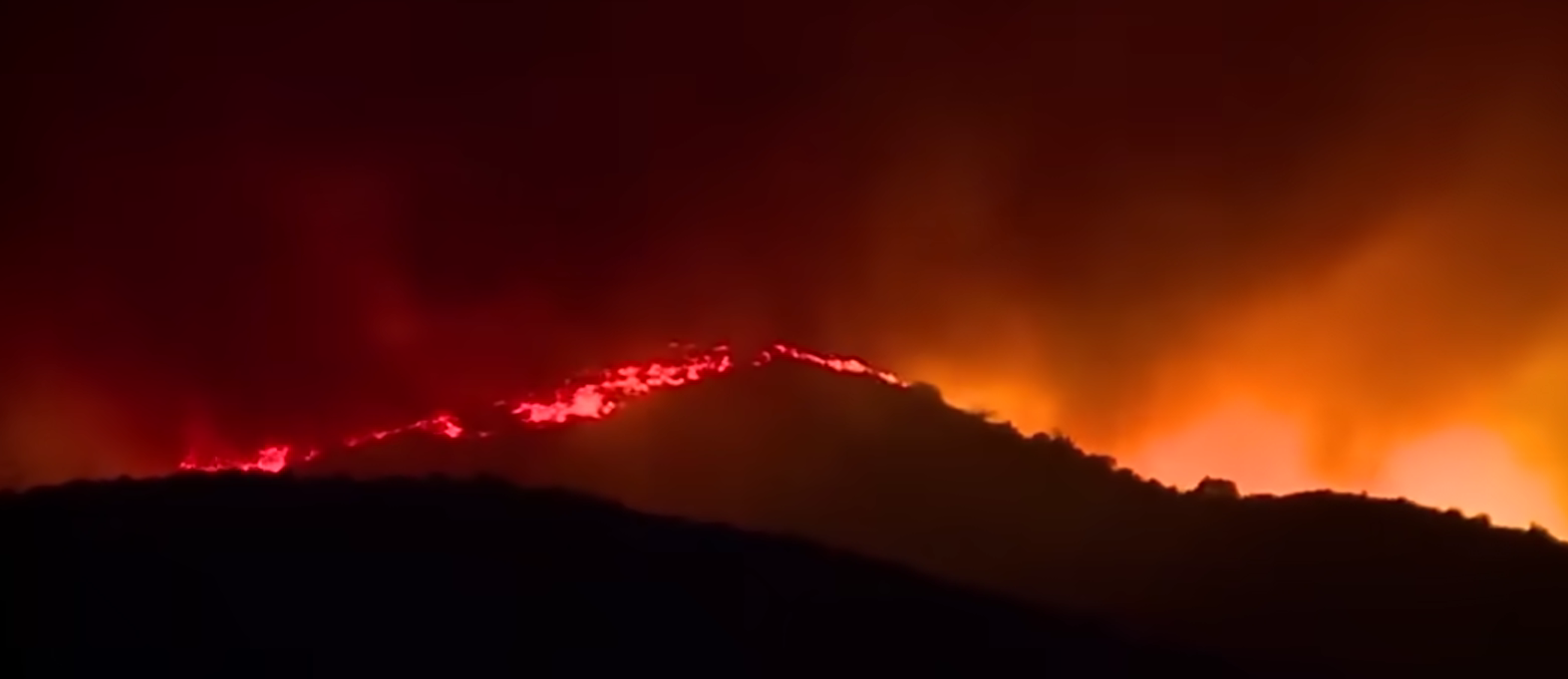
American wildland firefighters are being overrun by flames at the highest rate in two decades, with 12 entrapments recorded so far in 2026. The figure has already surpassed the 20 year annual average of nine and represents the worst year to date total since 2006. The grim tally comes amid a record breaking fire season that has consumed 6.4 million acres across the United States by mid August, the highest level recorded for this point in the year and roughly five times the area burned in Europe during the same period.
Of the 13 firefighters who have died battling wildfires so far this year, six were involved in entrapments. The proportion has alarmed veterans and safety advocates, who warn that extreme weather, federal staffing cuts and an increasingly aggressive “full suppression” mandate are pushing crews into more dangerous conditions. The combination has raised fresh questions about whether firefighters are being asked to accept risks that are becoming harder to manage as fires grow more intense and unpredictable.
Deadly Entrapments Raise Questions Over Firefighting Policy
The deadliest incident occurred on June 27 during the Snyder Fire near the Colorado-Utah border, when members of the Rifle Interagency Helitack Crew were overrun by extreme fire behavior while working to establish fire lines. Five crew members deployed their emergency shelters as flames swept through their position. Squad leader Emily Barker, 38, Nicholas Hutcherson, 27, and Sydney Watson, 27, died at the scene, while Nathan Matthews sustained critical burns and later died from his injuries on July 24. A fifth crew member was also severely burned.
The tragedy, the deadliest firefighter entrapment in 13 years, has intensified debate over whether crews are being asked to take extraordinary risks under a policy that calls for fires to be extinguished as quickly as possible. Known as full suppression, the approach was reinforced in April when Agriculture Secretary Brooke Rollins directed the U.S. Forest Service to accelerate initial attack and use a full suppression strategy during the 2026 fire season.
The policy echoes a decades old approach that many fire scientists argue contributed to today’s fuel buildup by limiting natural burns that would otherwise clear dry vegetation. Former Colorado forest supervisor Scott Fitzwilliams, who knew Emily Barker, warned that applying such tactics during an era of increasingly severe wildfires could put firefighters at greater risk. Critics have also highlighted more than 5,000 Forest Service job cuts in 2025, which reduced support staffing and increased pressure on an agency with about 11,300 firefighters.
Riva Duncan, president of Grassroots Wildland Firefighters, said crews are being sent into highly volatile conditions with instructions to attack fires that could potentially diminish once winds subside. The debate has centered on how aggressively firefighters should respond during the earliest stages of a blaze, particularly when weather conditions can change rapidly and leave crews with fewer safe escape options.
The newly created U.S. Wildland Fire Service, established under the Interior Department in 2026 to consolidate federal firefighting forces, has said it is reviewing this year’s entrapments to improve safety protocols. Director Brian Fennessy acknowledged confusion surrounding the administration’s push for more aggressive initial attack, while emphasizing that aggressive firefighting should not mean taking extraordinary risks that could harm personnel.
Current and former firefighters say that they are nevertheless seeing changes on the ground, with helicopter crews, bulldozer operators and engine teams sometimes being pushed into dangerous positions in efforts to contain fires early. Around a quarter of this year’s entrapments have involved helicopter borne crews, although the Wildland Fire Service has cautioned that this does not necessarily mean helitack operations have become more dangerous overall.
The scale of the 2026 season has left little margin for error. Firefighters have responded to more than 46,500 wildfires across the United States, the highest number in more than a decade, while much of the West has faced historically low snowpack, record temperatures and prolonged drought. Fire specialist Wesley Page has noted that the sheer number and intensity of fires expose personnel to dangerous conditions for longer periods, while the National Interagency Fire Center reported that 6.4 million acres had burned by August 12.
With months of fire season still ahead, the record number of U.S. firefighter entrapments is adding to concerns about the risks facing crews on the front lines. The combination of extreme weather, reduced federal staffing and a policy framework emphasizing rapid suppression has created an increasingly difficult environment for firefighters, making safety protocols and operational decisions a central issue for the remainder of the 2026 wildfire season.