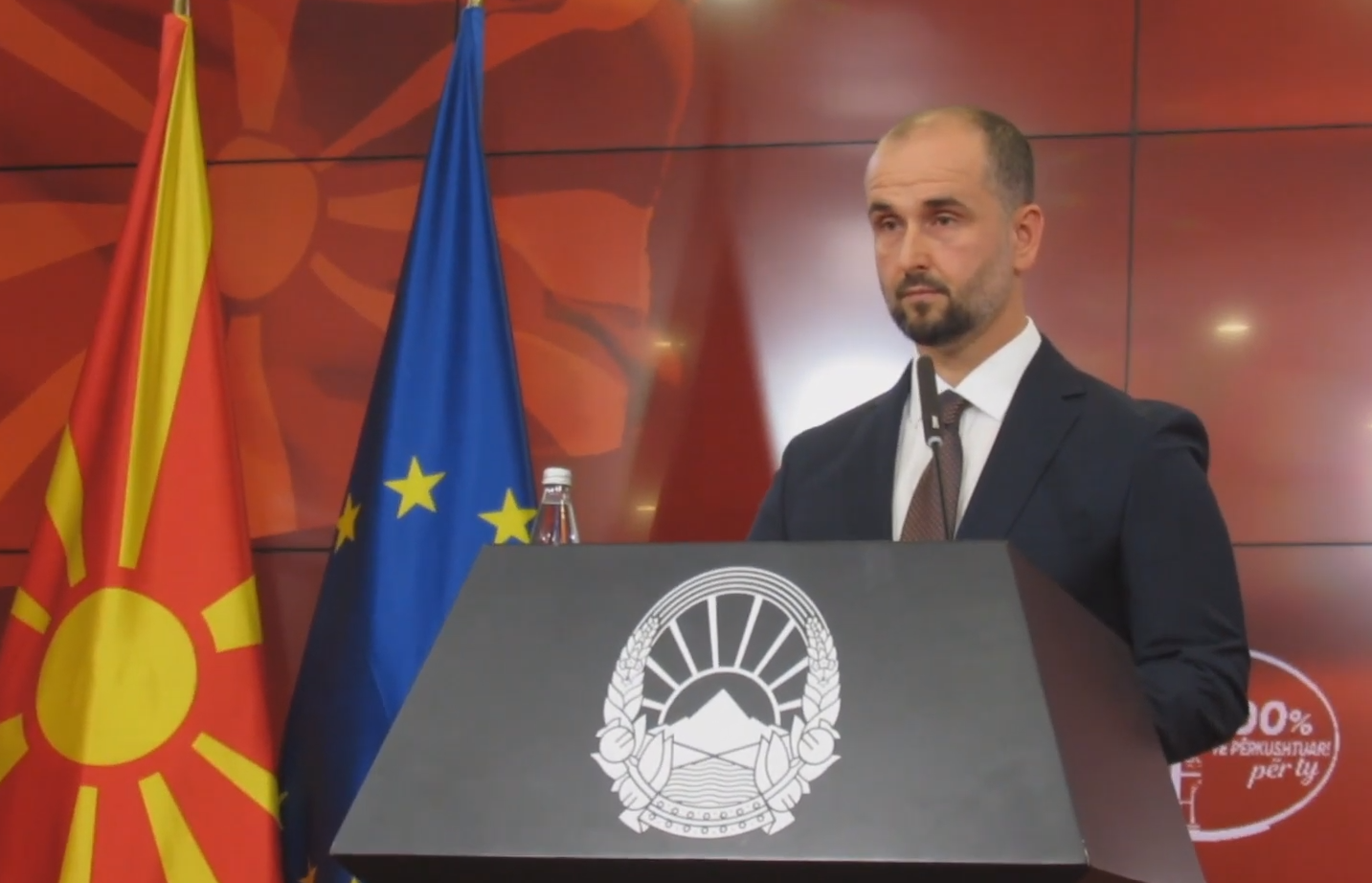
Macedonia has formally installed Orhan Murtezani as its new ambassador and permanent representative to NATO, with the diplomat presenting his credentials to Secretary General Mark Rutte and declaring that Skopje intends to speak with clarity and consistency within the 32 member alliance. In a social media post following the ceremony, Murtezani emphasized that Macedonia “has its own place, its own voice and allies” in NATO and accepted responsibility for ensuring that voice remains “clear, credible and consistent.” The appointment comes as Macedonia seeks to deepen its integration and strengthen its role amid a rapidly changing security environment in Europe.
Murtezani takes over the Brussels post as Macedonia approaches the sixth anniversary of its NATO accession in March 2020, a milestone that ended a decades long journey toward full alliance membership. Since joining, Skopje has steadily increased its defense contributions, devoting more than 2% of GDP to military spending in 2025 and meeting NATO’s benchmark at a time when many larger members are still working toward the target. Macedonian armed forces are deployed on NATO’s eastern flank as part of the Forward Land Forces in Bulgaria and Latvia, while the country also maintains a presence in the KFOR peacekeeping mission in Kosovo.
During a visit to Skopje in March 2026, Rutte praised these contributions, noting that Macedonian troops serve alongside allies with credible deterrence and defense capabilities. He also thanked Macedonia for its continued support for Ukraine through NATO’s PURL initiative, highlighting the country’s commitment to alliance priorities beyond its immediate neighborhood.
Macedonia Seeks a Stronger Role in NATO
The new ambassador’s emphasis on consistency and credibility also comes against a backdrop of internal and external pressures. Macedonia has navigated a turbulent political period, including a tragic nightclub fire in March 2026 that claimed 60 lives and prompted an outpouring of allied solidarity. Prime Minister Hristijan Mickoski cited the response as evidence of NATO’s commitment to its members, saying that when one ally is in trouble, others stand ready to help.
At home, the government has pledged to modernize the armed forces, with 32% of the defense budget earmarked for new equipment purchases. At the same time, NATO is dealing with the consequences of the U.S.-Iran war, disruption in the Strait of Hormuz and a broader push for members to establish a credible path toward spending 5% of GDP on defense by 2035.
Murtezani’s appointment signals that Skopje views its NATO membership as more than a security umbrella. By pledging to make Macedonia’s voice heard clearly in Brussels, the ambassador is aligning himself with Rutte’s broader agenda of strengthening the alliance, increasing defense production and preparing members for a more demanding security environment.
With the next NATO summit cycle already underway and the Western Balkans remaining a stated priority for the secretary general, Murtezani’s early pledge suggests that Macedonia intends to be an active and predictable alliance member. His challenge will be to turn that commitment into sustained diplomatic influence while continuing to support NATO’s collective security priorities.