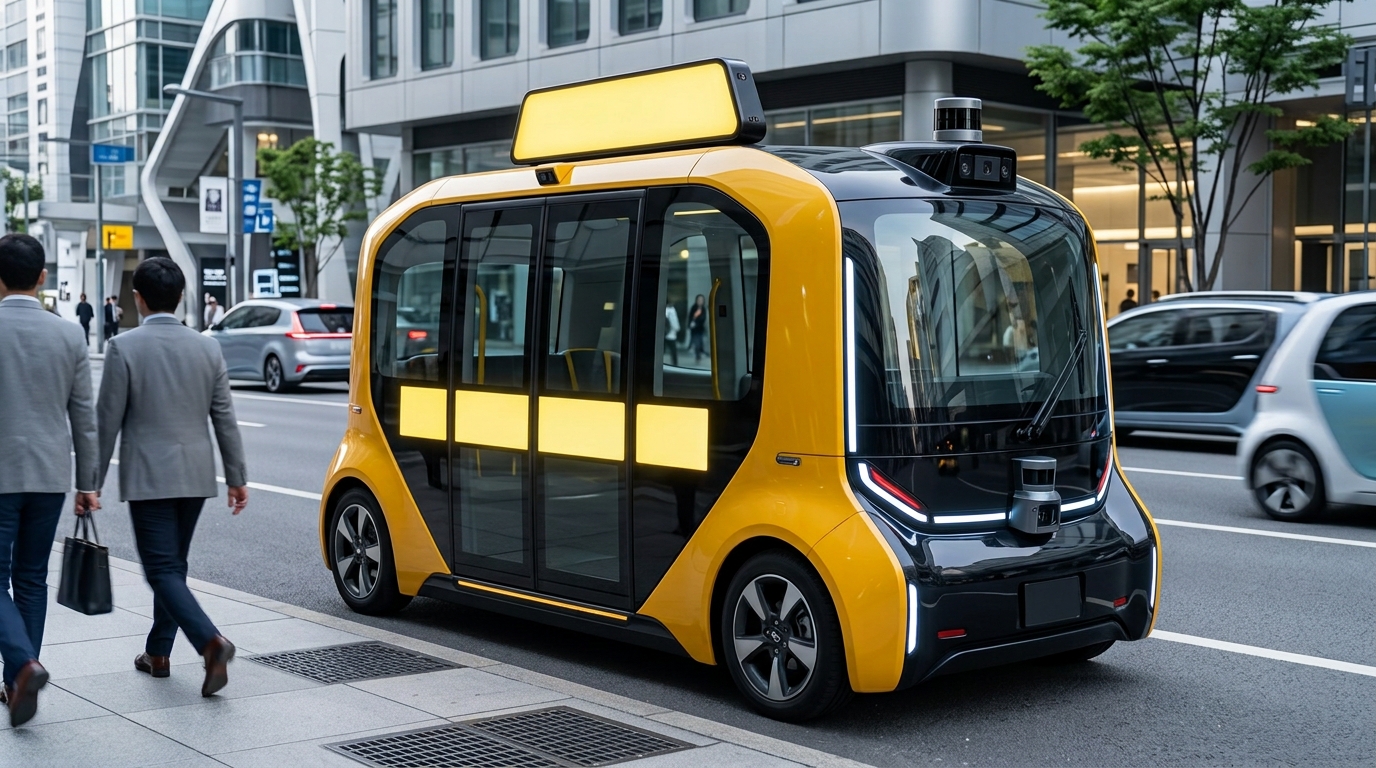
Slovenia could soon take a major step toward introducing self driving taxis, with the government preparing changes to legislation that would allow robotaxi services to operate in the country. Infrastructure and Energy Minister Jernej Vrtovec said the government could begin preparing the necessary legal changes shortly, potentially opening the way for autonomous taxi services in Ljubljana, Maribor, Celje, Nova Gorica and other Slovenian cities. The announcement came after a presentation of Tesla’s advanced driver assistance technology in Ljubljana, with Vrtovec saying that autonomous driving represents the future of transportation and that Slovenia needs to remain open to new technological solutions.
The planned changes would follow the example of other European cities, including Zagreb, where robotaxi services have already begun operating. Vrtovec said Slovenia wants to adapt its legislation so that similar services can eventually be introduced domestically. However, the current Tesla system demonstrated in Slovenia should not be confused with a fully autonomous vehicle. The system can take over several driving tasks while the driver remains actively responsible for monitoring the vehicle. Slovenian authorities have recently approved Tesla’s advanced supervised driving system, with the company expected to introduce the feature through software updates.
Vrtovec described the supervised autonomous driving technology as an important first step toward wider use of autonomous vehicles. He argued that such systems could improve safety and efficiency because they do not become tired or distracted in the same way a human driver can. At the same time, the minister emphasized that the driver remains fully responsible for the vehicle when using the current technology, meaning Slovenia has not yet moved to a system in which cars can operate completely independently without human supervision. The future introduction of robotaxis would therefore require additional legal and regulatory changes before such services could become a normal part of urban transportation.
The government is also considering broader changes to the way people access transportation services in Slovenia. Vrtovec said the country would enable services that provide transportation on demand, such as Uber, as part of a wider approach to opening the market to new mobility solutions. The discussion comes as cities around Europe experiment with autonomous vehicles, electric transportation and app based mobility services. For Ljubljana, Maribor, Celje and other Slovenian cities, the proposed legal changes could eventually mean that passengers will be able to order a driverless taxi through a digital platform, although the exact timeline and regulatory conditions for such services have not yet been announced.