U.S. President Donald Trump welcomed Chinese President Xi Jinping to Washington this week for a closely watched three day visit aimed at managing one of the world’s most consequential bilateral relationships. The summit comes as Washington and Beijing continue to disagree over trade, technology, Taiwan and other geopolitical issues, but the two sides have also agreed to extend their existing trade truce, giving negotiators additional time to work toward a broader economic agreement.
Xi’s visit is his first trip to Washington in nearly three years and comes at a significant moment for relations between the world’s two largest economies. Before the leaders met, U.S. Treasury Secretary Scott Bessent said American and Chinese officials had reached an agreement to extend the trade truce from its previous November 10 expiration date to January 10.
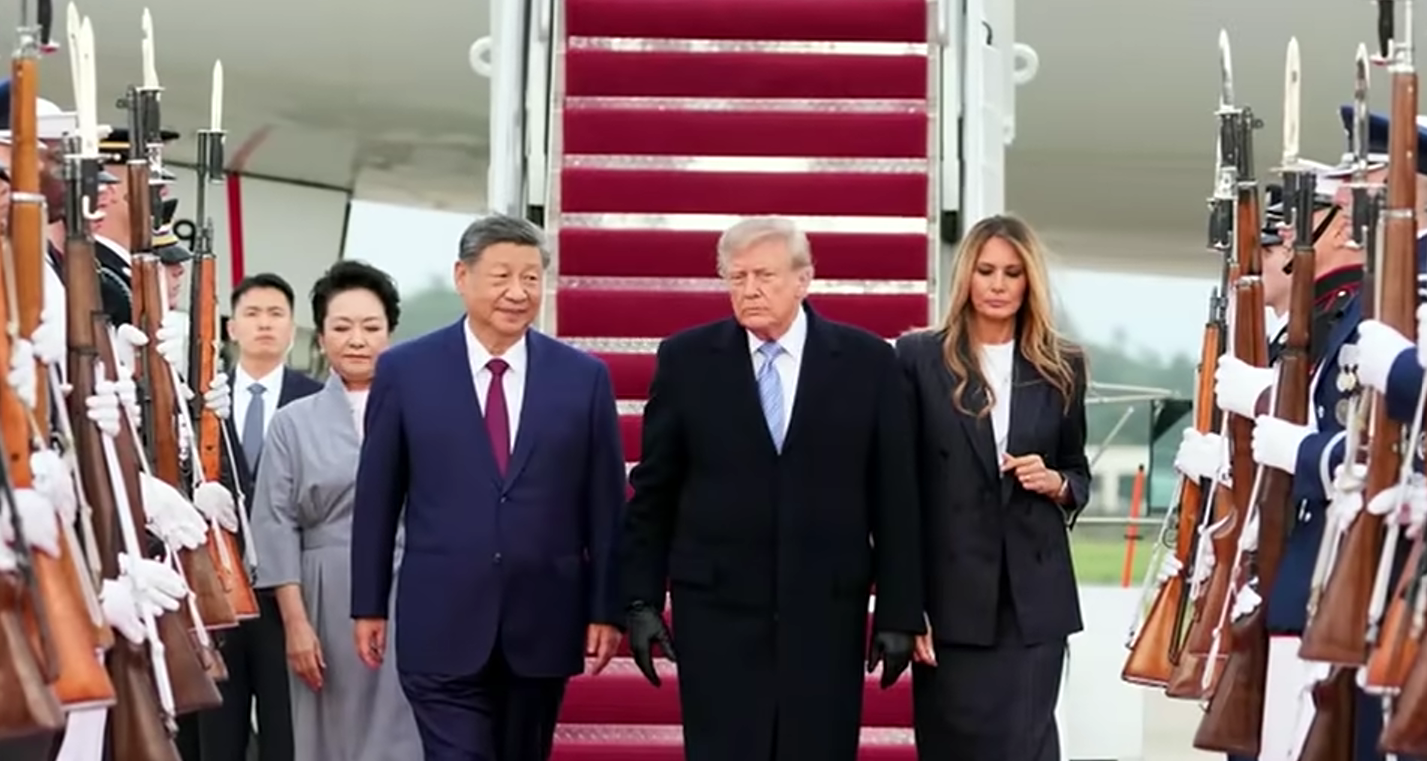
The opening of the visit was marked by an unusually prominent welcome. Trump personally greeted Xi and his wife, Peng Liyuan, at Joint Base Andrews in Maryland on Wednesday. The ceremony included a military band, a 21 gun salute and a B-1 bomber flyover, highlighting the importance both governments have placed on the meeting. The White House confirmed that Trump would host Xi at the White House for an official state visit on Thursday.
Trump-Xi Summit Centers on Trade and Technology
The trade truce is one of the clearest areas where the two governments have sought to prevent their economic relationship from deteriorating further. Washington and Beijing have spent much of the past year negotiating arrangements designed to reduce the risk of another escalation in tariffs. The latest extension does not resolve the underlying disputes, but it postpones the immediate deadline and creates more time for officials to negotiate.
Those disagreements remain substantial. The United States and China continue to compete over advanced technologies, including semiconductors and artificial intelligence, while restrictions involving critical minerals and other strategic materials have become part of the broader economic relationship. The two governments also have different positions on China’s relationship with Iran and on Taiwan, issues that extend well beyond trade.
The technology relationship is particularly complicated because economic competition and national security concerns increasingly overlap. Washington has imposed restrictions on the transfer of certain advanced technologies to China, while Beijing has sought to strengthen its own domestic capabilities and reduce reliance on foreign suppliers. At the same time, both countries have an interest in preventing their rivalry from creating unnecessary instability in global technology and supply chains.
Artificial intelligence could therefore become another area for discussion during the summit. The two countries may expand communication on AI even as they compete for leadership in the technology. The issue presents a difficult balance: both governments want continued technological development, while policymakers are also increasingly concerned about the risks associated with advanced AI systems.
Taiwan remains another major source of disagreement. Beijing considers Taiwan part of China and has opposed foreign support for the island, while Washington maintains extensive unofficial relations with Taiwan and has continued to emphasize peace and stability across the Taiwan Strait. Ahead of the summit, the United States also reaffirmed its defense commitments to Japan, South Korea and Taiwan, underlining that the wider regional security environment remains closely connected to the U.S.-China relationship.
The economic stakes extend far beyond Washington and Beijing. The two countries are deeply connected through trade, investment and global supply chains, meaning changes in tariffs or restrictions on strategic products can affect companies and consumers in other markets as well. The previous tariff confrontation between the United States and China contributed to uncertainty for businesses and financial markets, making continued negotiations significant for the wider global economy.
Washington and Beijing Extend Trade Truce
The two governments have already established a framework for managing parts of their economic relationship. A May 2026 White House fact sheet said Trump and Xi had agreed to create U.S.-China boards focused on trade and investment, while China also committed to measures involving critical minerals, agricultural purchases and other areas of commerce. The latest extension suggests that both sides continue to favor negotiations over immediately allowing the existing truce to expire.
Beyond economics, the summit carries considerable diplomatic symbolism. Xi’s visit comes more than a decade after his previous White House visit, according to the White House, and the official program includes a state arrival ceremony and a state dinner. Technology executives and other business leaders are expected to feature prominently around the event, reflecting the importance of the relationship to major American and Chinese industries.
The timing is also significant for both governments. China continues to rely heavily on international trade while dealing with weaker domestic consumption and continuing problems in its property sector. The United States, meanwhile, is managing several international disputes at the same time as its administration faces domestic political pressures. Against that background, maintaining a degree of stability between Washington and Beijing gives both governments more room to address other priorities.
For now, the extension of the trade truce is the most concrete development surrounding the summit. It does not eliminate disagreements over tariffs, technology, Taiwan or strategic competition, but it moves the immediate trade deadline into January and creates another period for negotiations. The leaders may also discuss issues ranging from cooperation against drug trafficking to military to military communication and the treatment of citizens detained in the other country.
The Trump-Xi meeting therefore represents both cooperation and continued competition. The two governments are attempting to keep economic tensions from escalating while remaining divided over some of the most important strategic questions in international affairs. Whether the Washington summit produces additional agreements will depend on negotiations beyond the highly choreographed diplomatic events, but the extension of the trade truce gives both sides additional time to pursue them.
For the global economy and for countries connected to both markets, the immediate message is one of continued negotiation rather than a final settlement. Washington and Beijing remain strategic competitors, but the decision to extend their trade arrangement shows that both governments are still using diplomacy to manage their economic relationship. The coming months will determine whether that temporary stability can develop into a broader agreement or whether unresolved disputes will once again place pressure on the relationship.