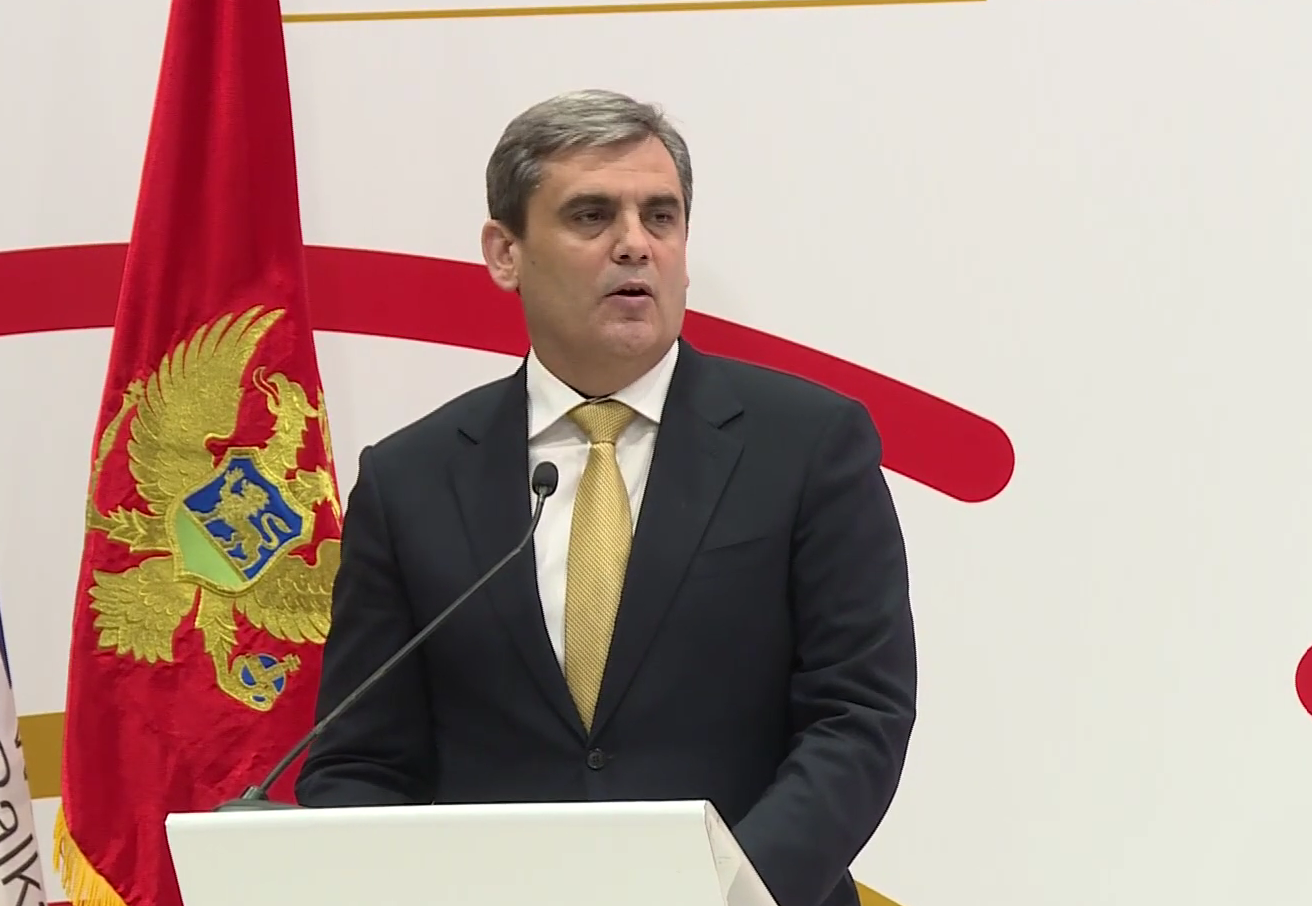
Montenegro is seeking to accelerate its path toward European Union membership, with Foreign Minister Ervin Ibrahimović emphasizing the importance of Germany’s continued support during a meeting with German Foreign Minister Johann Wadephul ahead of the Berlin Process ministerial gathering in Pržno. Ibrahimović described Montenegro’s potential success as an important test of the EU’s enlargement policy, arguing that the country’s progress could demonstrate how political commitments and domestic reforms can produce concrete results.
The meeting highlighted the close relationship between Montenegro and Germany, supported by regular diplomatic dialogue, shared NATO membership and a common interest in the European future of the Western Balkans. Ibrahimović expressed appreciation for Germany’s political and technical assistance, while both ministers discussed ways to maintain cooperation on European integration, regional stability and economic development.
Montenegro has set an ambitious objective of completing its EU accession negotiations by the end of 2026 and becoming ready for membership in 2028. Ibrahimović reiterated this timeline during the talks, presenting the country’s recent progress as evidence that enlargement can advance when candidate states meet established requirements and implement reforms. However, the target remains an ambition rather than a guaranteed outcome, with the final stages depending on Montenegro’s progress and decisions by EU institutions and member states.
Montenegro EU Accession Progress and Germany’s Support
Montenegro has made measurable advances in its accession negotiations. By July 2026, it had opened all 33 negotiating chapters and provisionally closed 18. Recent progress included agreements on competition policy and the customs union, following earlier steps involving the free movement of workers, consumer protection and health policy. These developments show that negotiations are moving forward, although provisional closure does not mean that chapters are permanently settled before an overall accession agreement is reached.
The remaining work is particularly important in areas involving the rule of law, judicial independence, institutional accountability, and the fight against corruption and organized crime. These reforms are central to the EU’s assessment of Montenegro’s readiness for membership. The European Commission has previously indicated that completing negotiations by the end of 2026 is possible if the country maintains its reform pace, while emphasizing that further progress is needed in fundamental areas.
Germany plays an influential role in the European integration process as a major EU member state and an important political partner for the Western Balkans. Its support can help Montenegro through diplomatic engagement, technical cooperation and assistance with institutional reforms. At the same time, EU enlargement requires agreement among member states, meaning bilateral support must be accompanied by progress on accession conditions and a broader European consensus.
The discussions also placed the Berlin Process at the center of the diplomatic agenda. Established in 2014, the initiative brings together Western Balkan governments, EU institutions and other European partners to strengthen regional cooperation and advance practical projects. Its priorities include economic connectivity, transport infrastructure, energy cooperation, youth mobility and closer links between the region and the European Union.
Montenegro’s chairmanship of the Berlin Process in 2026 has given the country an opportunity to play a more active role in regional discussions. The initiative’s meetings provide a platform for governments to address shared challenges and coordinate projects that can benefit several countries. For Podgorica, hosting the process also offers a chance to demonstrate its commitment to regional cooperation while pursuing its own EU accession goals.
Ibrahimović welcomed Germany’s support for Montenegro’s chairmanship and Wadephul’s participation in the ministerial meeting in Pržno. He also highlighted the planned participation of German Chancellor Friedrich Merz at the Berlin Process leaders’ summit scheduled for October 21 and 22 in Sveti Stefan. The summit is expected to bring together Western Balkan leaders, European officials and representatives of international organizations as Montenegro concludes its year leading the initiative.
Montenegro and Germany Expand Cooperation Beyond EU Enlargement
Beyond enlargement and regional cooperation, the ministers discussed opportunities to strengthen economic relations between Montenegro and Germany. Investment, energy, security and defense were among the areas identified for further collaboration. Stronger economic ties could support business activity and infrastructure development, while cooperation in energy and security would connect bilateral relations with wider European priorities.
Their shared NATO membership provides another framework for cooperation. Montenegro joined the alliance in 2017, and its partnership with Germany includes dialogue on regional security and defense related issues. The meeting offered an opportunity to reinforce those ties while considering how security cooperation and European integration intersect in the Western Balkans.
The wider geopolitical environment has also increased attention to EU enlargement. Developments in European security, including Russia’s war against Ukraine, have strengthened discussions about the strategic importance of the Union’s relationships with neighboring countries. Enlargement, however, remains a demanding process. Candidate states must meet political, legal and economic requirements, while the EU must address the institutional and policy implications of admitting new members.
For Montenegro, the immediate challenge is to translate its stated timetable into completed reforms and closed negotiating chapters. Progress in the remaining areas will require sustained work by government institutions, parliament and the judiciary, as well as continued engagement with European partners. The country’s accession process is therefore not determined by diplomatic statements alone, but by whether its institutions can meet the standards required for membership.
The meeting between Ibrahimović and Wadephul reflects the importance of maintaining close political relationships as Montenegro approaches a decisive stage in its European path. Germany’s support and Montenegro’s role in the Berlin Process provide opportunities to advance bilateral cooperation and wider regional integration. At the same time, the country’s membership ambitions remain tied to measurable progress and the completion of formal accession procedures.
Montenegro’s eventual success would carry significance beyond its own borders, particularly for other Western Balkan countries seeking closer ties with the EU. Whether the current momentum leads to membership by 2028 will depend on the reforms still ahead and the decisions taken across the Union. For now, Podgorica is using diplomatic engagement and its regional leadership role to maintain attention on enlargement and strengthen its position within Europe.