The Trump administration has reportedly approached Russia and China about backing former Hungarian Prime Minister Viktor Orbán to lead the United Nations. The reported proposal comes as the race to succeed António Guterres remains uncertain, with no candidate having secured clear support among Security Council ambassadors.
The Trump administration has reportedly proposed that Russia and China support former Hungarian Prime Minister Viktor Orbán as the next secretary-general of the United Nations, according to a report by The Wall Street Journal.
The reported initiative has added a new dimension to an already complicated selection process, with several candidates competing to succeed António Guterres and no clear consensus emerging among the permanent members of the U.N. Security Council.
A Race With No Clear Front-Runner
The search for Guterres’s successor has attracted limited public attention compared with previous international leadership contests, but the reported possibility of an Orbán candidacy could bring the process into sharper focus.
Orbán, who served as Hungary’s prime minister for 16 years, lost the April election to Péter Magyar, leader of the Tisza party, ending the long rule of Orbán’s Fidesz party.
He has maintained close political relationships with U.S. President Donald Trump, Russian President Vladimir Putin and Chinese President Xi Jinping. Those relationships could be relevant to discussions about support among the Security Council’s permanent members, although any candidacy would face a complex diplomatic process.
Orbán has also previously criticized the idea of former national leaders moving to international organizations after leaving office. In 2018, he dismissed such ambitions as personal political projects, according to the RTS report.
Lana Nusseibeh Enters the Contest
The reported discussions about Orbán emerged shortly after Lana Nusseibeh of the United Arab Emirates entered the race to succeed Guterres.
Nusseibeh, a senior Emirati diplomat of Palestinian descent, has been associated with diplomatic efforts involving humanitarian assistance to Gaza. Her candidacy has reportedly received support from some Western diplomats and Palestinian representatives.
However, it also faces opposition linked to allegations concerning the UAE’s role in Sudan’s conflict. A U.N. report cited in the Serbian report alleged that the Emirates had provided military assistance to Sudanese rebel forces. The UAE has firmly denied such allegations.
Representatives of Latin American and Caribbean countries have also reportedly objected to Nusseibeh’s candidacy, arguing that selecting a candidate from outside their region could undermine regional consensus.
The issue reflects an informal diplomatic expectation that the next secretary-general could come from Latin America or the Caribbean. Such regional expectations are not binding rules, however, and the selection ultimately depends on the U.N.’s established appointment process.
Eight Candidates Remain in the Race
RTS reported that eight candidates remained under consideration after former Chilean President Michelle Bachelet withdrew following an earlier round of preliminary voting.
The candidates listed in the report include:
- Carolyn Rodrigues-Birkett of Guyana
- Rebeca Grynspan of Costa Rica
- Rafael Grossi, head of the International Atomic Energy Agency
- María Fernanda Espinosa of Ecuador
- Macky Sall, former president of Senegal
- Olara Otunnu of Uganda
- Ivona Baki, as named in the RTS report
- Lana Nusseibeh of the United Arab Emirates
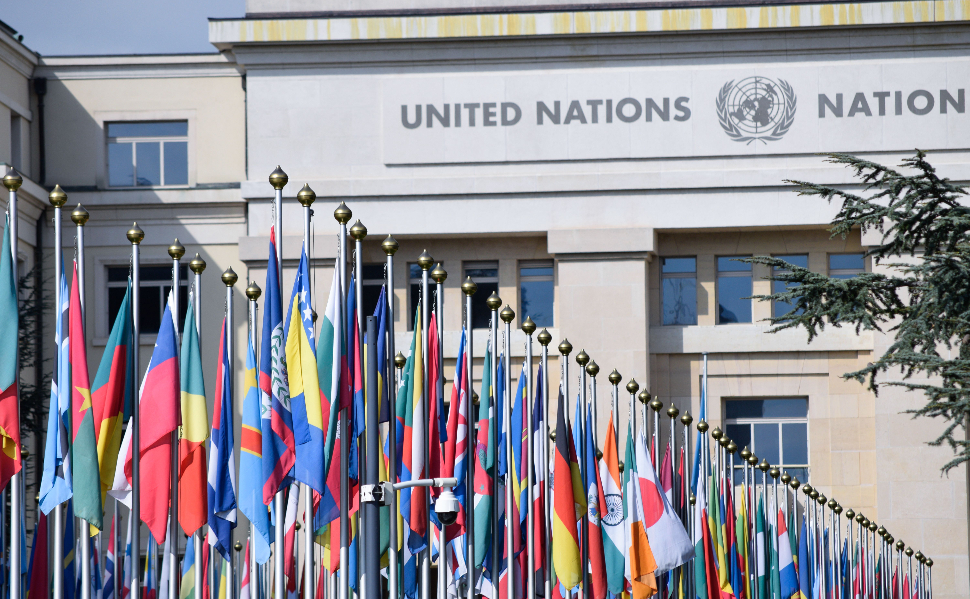
The process is conducted through the U.N. Security Council, whose five permanent members—the United States, Russia, China, the United Kingdom and France—hold veto power. The Council recommends a candidate for appointment by the General Assembly.
That means support from Washington, Moscow and Beijing alone would not guarantee Orbán’s appointment. Opposition from either London or Paris, or a lack of sufficient support among other Council members, could complicate his prospects.
European Opposition Could Complicate Orbán’s Prospects
The Financial Times, reported that Britain and France could oppose a potential Orbán candidacy.
Such resistance would put the reported proposal at the center of a broader diplomatic debate over the future leadership of the United Nations, including the balance between regional representation, international consensus and the influence of the Security Council’s major powers.
For now, the reported discussions remain a potential development rather than a confirmed nomination. The decisive question is whether Orbán—or any other candidate—can secure the support required from the Security Council’s permanent members and win broader backing within the United Nations.