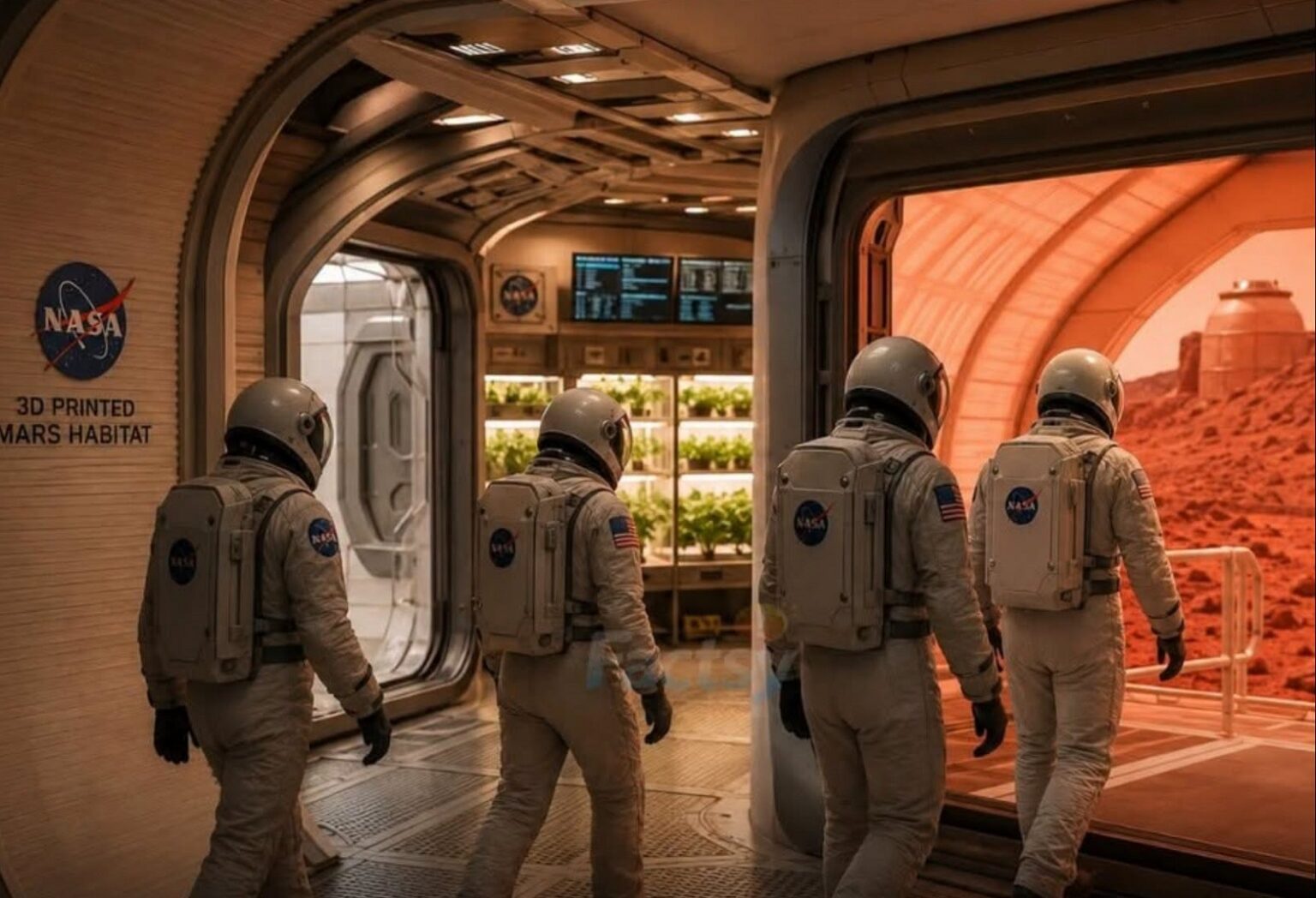
Four volunteers have finally emerged from an isolated habitat after spending 378 days living under conditions designed to simulate life on Mars.
They spent more than a year inside a white, windowless facility, without sunlight, trips to the store or face-to-face contact with friends and family. They were allowed to communicate with the outside world by email, but messages were delayed to simulate the vast distance between Earth and Mars.
The Mars habitat simulator was built at NASA’s Johnson Space Center in Houston, Texas.
Through the experiment, the U.S. National Aeronautics and Space Administration (NASA) aimed to study the effects of spending more than a year in isolation, sharing a confined living space with the same small group of people.

Three Men and One Woman
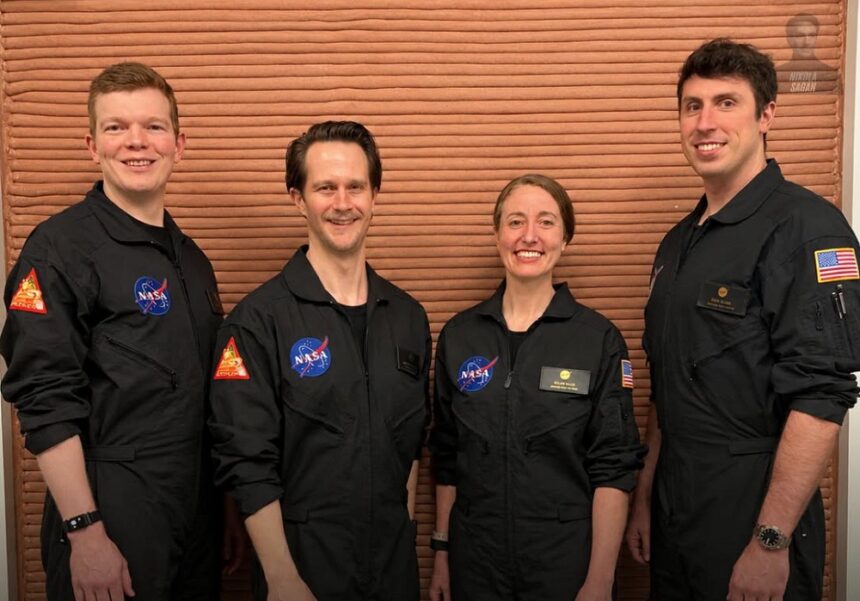
The crew consisted of three men and one woman: Ross Elder, Matthew Montgomery, James Spicer and Ellen Ellis.
Each had a specific responsibility. Elder served as mission commander, Montgomery focused on scientific research, Ellis was responsible for medical matters, and Spicer served as flight engineer, handling technical operations.
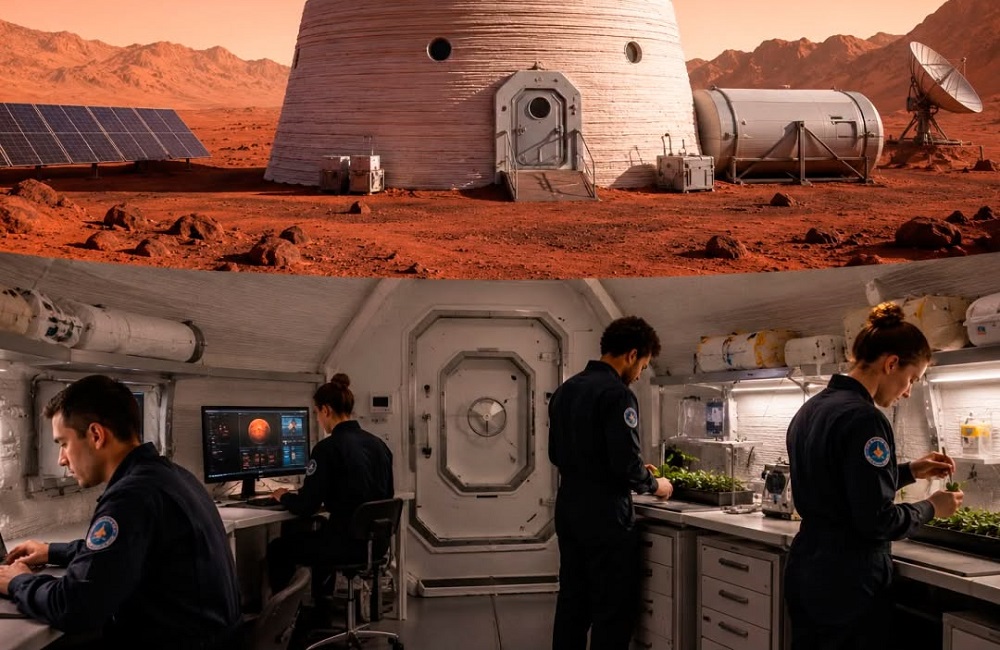
Their living space was a 1,700-square-foot (158-square-meter) facility built using 3D-printing technology.
The volunteers had limited opportunities to communicate with the outside world. Although they could exchange emails with mission control and their families, communication delays simulated the time it would take messages to travel between Earth and Mars.
NASA’s simulation included delays of up to 22 minutes in each direction. The crew also experienced a simulated two-week communications blackout, during which contact with Earth was unavailable.
After leaving the habitat, Spicer said he had received more than 4,000 emails.
From Growing Food to Drawing Blood
“They conducted important research that should help us better understand what it would mean to send humans to Mars,” said Vanessa Wyche, director of NASA’s Johnson Space Center.
The crew had to live with limited resources and carry out a wide range of daily responsibilities. These included maintaining their habitat, growing food, testing technology, exercising and conducting simulated spacewalks outside the facility.
They also had to take care of their personal needs, including cutting their own hair and monitoring their health.
The crew members learned how to draw their own blood and assist one another with the procedure.
The mission was called CHAPEA 2, short for Crew Health and Performance Exploration Analog.
Physical fitness was just as important as mental resilience. The volunteers followed intensive exercise routines to maintain their strength and endurance. This created another challenge: ensuring they had enough food to replenish their energy, maintain their health and stay physically fit.
One Step Closer to the Future of Human Space Exploration
The crew entered the habitat on October 19, 2025, and emerged on October 31, 2026, completing 378 days in isolation.
Over the next two weeks, researchers will collect and analyze additional data about the crew’s physical and mental health.
Mission commander Ross Elder was among the first to speak after the crew emerged.
“I hope our findings will help reduce the risks of living on Mars and bring us a little closer to what seems inevitable,” Elder said.
James Spicer was delighted to see sunlight again for the first time in more than a year.
“Even if it starts raining heavily later, we will be happy just to experience something like that,” Spicer said.
Ellen Ellis also spoke about the ongoing international race to reach the Moon and eventually Mars, including competition with China.
“We still have the advantage, but we will have to be fast. We must continue to maintain the initiative,” Ellis said.
Matthew Montgomery reflected on the future of space exploration.
“I am looking forward to seeing humans return to the Moon, building a base and exploring Mars. Having people on Mars is not a dream; it is becoming an inevitable reality. But we have to keep working toward it,” Montgomery said.
NASA hopes the findings from the CHAPEA mission will help prepare astronauts for future long-duration space missions, including journeys to the Moon and Mars.