
The U.S. midterm elections are widely viewed as a referendum on President Donald Trump’s policies. With voters choosing members of the Senate and House of Representatives, as well as governors in several states, the results could have a major impact on the country’s political future.
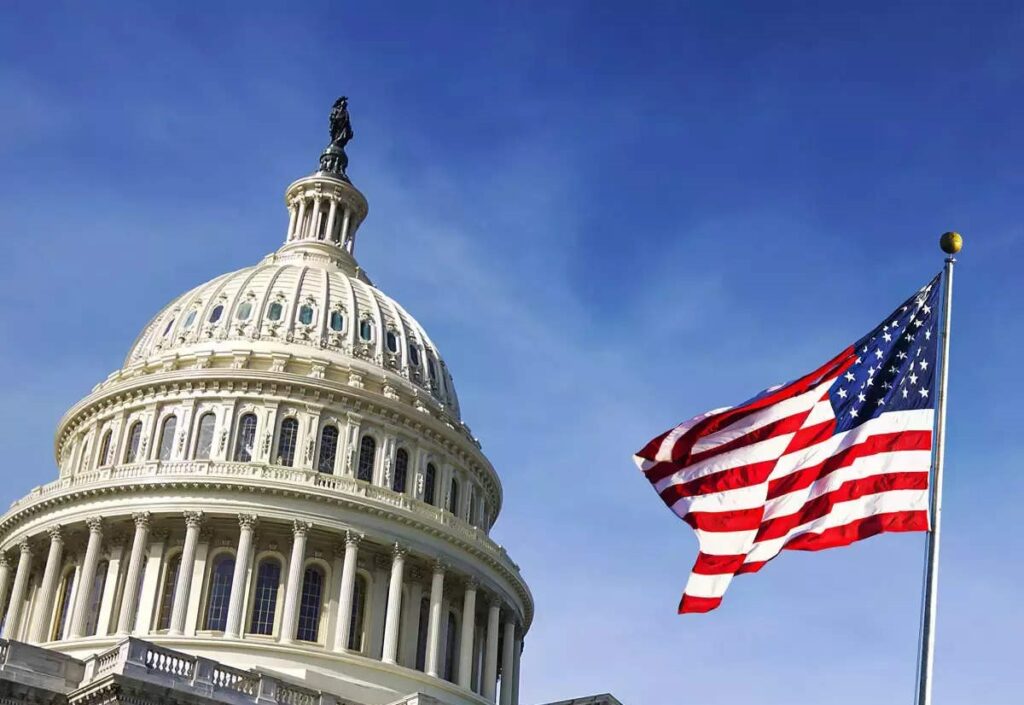
On Tuesday, November 3, Americans head to the polls. This time, they are not deciding who will move into the White House, but who will take their seats in the Capitol. These are the so-called midterm elections, held halfway through a president’s four-year term.
Midterm elections take place every four years, exactly halfway between two presidential elections. Voters across the country choose their representatives in the House of Representatives and the Senate — the two chambers of the U.S. Congress. In several states, they also elect governors.
But beyond the candidates and offices listed on the ballot, voters are making another important judgment. Midterm elections are often seen as a referendum on the president and the party in power.
“They often serve as a referendum on the president and the party currently in power,” explained J. Miles Coleman, an election analyst at the University of Virginia’s Center for Politics, ahead of the 2022 elections. When the public is satisfied, the president’s party tends to perform better. When voters are dissatisfied, that sentiment is often reflected in the election results.
Who Are Americans Voting For?
Voters across the country will elect all 435 voting members of the House of Representatives. Each representative serves a specific congressional district, with districts drawn according to population.
For example, relatively large states with small populations, such as Wyoming, have only one seat in the House. New Jersey, despite having a much smaller land area, has 12 representatives because of its larger population.
Members of the House are elected to two-year terms.
Senators, by contrast, serve six-year terms. The Senate, the other chamber of Congress, has 100 seats, with each of the 50 states represented by two senators, regardless of population or geographic size.
Approximately one-third of the Senate seats are contested every two years. In this election cycle, Americans will vote on 35 of the 100 Senate seats. Unlike House elections, Senate races are therefore not held in every state.
Voters in 36 states will also elect governors, who typically serve four-year terms. Many important policy decisions in the United States — from abortion laws and education policy to the administration of elections — are made at the state level. As a result, whether Democrats or Republicans control a particular state government can have significant consequences for its residents.

Which Party Controls Congress?
Republicans, President Trump’s party, currently hold majorities in both chambers of Congress, although their margins are narrow.
In the House of Representatives, there are 218 Republicans, 214 Democrats and one independent member who generally votes with Republicans. Two seats are currently vacant.
Political analysts believe Democrats have a strong chance of taking control of the House in the upcoming elections.
“It would be surprising if Democrats did not win the majority in at least the House of Representatives,” Coleman told CBS in late October.
The Senate currently consists of 53 Republicans, 45 Democrats and two independent senators who generally caucus with Democrats. In the event of a 50-50 tie, the vice president can cast the deciding vote. Under the Trump administration, that responsibility falls to Republican Vice President JD Vance.
Why Are These Elections Important?
Although voter turnout is generally lower than in presidential elections, midterm results can have a major impact on the direction of U.S. policy for the years ahead.
The president has considerable executive authority and can implement certain measures through executive orders. However, many major policy initiatives require congressional approval.
For Trump, governing and advancing his agenda is considerably easier when Republicans control both chambers of Congress. If Democrats take control of either chamber — or both — it could become much more difficult for the president to advance his domestic and foreign policy priorities.
Where Are the Key Races?
In the House of Representatives, Democrats need to gain only a handful of seats to secure a majority of 218. Although most of the 435 races are not considered highly competitive, several districts remain closely contested, including seats in Iowa, Virginia and Montana.
The Senate race in Texas is attracting particular attention. Recent polls show Democrat James Talarico running neck and neck with his Republican opponent, Ken Paxton.
Democrats need to gain four seats to secure a Senate majority, and a victory in Texas would be a major political breakthrough. No Democrat has won a statewide election there since 1994.
Talarico has even attracted support from some members of the Bush family, the prominent Republican political dynasty that includes former presidents George H. W. Bush and his son, George W. Bush.
The gubernatorial races are also drawing attention. For the first time in the country’s history, an African American woman could be elected governor.
In Minnesota, Democrat Amy Klobuchar and Republican Lisa Demuth, who is African American, are competing for the governor’s office. In Georgia, Democrat Keisha Lance Bottoms, also an African American woman, is running against Republican Rick Jackson.
Demuth faces a difficult challenge in Minnesota, a state that generally leans Democratic. Klobuchar, a longtime senator, is also a more familiar figure to many voters.
The race in Georgia, however, is considered much closer, with recent polling showing a tight contest. Bottoms is viewed as a serious contender.