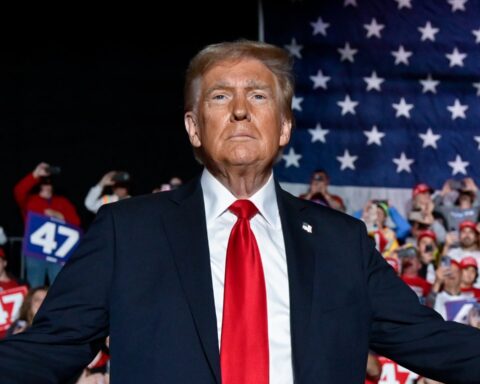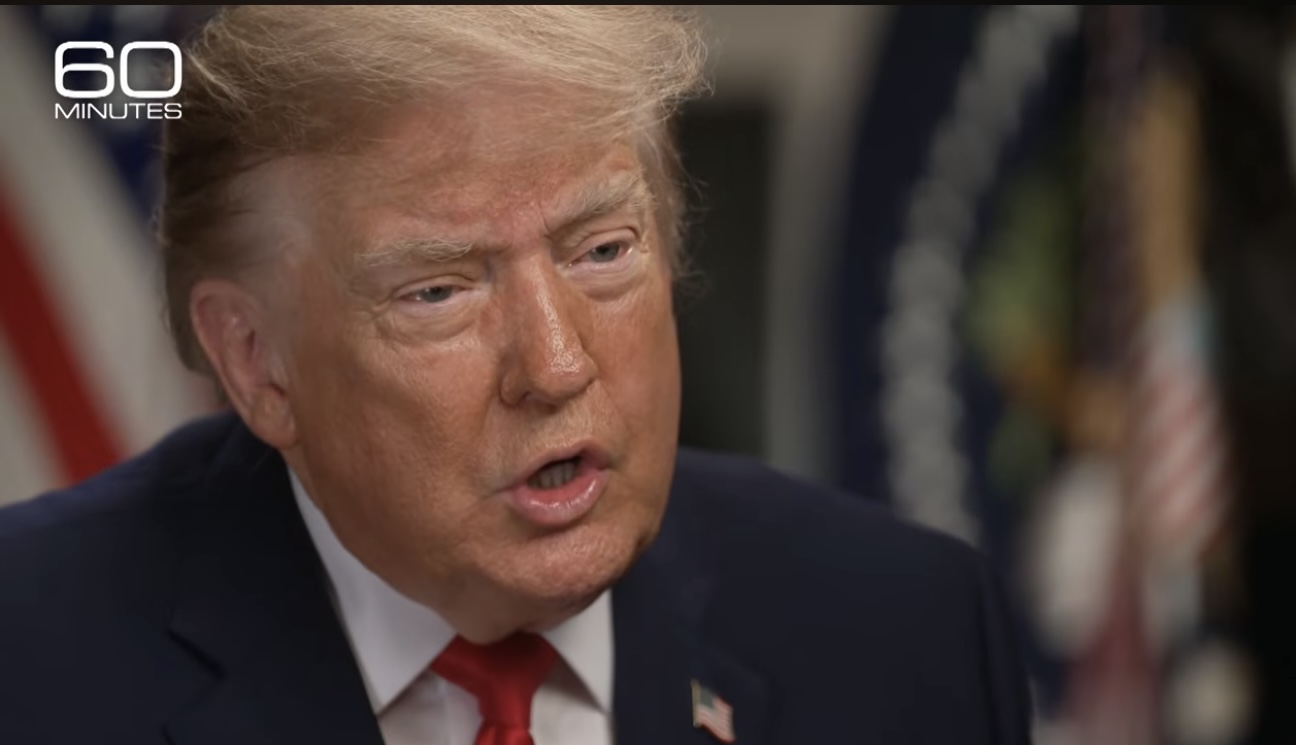
President Donald Trump has finally acknowledged that some of his administration’s policies may have contributed to the Republican Party’s crushing defeat in last week’s midterm elections. However, rather than fully accepting responsibility, Trump once again blamed the media for failing to highlight what he considers the positive achievements of his administration.
During an interview with CBS’s 60 Minutes, correspondent Ross Douthat asked Trump to explain the reasons behind the Republicans’ devastating loss, which saw Democrats take control of both the House of Representatives and the Senate, while also winning several key gubernatorial races.
Trump, who has repeatedly argued that Republicans lost because his name was not on the ballot, this time pointed to several additional factors.
“They didn’t like the war. They didn’t like the fact that gasoline went up because I had it down at a low. And there’s a great dislike, incredibly, for Israel,” Trump said.
The eight-month-long war with Iran has become increasingly unpopular among American voters, particularly as fuel prices surged during the conflict. On Sunday, the national average price of gasoline remained above $4 per gallon, approximately one dollar higher than a year earlier, according to the American Automobile Association (AAA).
However, when asked why Americans have become increasingly dissatisfied with the economy, Trump quickly shifted the blame to the media.
“In poll after poll, people say they’re unhappy with this economy in a way they weren’t in the first term. Cost of living, inflation, and so on. Is that all just the Iran war?” Douthat asked.
“The press doesn’t cover positive news for Republicans. They don’t cover, certainly, positive news for me. So I have to do it myself. I have to get it out there. We have historically good numbers. We have the highest stock market in history,” Trump responded.
Throughout October, Trump held multiple rallies in an effort to energize his political base and boost Republican candidates ahead of the midterm elections. His efforts, however, failed to prevent what Democrats celebrated as a major electoral victory.
The defeat was particularly painful for Trump because several high-profile Senate candidates he had personally campaigned for also lost, including Ken Paxton in Texas, Jon Husted in Ohio, and Roger Marshall in Kansas.
Trump considers changes to his administration
Following the Republican electoral disaster, Trump began signaling changes within his administration.
One of the most significant developments was his decision to replace White House Chief of Staff Susie Wiles with her deputy, Stephen Miller, who is widely known as one of the architects of Trump’s hardline immigration policies.
During the interview, which was recorded before Wiles’ departure, Douthat asked Trump whether he planned to fire anyone following the election results.
“I do, a little bit. I love my cabinet. I think they’re good. But I’ll be doing maybe a few changes. I don’t want to mention who,” Trump said.
The president was also asked whether he still had confidence in Defense Secretary Pete Hegseth, amid reports that Democratic lawmakers could pursue impeachment proceedings against him or that Trump himself might decide to remove him.
“I do,” Trump replied, pointing to the January military operation in Venezuela, during which American forces captured then-President Nicolás Maduro.
When Douthat asked whether Hegseth deserved credit for the operation, Trump responded: “No, but he was a part of it.”
Trump says he can work with Democrats despite continued insults
The interview also addressed whether Trump would be able to cooperate with Democrats during the remaining two years of his presidency, particularly given his frequent personal attacks against political opponents.
Douthat reminded Trump that he had occasionally referred to Texas Senator-elect James Talarico as “Tala-freako.”
“Do you think you could work with the Democrats without insulting them consistently?” Douthat asked.
Trump insisted that he could, but immediately continued his name-calling.
“I also call many of them Dumocrats,” he said.
When asked whether he could refrain from insulting Democrats for six months if doing so would help secure a political agreement, Trump answered:
“Very easily.”
The interview comes at a difficult moment for the Republican Party, which is facing one of the most significant electoral setbacks of Trump’s political career.
Two years after celebrating what he described as a historic victory, the president is now being forced to confront growing voter dissatisfaction over the economy, the cost of living, immigration policies, and the war with Iran.
Whether Trump will change his political approach or continue blaming the media and his opponents remains one of the biggest questions facing his administration.