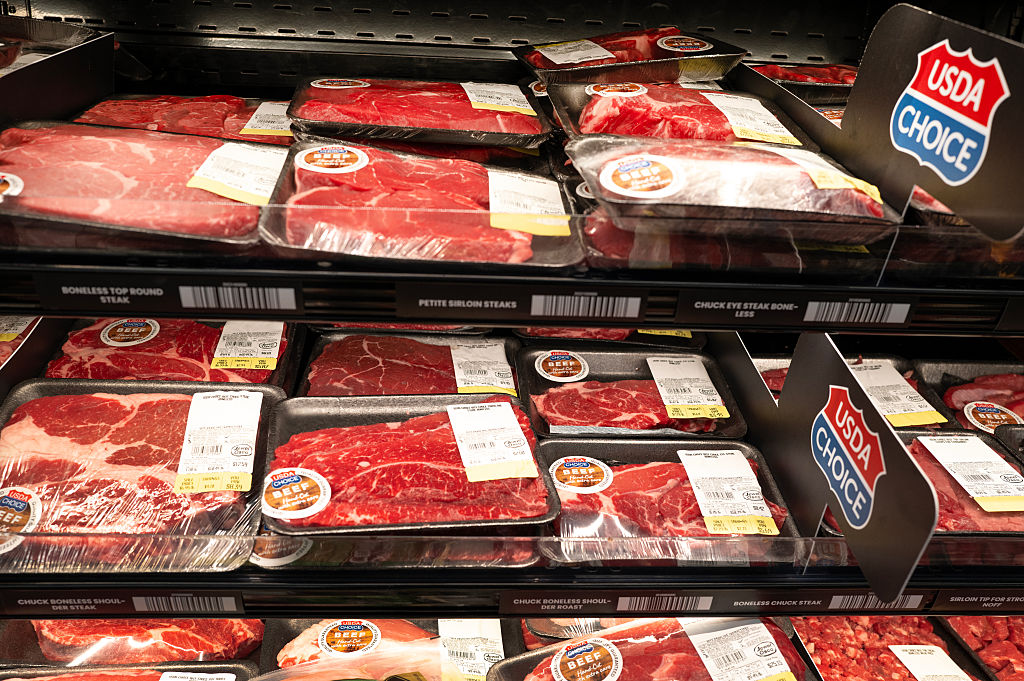
A historic cattle shortage, rising production costs and restrictions on livestock imports are putting continued pressure on the U.S. beef market, leaving consumers with little hope of lower prices in the near future.
American consumers should not expect beef prices to come down anytime soon, industry experts warn, as the United States continues to struggle with a shrinking cattle supply and rising production costs.
The rising cost of beef has become a challenge for the Trump administration as it faces growing voter frustration over the high cost of living and the affordability of everyday essentials.
When President Donald Trump took office in January 2025, a pound of 100 percent ground beef cost an average of $5.545, according to data from the Federal Reserve Bank of St. Louis.
By August 2026, the price had climbed to a record $6.923 per pound before easing slightly to $6.755 in October.
Much of the increase has been attributed to the historically low number of cattle in the United States. Those working in the industry say rebuilding the nation’s herds will take years.
Livestock auctioneer Brad Peek told The Wall Street Journal that restoring cattle populations would be a lengthy process.
“The common public probably thinks you can turn it around in four months,” Peek said. “We’ll be lucky to start gaining cattle in four years.”
In July 2026, the U.S. Department of Agriculture reported that the country had 94.2 million head of cattle and calves on farms. Although that represented an increase from the 86.2 million recorded at the beginning of the year, the January figure marked the lowest cattle inventory in 75 years.
The shortage has also affected meat-processing operations. Austin Campbell, a maintenance worker at a Tyson Foods facility in Utah, told The Wall Street Journal that he received an email from the company’s then-CEO, Donnie King, announcing the closure of the five-year-old plant because of difficult conditions in the beef industry.
“Our beef business is operating in a challenging environment due to the historic cattle shortage,” King wrote, according to the newspaper. “These supply constraints are likely to persist.”
Other factors are adding to the pressure on producers. High energy costs and droughts that reduce crops used for livestock feed have increased expenses for farmers and beef producers. At the same time, strong consumer demand and a limited cattle supply have helped keep prices elevated.
U.S. cattle prices have also been affected by the Trump administration’s May 2025 decision to suspend imports of horses, bison and cattle from Mexico.
The measure followed the spread of the New World screwworm, a parasite that feeds on the living tissue of animals and can cause serious damage to livestock populations.
Between 2020 and 2024, cattle from Mexico accounted for 62 percent of U.S. cattle imports, according to the USDA.
In July 2026, the Agriculture Department announced a gradual, phased reopening of southern ports for livestock trade, offering a potential path toward easing supply constraints.
Despite the difficult market conditions, surviving ranchers are benefiting from higher cattle prices. Industry analysts told The Wall Street Journal that some ranchers are earning their highest profits in years, with returns reaching approximately $1,000 per head.
“If you take that number of cattle out of the beef supply chain, yes, it’s going to increase the value of the rest of the calves that ranchers are selling domestically here,” Jason Cleere, a professor at Texas A&M University, told NPR in May.
Meatpackers, however, are facing the opposite situation. They are paying more for fewer cattle, while industry analysts estimate that some operations are losing around $100 per head.
With cattle numbers taking years to recover and production costs remaining high, the beef industry is warning that relief for American consumers is unlikely to come soon.