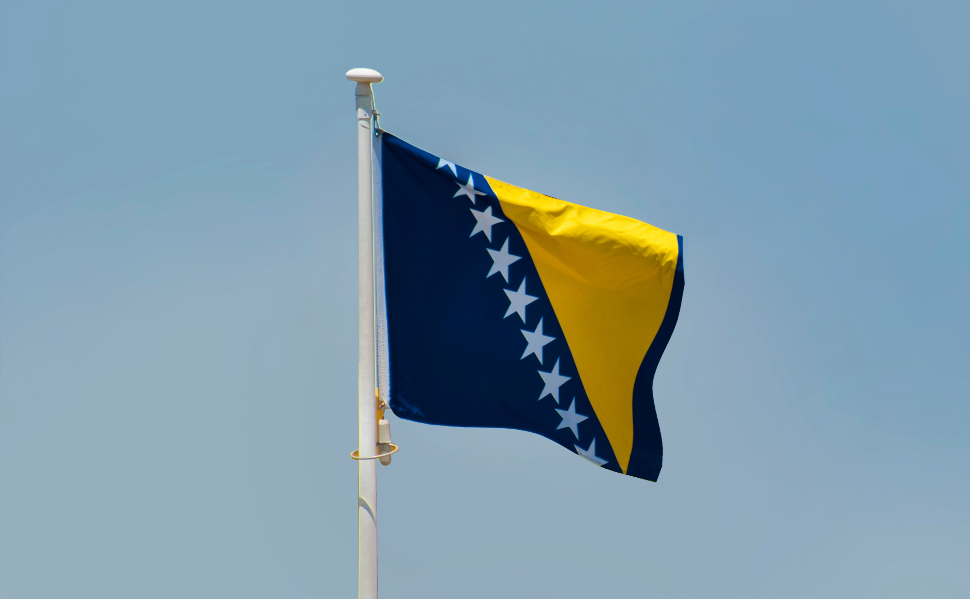
Bosnia and Herzegovina’s new three-member Presidency has taken office, marking the first time two women have served together in the country’s collective head of state.
Željka Cvijanović, Denis Bećirović and Darijana Filipović began their four-year terms at an inaugural session in Sarajevo on November 16. Cvijanović assumed the rotating chairmanship for the first eight months.
The inauguration followed the October 4 general elections and the certification of results on November 3. The new Presidency will serve until 2030, with responsibility for major decisions concerning foreign policy, international representation and the formation of state-level executive institutions.
Filipović Joins Two Returning Members
Filipović, elected as the Croat member, succeeds Željko Komšić. Bećirović, the Bosniak member, and Cvijanović, the Serb member, have both begun their second consecutive terms.
Their election reflects Bosnia and Herzegovina’s constitutional structure. Voters in Republika Srpska elect the Serb member, while voters in the Federation of Bosnia and Herzegovina elect the Bosniak and Croat members.
During the ceremony, Central Election Commission Chairman Jovan Kalaba presented the members with certificates confirming their mandates. They then delivered and signed their official declarations.
The oath commits members to respecting the Constitution, implementing the Dayton peace agreement and its annexes, protecting fundamental rights and safeguarding the interests and equality of the country’s peoples and citizens.
The ceremony formally established the ninth Presidency since the country’s postwar institutions were created. However, it represents one part of the wider process of establishing authorities following the general election.
Government Formation Remains a Key Task
One of the Presidency’s consequential responsibilities is nominating the chair of the Council of Ministers, Bosnia and Herzegovina’s state-level executive body.
That nominee must receive approval from the House of Representatives before taking office. The chair then nominates ministers, whose appointments also require parliamentary approval.
The Presidency’s inauguration therefore does not mean that a new Council of Ministers has automatically been established. Government formation requires further decisions involving both the collective head of state and parliament.
Beyond that process, the Presidency conducts foreign policy and appoints ambassadors and other international representatives. It also represents Bosnia and Herzegovina in international organizations and handles international treaties within the constitutional framework.
Its financial responsibilities include proposing the annual state budget to the Parliamentary Assembly on the recommendation of the Council of Ministers.
These powers place the institution at the center of relations with foreign governments and cooperation among state bodies. The coming mandate will require the three members to translate their electoral mandates into decisions within that shared constitutional structure.
For citizens abroad, the Presidency’s work is particularly relevant to diplomatic representation and the country’s relationships with the states where they live. The immediate institutional focus now shifts from the inauguration ceremony to appointments, government formation and the functioning of the newly elected authorities.