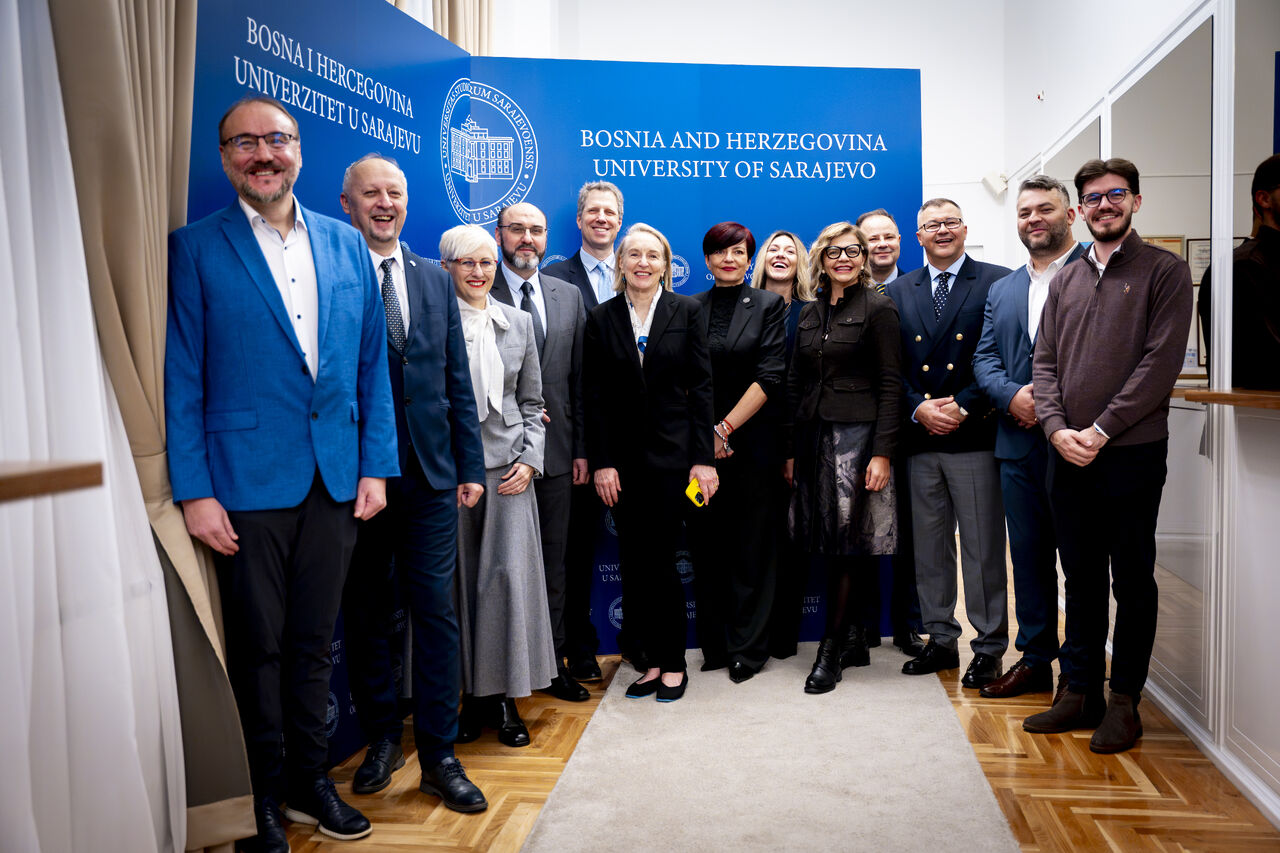
The U.S.-BiH Exchange Council, in partnership with the University of Sarajevo, its Faculty of Law, and the Faculty of Criminal Justice and Security Studies, co-organized a forum titled “Recentering Citizens in Peace and Political Progress: Evidence from Bosnia and Herzegovina.”
The event brought together representatives of universities across Bosnia and Herzegovina, diplomats, researchers, civil society representatives, and youth leaders to examine where citizens from different communities find common ground and how shared interests can contribute to stronger institutions and political progress.
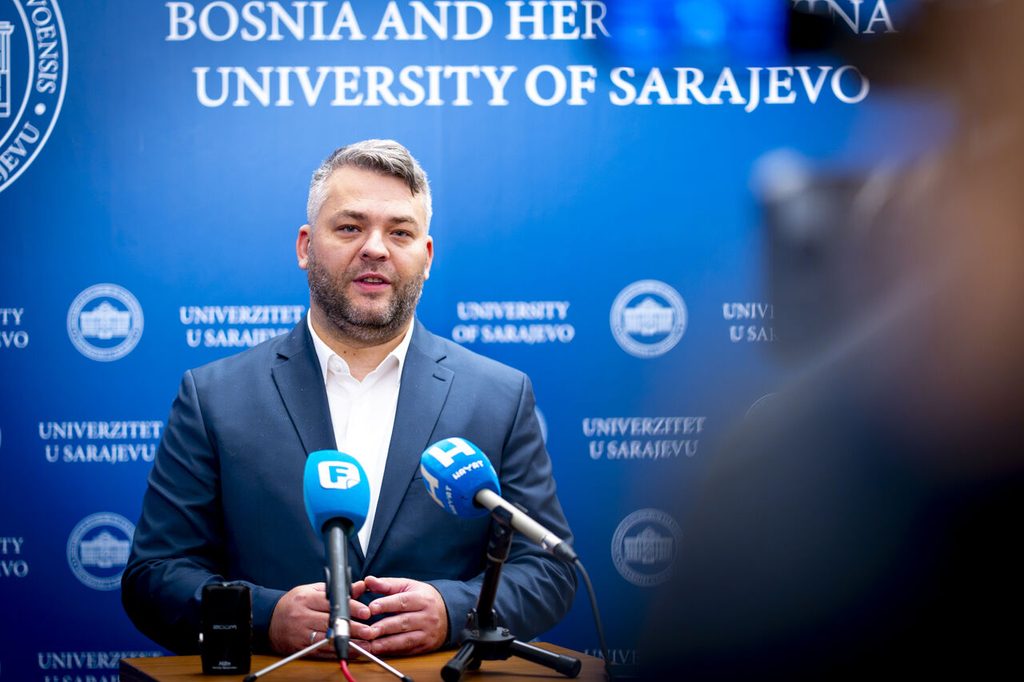

The organizers expressed their gratitude to speakers Dr. Tarik Zaimović, Dr. Zinka Grbo, and Dr. Jasmin Ahić, as well as U.S.-BiH Exchange Council Board Members Adnan Hadrović and Dr. Azra K. Nurkić, for their contributions, insights, and opening remarks.
Two major research initiatives conducted by the University of Luxembourg, Yale Jackson School of Global Affairs, and the Institute for Development Impact (I4DI) reveal that different constituent peoples in Bosnia and Herzegovina share surprisingly similar broader political views and expectations of public institutions, despite significant differences in their positions on constitutional arrangements and the distribution of political power.
The findings also challenge the assumption that ethnic communities hold uniform positions on constitutional matters. Instead, the research identifies considerable differences within each community, highlighting a more diverse range of perspectives than is often reflected in political debates.
More broadly, the studies show that citizens across Bosnia and Herzegovina share many expectations of their institutions. They want public institutions to be accountable, impartial, and committed to serving everyone.
The research also demonstrates that cooperation already takes place despite existing divisions. Making that cooperation more sustainable, the findings suggest, requires stronger institutional connections, clear accountability, and greater attention to citizens’ needs.
The U.S.-BiH Exchange Council also extended its sincere appreciation to the researchers who presented their work: Dr. Ensar Muharemović, Mia Džepina, Dr. Catherine Panter-Brick, Dr. David Simon, and Imran Pašalić. The discussion was moderated by Dženana Š.
The forum highlighted an important message: despite Bosnia and Herzegovina’s political and constitutional divisions, citizens share common expectations for fair institutions, accountability, cooperation, and a better future.