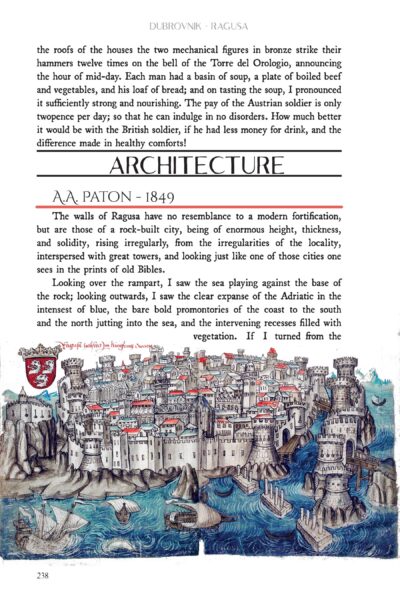
Inspired by old travel accounts written by foreign visitors, “Time Traveler’s Guide to Dalmatia” takes readers back to 19th-century Croatia, revealing how people dressed, what they ate, and what life was like in cities such as Split, Zadar and Šibenik.
What did Split look like more than 150 years ago? What did travelers write about Zadar and Šibenik? How did people dress, and what did they eat in Dalmatian cities when our great-grandparents lived there?
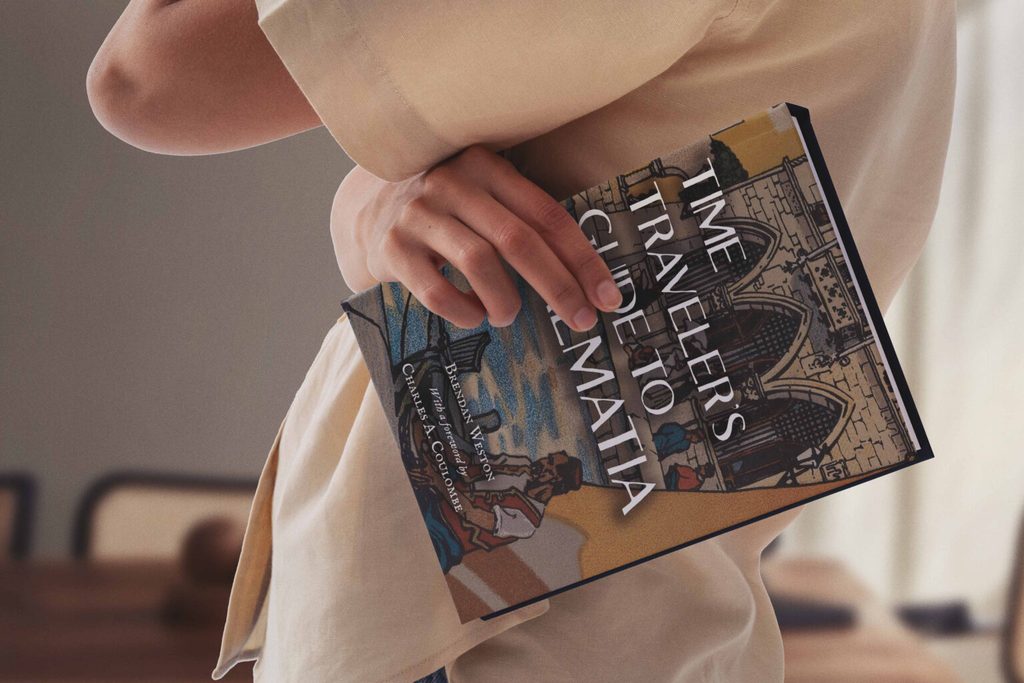
Those questions sparked the curiosity of Brendan Weston, leading him to explore dozens of historical travel accounts and eventually write Time Traveler’s Guide to Dalmatia. In an interview with Croatians Saturday Live, Weston explained how a simple question — “What did this place look like in the past?” — grew into a guide to 19th-century Dalmatia.
Weston does not have Croatian ancestry himself, but over the years, Croatia has become much more than another country he has visited. He has traveled through Dalmatia several times, and the more time he spent in its historic towns, the more interested he became in discovering what those same places looked like 100 or 150 years ago.
His book offers readers an opportunity to travel back in time and see today’s Dalmatian cities through the eyes of people who actually visited them generations ago.

From a Few Old Books to a Journey Through Time
Weston initially set out to find English-language travel accounts written by foreigners who had visited Dalmatia. But the research soon took him much further.
He describes the experience as falling down a “rabbit hole,” discovering an almost forgotten world of 19th-century travelers who documented what they saw throughout the region. Among them were students, architects, spies, adventurers and, as Weston describes them, “wild American millionaires.”
Each recorded their own impressions of Dalmatian towns, their people, food, customs and everyday life.
At first, Weston simply wanted to republish these accounts for his own enjoyment. His wife, however, encouraged him to turn the material into a practical guide that people could take with them while exploring Dalmatia.
That is how the concept for the book developed: imagine sitting on Split’s waterfront promenade or in Zadar while reading an account describing that very same location as it appeared when your great-grandparents were alive.
“You can get a sense of what the people were like, what the food was like and what the surroundings looked like in that exact same place 100 years ago,” Weston explained.
For his research, he used online archives, historical maps and library collections, including materials he studied at the National Library of Hungary.
In Split, People Were Doing Something 150 Years Ago That They Still Do Today
One of Weston’s biggest surprises was discovering how many traditions have survived, in some cases almost unchanged.
He points to British travel writer Andrew Archibald Paton, who visited Split in the 19th century during Carnival, Holy Week and Easter. Paton described various Carnival balls as well as an unusual ritual held on the final night before Lent.
At midnight, a funeral procession would appear carrying a coffin, after which participants would leave the venue together.
Weston was fascinated to discover that a similar tradition continues today. The symbolic burial of Carnival remains part of the region’s traditional celebrations more than a century and a half later.
“It’s incredible to see cultural things that someone observed more than 150 years ago, and then you can go out into the street today and see them again,” he said.
For Weston, these moments demonstrate that history is not something confined to archives and museums. In Dalmatia, it remains visible in everyday life, local customs and cultural traditions.
He was also surprised by how recognizable the physical appearance of some cities has remained. Despite wars, destruction and major historical changes, parts of Split, Zadar, Šibenik and Dubrovnik still look familiar enough that, as Weston suggests, a traveler from 1850 might find their way around.
Some of this is the result of preservation, while some reflects careful restoration following wartime destruction. For Weston, it demonstrates Croatia’s strong connection to its historical heritage.
Zadar and Šibenik Are Just an Hour Apart, Yet Once Seemed Like Different Worlds
The book is organized much like a traditional travel guide, but instead of recommending today’s restaurants and hotels, it answers questions about how people lived in the past.
Readers can discover which landmarks were considered most important in each city, what people ate, how visitors described local residents and what could be seen in the streets.
Weston was particularly struck by the differences between towns that are geographically close to one another.
Today, Zadar and Šibenik are approximately an hour’s drive apart. Yet historical travel accounts reveal striking differences in clothing and even speech.
“Going from one town to another, you could see enormous differences in the way people dressed,” he recalled.
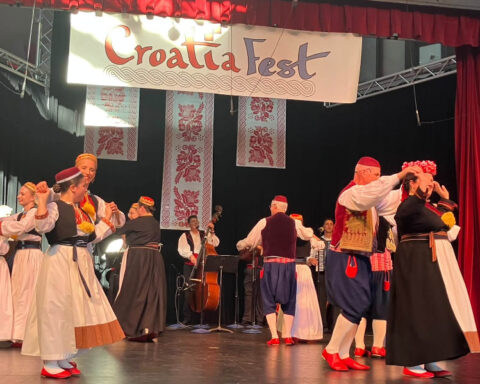
Some of these distinctive local characteristics are no longer part of everyday life on Dalmatian streets. However, Weston believes that certain traditions have been preserved in an interesting way within Croatian diaspora communities, particularly through folk dancing, traditional costumes and cultural celebrations.
A Book That Can Help Croatian Diaspora Descendants Rediscover Their Roots
For Time Traveler’s Guide to Dalmatia, Weston drew on material from approximately 24 different books and authors who visited the region during various periods.
Rather than reproducing entire travel accounts, he selected the most compelling passages about local people, food, travel and everyday life.
He also sees the book as a potential starting point for descendants of Croatian immigrants who want to learn more about the places their families came from.
For example, someone who discovers an account written by a traveler who visited their ancestor’s village or hometown in 1859 could then seek out the original book and explore the complete story.
Many of these accounts were written in English that remains accessible to modern readers, making them especially valuable to members of the diaspora who may not speak Croatian.
“You can, in a way, put yourself in the shoes of the people who were visiting those places at the time,” Weston said.
He added that the biggest challenge during the research was not finding enough material, but deciding what to leave out.
Interestingly, Weston himself is not Croatian. His wife has Croatian roots, and together they are now thinking about which Croatian traditions they want to pass on to their children, who are still very young.
Christmas, Easter, Carnival and other customs are already part of their family life, but, as he explained, they are still discovering which traditions they will preserve and share with the next generation.
His interest in Croatia has therefore grown beyond historical research. Weston recently presented his book at CroatiaFest in Seattle, where, according to his interview, they sold all the copies they had brought for the event. His journey then took him back to Croatia.
Ultimately, Weston’s book is more than a collection of historical accounts. It is an attempt to bring two different eras together: the same stone street, the same church, the same town square — but seen through the eyes of a traveler who stood there 150 years ago.
For people whose families left these very places for the United States, Canada and other parts of the world, that perspective offers much more than historical curiosity. It provides an opportunity to imagine, even briefly, the Dalmatia their ancestors once knew.
Watch the full conversation with Brendan Weston about Time Traveler’s Guide to Dalmatia, his research into historical travel accounts and 19th-century Dalmatia on Croatians Saturday Live, available on the Croatians Online YouTube channel.