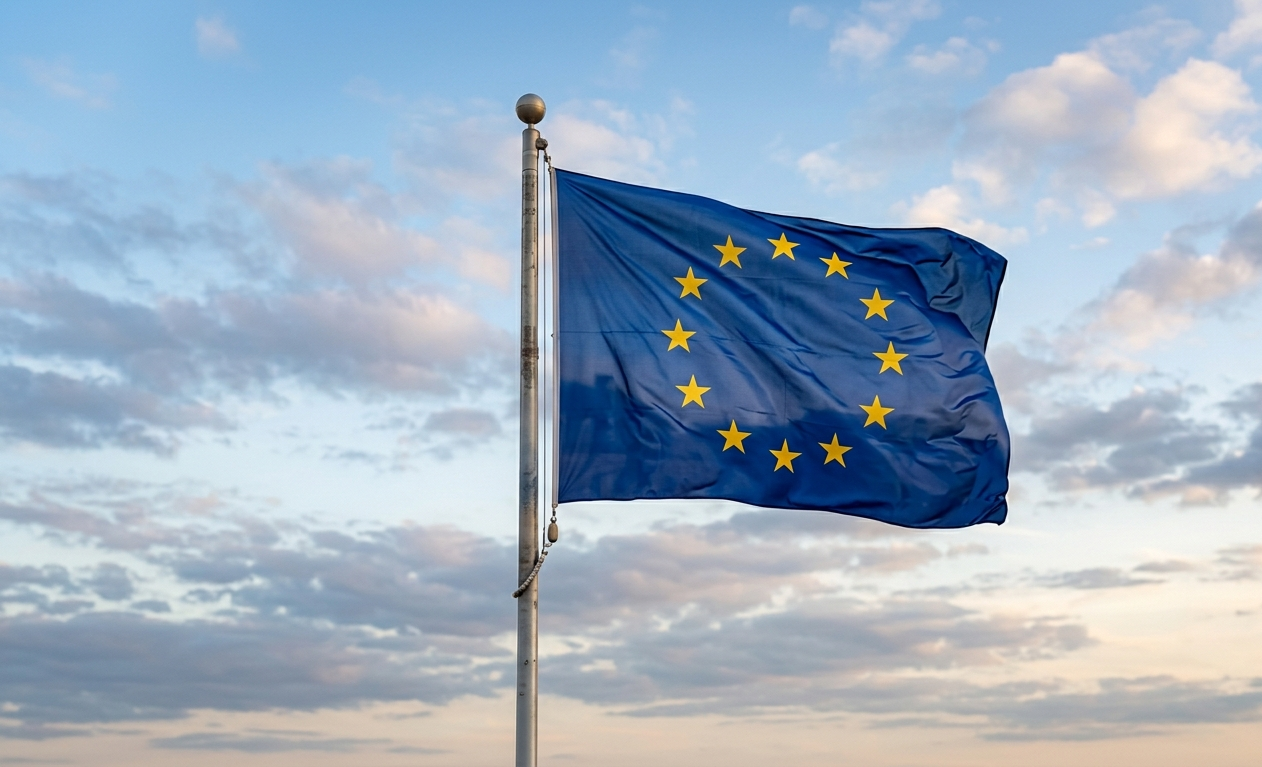
Ten years after voting to leave the European Union, Britain signed three agreements with the EU today at a summit in Brussels, introducing changes to the terms of the post-Brexit arrangements.
In an effort to “reset” relations, the United Kingdom and the European Union unveiled their most significant agreement, which is expected to eliminate many health checks on plants and animals that have significantly reduced British food exports to the EU. In return, Britain will be required to comply with EU food safety laws and regulations. Reduced food border checks are expected to begin after March 2028.
Downing Street announced that both sides had agreed on timelines for implementing a youth mobility scheme, a sanitary and phytosanitary (SPS) agreement, and linking their respective emissions trading systems. Further details are expected to be published in a joint statement.
A decade after Britain voted to leave the bloc, which now has 27 member states, both sides acknowledged the need for closer cooperation in an increasingly turbulent international environment shaped by Russia’s full-scale invasion of Ukraine, U.S. tariffs, China’s control over critical minerals and the war in Iran.
FOOD SAFETY AND HEALTH CHECKS TO BE EASED
The most important agreement announced today concerns so-called SPS rules, covering health checks on plants and animals, as well as the standards and regulations the EU applies to food products entering its single market.
According to the British food industry lobby, the costs of complying with these regulations have contributed to a 20% decline in British food exports to the EU. Removing many of these requirements is therefore expected to make trade with the bloc easier, particularly for smaller British businesses.
The removal of SPS checks could also ease political tensions in Northern Ireland, where a special arrangement was introduced to protect the open border with the Republic of Ireland. This arrangement required checks on food products arriving in Northern Ireland from mainland Britain.
Under the new agreement, most of these checks, previously established under the Windsor Framework, will be eliminated, bringing an end to some of the most burdensome aspects of the so-called Irish Sea border. However, customs paperwork for businesses importing and exporting food and beverages will remain in place.
According to British government estimates, the agreement could generate an additional £5.1 billion annually for the UK economy.
“Britain and Europe share values, interests and a global neighborhood,” British Prime Minister Andy Burnham said ahead of his meeting with European Commission President Ursula von der Leyen and European Council President António Costa.
He added that the agreements would help reduce costs, keep prices down and create opportunities for young people.
“In a more dangerous world, we are stronger together.”
Prime Minister Burnham, who was welcomed by a string quintet upon his arrival, said Britain should consider its options for future relations with the EU, including the possibility of rejoining the bloc. He described it as an “obvious truth” that Britain had lost more than it had gained from Brexit.
SEEKING TO OFFSET EXISTING LOSSES
At the summit, which had been postponed from July following the resignation of his predecessor, Keir Starmer, both sides sought to recover at least some of those losses through a package of agreements.
One of the agreements provides for linking the British and EU emissions trading systems. This would exempt goods traded between the UK and EU, such as steel, from the cross-border carbon charges imposed by both sides.
The initiative aims to reduce regulatory compliance costs and create a larger European carbon trading market. It is also intended to strengthen protection against cheaper imports from countries abroad, particularly China, where products are manufactured using energy sources with high carbon emissions, such as coal.
Additionally, the agreement seeks to support climate targets negotiated at international forums, including the United Nations COP climate conferences.
Both sides also plan to allow young people from each other’s territories to come for work or study for up to three years. However, this issue has exposed some of the most significant differences in their positions.
According to EU diplomats, Britain, aware that immigration was one of the factors behind the Brexit vote, initially proposed a quota of just 50,000 participants but later agreed to increase the figure to 100,000.
Currently, EU students attending universities in the United Kingdom must pay full international tuition fees, which are several times higher than the rates charged to British students.
The EU is seeking a reciprocal arrangement under which EU citizens would pay the same tuition fees as British students, and vice versa.
The agreement would not affect Irish students, who can already study in the UK at the same rates as British citizens under the Common Travel Area arrangement, which predates both countries’ EU membership.
British students benefit from the same arrangement when studying in Ireland.
The United Kingdom had also hoped to include an agreement on reintegrating the British and EU electricity markets, but this proved impossible within the current negotiating timeframe.
According to British government estimates, a combined electricity market would be particularly beneficial for Northern Ireland, where London believes wholesale electricity costs could be reduced by as much as 20%.
Negotiations on electricity market integration will continue.
The EU says it plans to begin implementing the three new agreements on March 1, 2028. However, it has also indicated that the agreements covering food imports, emissions trading and youth mobility will remain on hold until an agreement is reached on university tuition fees.
Andy Burnham said Britain and Europe share common values and interests and belong to the same global neighborhood. Both sides agreed to try to resolve the outstanding issue within six months.
Another sensitive issue is Britain’s acceptance of EU rules, a particularly contentious subject among opponents of closer European integration.
One of the United Kingdom’s key demands is for the EU to grant Britain special status under the bloc’s proposed rules for European-origin products, known as “Made in Europe,” particularly in the automotive sector.
The EU has expressed willingness to consider such an arrangement, but only if Britain aligns its policies with those of the bloc, including measures restricting imports of Chinese electric vehicles.
An initial draft of the joint statement contained conflicting positions between Britain and the EU regarding the extent of regulatory coordination.
The final agreed text states that, in sectors where cooperation has been established, Britain will “ensure outcomes consistent with relevant EU measures” in order to protect those sectors and prevent circumvention of the rules.
This is believed to refer to a French-German proposal under which EU public funds could be used to purchase British-made cars through public procurement or subsidies, provided that Britain agrees to dynamically align its trade protection measures with those of the EU.
This would mean Britain adopting measures introduced by the EU to restrict imports of hybrid and fully electric vehicles manufactured in China, a step London has so far refused to take.