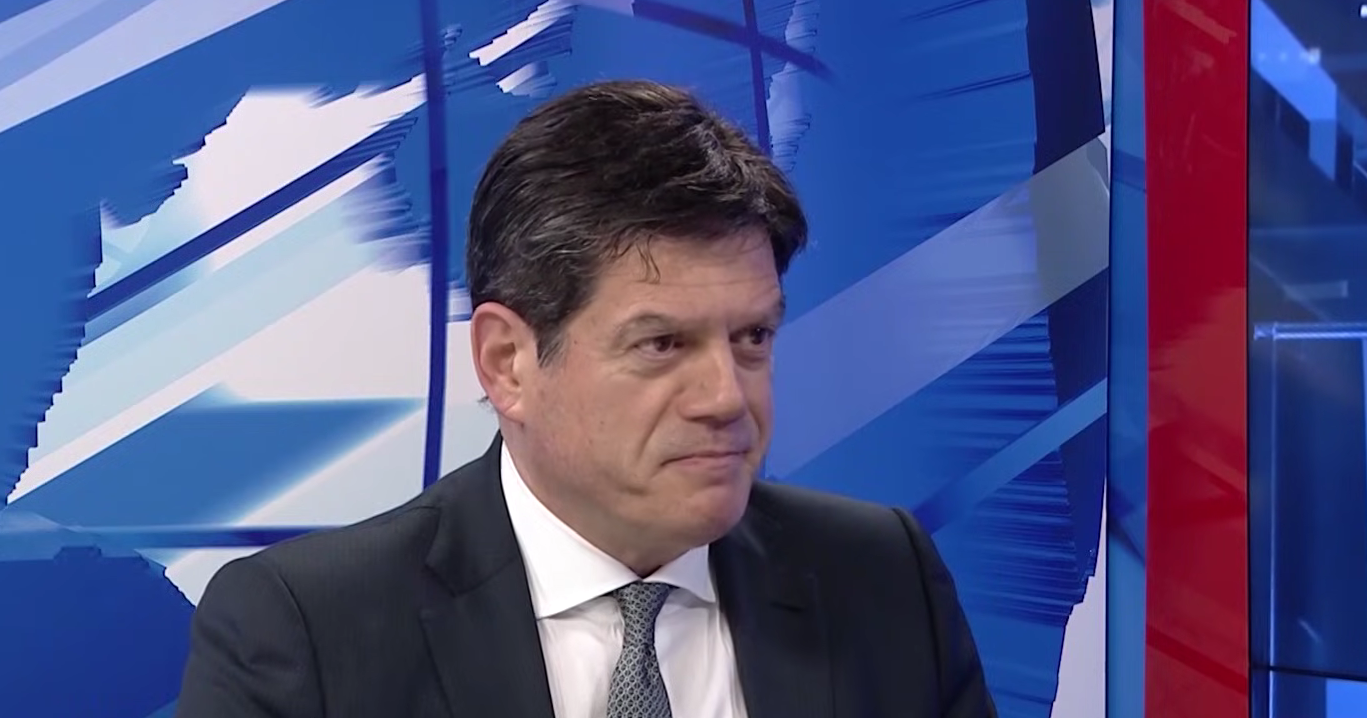
EU Ambassador Mihalis Rokas has delivered a clear message to Macedonia, the European Union remains fully committed to the country’s EU perspective, but there will be no compromise on the rule of law as a precondition for opening accession negotiations. Addressing the National Council for European Integration, Rokas emphasized that judicial independence, freedom from political influence, and adequate staffing and budgeting are non negotiable criteria that apply to all candidate countries equally. “You should have no doubt that the European Commission is fully committed to seeing your country as a full member of the EU,” he stated, while simultaneously warning that “there can be no compromise” on these fundamentals.
The timing of Rokas’s address is significant. The EU enlargement process is in “full swing,” with intergovernmental conferences held with Albania, Ukraine, Moldova, and Montenegro resulting in new chapters opened and others provisionally closed. Montenegro, in particular, has emerged as the region’s success story, having met interim benchmarks in Chapters 23 and 24 by June 2024, opened all 33 chapters, and provisionally closed sixteen as of mid 2026. It is now the only candidate country for which the EU has established an ad hoc working group to prepare the accession treaty, making it the likely next member state. Rokas cited a study showing that Montenegro’s accession would cost EU citizens less than one euro per day, arguing that enlargement is financially sustainable. France and Germany, he noted, were the driving forces behind accelerating the process while gradually giving candidate countries greater access to the EU’s internal market.
For Macedonia, however, the gap between rhetoric and reality remains substantial. The European Commission’s 2025 report found the country’s judicial system “between having some and a moderate level of preparation” with no progress made in the past year. Judicial independence is undermined by interference from other state branches, including parliamentary pressure on Judicial Council members, while limited financial resources and staffing shortages affect the quality and efficiency of justice. The perceived level of judicial independence “is very low,” and recent amendments to the Criminal Code have weakened the legal framework for prosecuting corruption, particularly in high level cases. Civil society representatives describe corruption as the result of “dysfunctional institutions” where public administration has been treated as a space for political party employment rather than merit based recruitment.
Rokas identified three key areas requiring sustained focus, the rule of law, professional and efficient public administration, and filling vacant positions in the judiciary. He specifically called for a strengthened, transparent, and independent Judicial Council, full implementation of the Automated Court Case Management Information System, and broad political consensus on critical reforms, particularly the Electoral Code and the Criminal Code. The EU has supported these efforts through the Instrument for Pre accession Assistance (IPA III), which has allocated €14.2 billion for 2021-2027, and the new €6 billion Reform and Growth Facility. However, Macedonia’s absorption of these funds has been hampered by slow reform implementation. The New Growth Plan introduces a performance based element, countries demonstrating solid progress may receive more than their initial share, while those lagging behind could see reductions.
The ambassador’s message was not entirely critical. He praised the constructive approach of political parties, the positive democratic atmosphere, and the Parliament’s recent legislative work. But his core argument was unmistakable, Macedonia has the capacity to implement reforms, as demonstrated by past achievements including non discrimination laws and the Istanbul Convention, but political will is the missing ingredient. “When it comes to these key reforms, it is very important, of course with our support, to achieve broad political consensus,” he said. The path forward is clear, judicial independence, anti corruption, and institutional reform, but the walking remains Skopje’s responsibility. With Montenegro racing toward the finish line and other candidates gaining ground, Macedonia faces a stark choice, deliver on the rule of law, or watch the enlargement train leave without it.