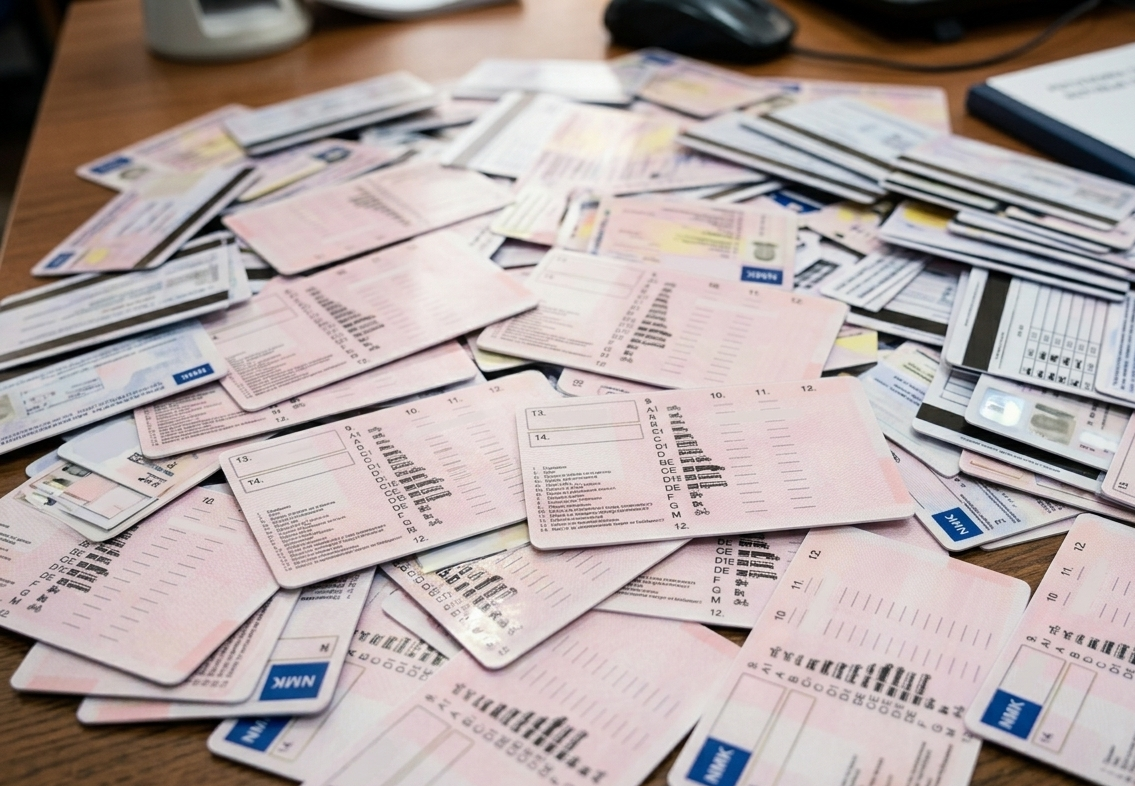
Macedonian citizens living and working in Italy are facing uncertainty over the recognition and conversion of their driving licenses, with authorities from both countries working toward a new bilateral agreement. The issue is particularly important for people whose jobs depend on driving, as the inability to convert their licenses could create serious difficulties once the applicable period for using a foreign license after establishing residency expires. For many Macedonian drivers in Italy, a clear agreement could provide greater certainty over their ability to continue driving legally and working.
Under Italian rules, people who become residents in Italy with a driving licence issued outside the European Union or European Economic Area can generally use that licence for up to one year after acquiring residency, provided the document remains valid and is accompanied by an international driving permit or an official Italian translation when required. After that period, conversion is possible only where Italy has the necessary reciprocal arrangement with the country that issued the license. Otherwise, the driver may have to obtain an Italian license through the normal examination process, potentially creating additional costs and administrative difficulties.
The situation has reportedly created particular concern among Macedonian citizens who rely on driving as part of their employment. Some affected residents say that losing the ability to drive could put their jobs at risk, while obtaining a new Italian license from scratch can require significant time, money and paperwork. The issue can be especially difficult for people who have already established their professional and personal lives in Italy and depend on their existing driving qualifications to maintain their income.
According to information provided by the Macedonian Interior Ministry, talks are already underway with Italian authorities on a bilateral agreement covering the recognition and exchange of driving licenses. The ministry says the two sides are working to harmonize the text of a draft agreement and that efforts are being made to complete the process as quickly as possible. Until the negotiations are finalized, however, drivers remain dependent on the existing rules and any official guidance issued by the authorities.
Why the Licence Agreement Matters for Macedonian Drivers in Italy
The issue is especially significant for professional drivers and people who hold several categories on their licenses. For someone whose employment depends on driving cars, buses or other vehicles, losing access to legally recognized driving privileges could have direct consequences for income and employment. This is why Macedonian citizens living in Italy have reportedly been seeking updates from their embassy and calling for a faster resolution that would clarify their legal position.
Italy’s existing rules also show why bilateral agreements are important in these cases. The Italian Ministry of Infrastructure and Transport maintains a list of non EU and non EEA countries whose licenses can be converted under reciprocal arrangements, and its current guidance includes “Macedonia” in that list, referring to an agreement that entered into force in 1998 and later updates concerning license models. This makes the precise legal status of individual documents and any transition connected with the country’s constitutional name particularly important, rather than suggesting that every Macedonian license is automatically invalid in Italy.
The matter also affects Macedonian visitors who travel to Italy temporarily, although different rules can apply depending on whether someone is visiting or has established residency. Italian authorities state that holders of non EU driving licenses may need an international driving permit issued by the country that issued the license or an official Italian translation, depending on the circumstances. Travelers therefore need to distinguish between the requirements for short term visits and those applying to people who become residents in Italy, particularly when considering how long a foreign license can be used.
The situation ultimately highlights how an administrative issue surrounding driving documents can have much broader consequences for citizens living abroad. For Macedonian drivers in Italy, a clear and functioning system for recognition and exchange of licences would provide greater certainty and help prevent people from having to repeat procedures they have already completed in their home country. It could also be particularly valuable for workers whose employment depends directly on maintaining valid driving privileges.
With negotiations between the two governments continuing, the key question is when a definitive arrangement will be reached and how it will apply to people who already live and work in Italy. Until the authorities provide a clear framework, affected drivers are likely to remain concerned about their ability to continue driving legally and, for some, about the potential impact the situation could have on their employment and financial security.