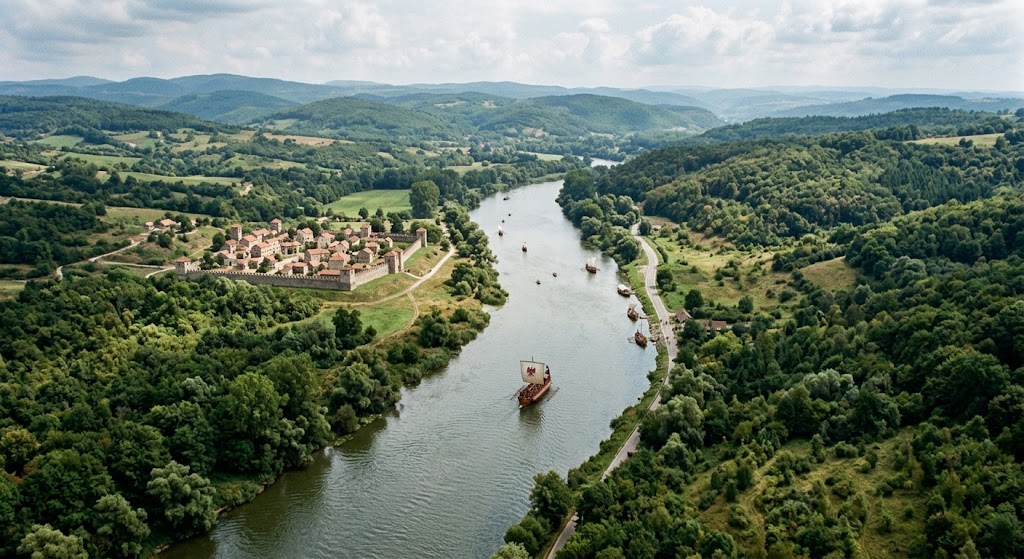
The Croatian Army has launched an unusual rescue operation to remove an 18 meter replica of an ancient Roman ship stranded on a sandbank in the Drava River near Osijek. The six ton vessel became stuck after exceptionally low water levels left it unable to continue its journey, prompting military engineers to step in. Specialized equipment is being used to carefully move the replica from the shallow section of the river. Engineers are positioning equipment around the vessel before gradually pulling it away from the sandbank. The operation is being carried out carefully to prevent damage to the historic ship replica.
The incident is directly linked to the unusually low level of the Drava this summer. Falling water levels have affected navigation in the region and exposed sections of the riverbed that would normally remain underwater. Similar conditions have recently revealed historic shipwrecks elsewhere in the region, including along the Danube. The replica was built to recreate an ancient Roman river vessel and is connected to the region’s Roman heritage. The Drava was an important waterway during antiquity, while archaeological research indicates that rivers in the region were used for military and commercial transportation during the Roman period.
The rescue has attracted attention because it combines modern military capabilities with the preservation of cultural heritage. The stranded vessel is more than a boat caught on a sandbank. It was created to demonstrate what Roman river transportation may have looked like more than a thousand years ago. The operation also highlights the wider consequences of extremely low river levels. Falling water can create serious problems for modern shipping and navigation, while also exposing archaeological remains that have remained hidden for decades or centuries. In this case, however, the low water has created an immediate problem for a vessel that was never meant to become part of the riverbed.
If the operation is completed successfully, the Roman ship replica will be removed from the sandbank and can return to its role as a cultural and historical attraction. The unusual rescue demonstrates how modern technology and military expertise can help protect a vessel designed to recreate an important chapter of Europe’s ancient history.