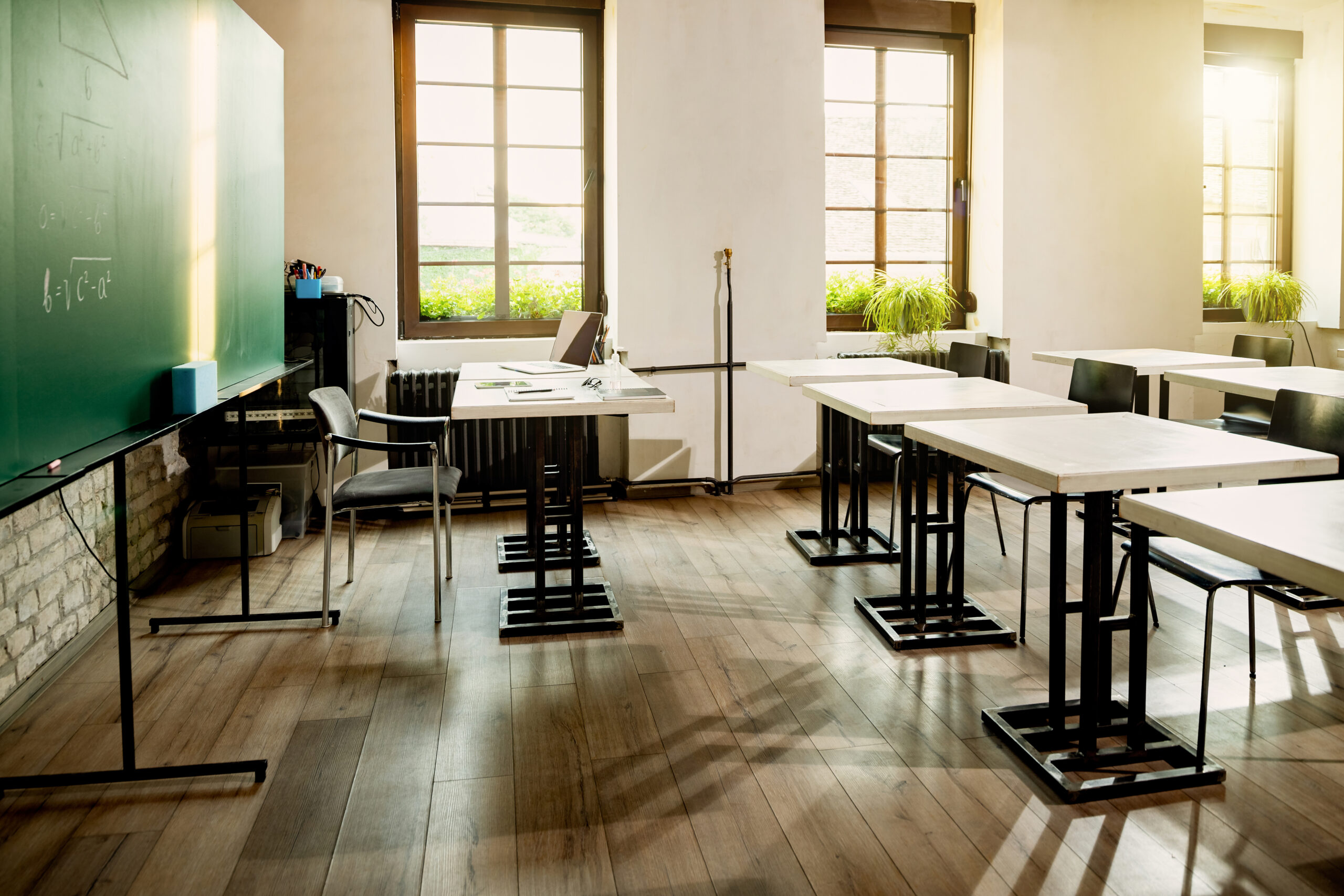
Macedonia is facing a growing demographic crisis as fewer children enter schools, leaving classrooms emptier and putting pressure on the future of some schools. Falling birth rates, emigration, an aging population and regional differences are all contributing to the decline in student numbers. The problem is no longer limited to demographics, as its effects are increasingly visible across the country’s education system. At the beginning of the 2025 and 2026 school year, Macedonia had 174,040 students in regular primary and lower secondary education. That represented a 3.6 percent decrease compared with the previous school year. Only 17,921 children enrolled in first grade, while the country had 927 regular primary and lower secondary schools. The figures highlight the growing gap between the number of schools and the number of children they serve.
The decline has been developing for more than a decade. Official statistics show that enrollment in primary and lower secondary education during 2024 and 2025 was 6.3 percent lower than a decade earlier. The decline was even greater in upper secondary education, where the number of students was 19.6 percent lower than in 2014 and 2015. These trends suggest that Macedonia’s shrinking school population is part of a much broader demographic transformation. The Ministry of Education has acknowledged that demographic changes are having a direct impact on the school system. Officials have identified declining birth rates, emigration, population aging and regional inequalities as major factors behind the reduction in student numbers. The ministry has also said the changes require adjustments to the school network and the distribution of teaching staff. As fewer children enter classrooms, authorities face difficult decisions about how education resources should be organized.
The problem is particularly visible in smaller communities. A declining number of children can leave schools with very small classes and make it increasingly difficult to maintain separate facilities. The Ministry of Education has noted that around two thirds of school buildings are branch schools, yet they educate only 12 percent of the country’s students. This imbalance could become increasingly important as Macedonia’s demographic decline continues. Behind the empty classrooms is an even broader population problem. Official population data has recorded a negative natural increase, meaning more people are dying than are being born. Long term projections from the State Statistical Office also indicate that population decline could continue under several demographic scenarios. Low fertility and migration remain among the biggest challenges affecting Macedonia’s demographic future.
The term “white plague” is often used across the region to describe the combined effects of low birth rates, population decline and emigration. In Macedonia, those effects are becoming increasingly visible in everyday life. Smaller first grade classes, declining enrollment and schools with very few students are among the clearest examples. The consequences could become even more significant if the demographic trend continues. Fewer students do not automatically mean that every affected school will close. However, the education system will increasingly need to adapt to a changing population. Decisions about school networks, student transportation and the future of small branch schools could become more important in the years ahead. Communities with rapidly declining populations may face particularly difficult choices about how to maintain access to education.
Ultimately, Macedonia’s empty classrooms represent much more than an education problem. They are one of the clearest signs of a wider demographic crisis that is reshaping communities across the country. As fewer children are born and more young people leave, the future of schools will increasingly depend on the future of the population itself.