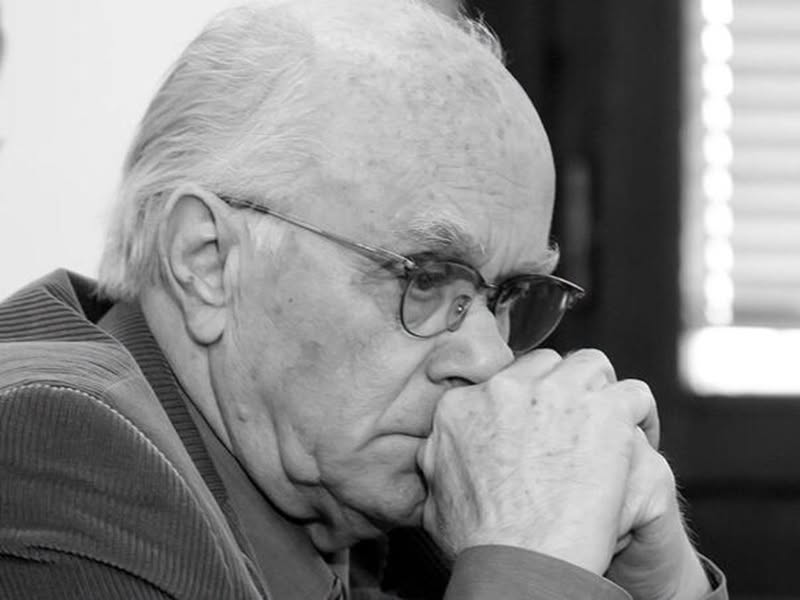
Raif Dizdarević, the former president of the Presidency of the Socialist Federal Republic of Yugoslavia, has died in Sarajevo at the age of 99. Dizdarević passed away on September 2, 2026, at around 7 a.m., marking the death of one of the last prominent political figures from the former Yugoslav state. Born on December 9, 1926, in Fojnica, Bosnia and Herzegovina, he entered political life at a very young age. In 1943, when he was just 17, he joined the Partisan movement and took part in the fight against the Axis occupation during World War II. His early experiences during the war had a lasting influence on his political views and later career. He would eventually become one of the most important Bosnian politicians and Yugoslav diplomats of the postwar period, holding a series of senior positions during some of the most politically complicated decades of the former country.
After the war, Dizdarević gradually moved into state and diplomatic service, building a career that took him far beyond Bosnia and Herzegovina. He studied at the Higher Diplomatic School in Moscow and later worked at Yugoslav diplomatic missions in Bulgaria, the Soviet Union and Czechoslovakia. His experience came during the Cold War, when Yugoslavia occupied a distinctive position between the major political blocs and played an active role in the Non Aligned Movement. Dizdarević eventually moved into increasingly senior political positions. From 1978 to 1982, he served as president of the Presidency of the Socialist Republic of Bosnia and Herzegovina. He then became president of the Assembly of Yugoslavia before taking over as federal secretary for foreign affairs, a position that placed him at the center of Yugoslavia’s international relations.
The highest point of his political career came in May 1988, when Dizdarević became president of the Presidency of SFRY. His one year at the head of the federal state came during an exceptionally difficult period. Yugoslavia was facing a deep economic crisis, growing political divisions and increasingly strong nationalist tensions between its republics. Dizdarević remained in the position until May 1989, when he was succeeded by Slovenia’s Janez Drnovšek. His time in office came only a few years before the political and economic breakdown that would ultimately lead to the dissolution of Yugoslavia. Although his presidency was relatively short, it placed him in one of the most consequential periods in the country’s modern history, when tensions that had been developing for years were becoming increasingly difficult for the federal leadership to contain.
After leaving high office, Dizdarević continued to live in Sarajevo and later documented his experiences and views on Yugoslavia’s turbulent final decades through several books and memoirs. Among his best known works are “From Tito’s Death to the Death of Yugoslavia” and “The Road to Disintegration,” which reflected on the political developments that preceded the collapse of the country. During the war in Bosnia and Herzegovina in the 1990s, he remained in the country rather than accepting offers to leave. His death now marks the passing of a figure whose life spanned nearly an entire century, from the Second World War and the creation of socialist Yugoslavia to the final years of the federation and its eventual breakup. Dizdarević’s long career in diplomacy and politics made him a significant witness to some of the defining events of the former Yugoslavia.