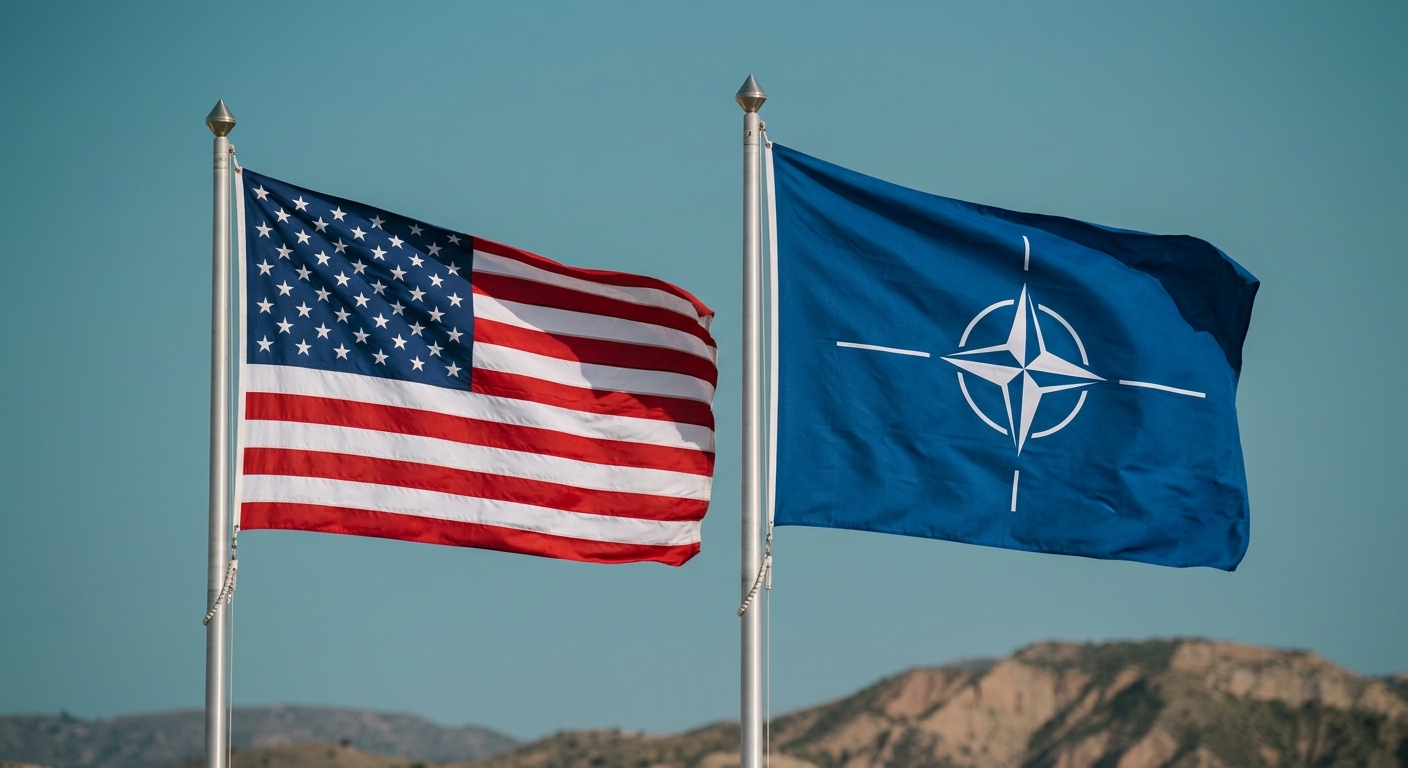
The future of European security and the role of the United States in NATO were among the central issues discussed at this year’s Bled Strategic Forum in Slovenia. A senior representative of the US State Department, Alison Hooker, made clear that Washington does not intend to leave NATO, but stressed that European countries must take greater responsibility for their own defense. Her message comes as NATO allies continue to face a changing security environment shaped by the war in Ukraine, tensions with Russia and growing questions about how much Europe should rely on American military support. Speaking at the forum, Hooker emphasized that the United States remains closely connected to Europe despite political disagreements and differences between the two sides of the Atlantic. At the same time, Washington wants European allies to carry a larger share of the burden when it comes to defense and security.
One of the most important points raised at Bled was Europe’s commitment to significantly increase defense spending. Hooker welcomed the decision by NATO countries to work toward spending five percent of their gross domestic product on defense and related security needs by 2035. She also stressed that simply purchasing more military equipment is not enough to create a stronger alliance. According to the US representative, interoperability between the armed forces of NATO members is essential because allies must be able to operate together effectively during a crisis. Her comments reflect a broader push from Washington for European countries to develop stronger military capabilities while remaining integrated with the United States and other NATO members. Rather than describing the relationship as one in which America is abandoning Europe, the message from the forum was that the alliance is entering a period in which European countries are expected to contribute much more to their own security.
The war in Ukraine was another major focus of discussions at Bled, with participants warning that the conflict remains a serious security issue for the wider European continent. Ukrainian Deputy Foreign Minister Yevhen Perebyinis argued that Russia’s war should not be viewed only as a conflict between Moscow and Kyiv, saying that its consequences affect Europe as a whole. Participants also discussed the need for continued military and political support for Ukraine, particularly in areas such as air defense. American diplomat Matthew Palmer said that the Trump administration’s approach to the war has focused heavily on the balance between strength and weakness, while Ukrainian representatives stressed that their military experience could become an important part of Europe’s future security architecture. The discussions also touched on Ukraine’s long term aspirations for closer integration with European and transatlantic institutions, although NATO membership remains dependent on agreement among all alliance members.
Beyond military issues, the forum highlighted a broader debate about Europe’s relationship with Washington and the future of transatlantic cooperation. Hooker said the United States and Europe remain connected by deep historical and civilizational ties, while also raising concerns about migration, border security, national sovereignty and the growing transfer of powers to international institutions. She argued that both sides of the Atlantic should work together to reform multilateral institutions when possible, while questioning whether institutions that no longer serve national interests should continue in their current form. The discussions in Bled therefore pointed toward a changing NATO relationship rather than an American withdrawal. The United States appears determined to remain part of the alliance, but wants European governments to become more capable and responsible for their own defense. For Europe, the challenge will be finding the balance between greater strategic independence and maintaining the close transatlantic partnership that has shaped its security for decades.