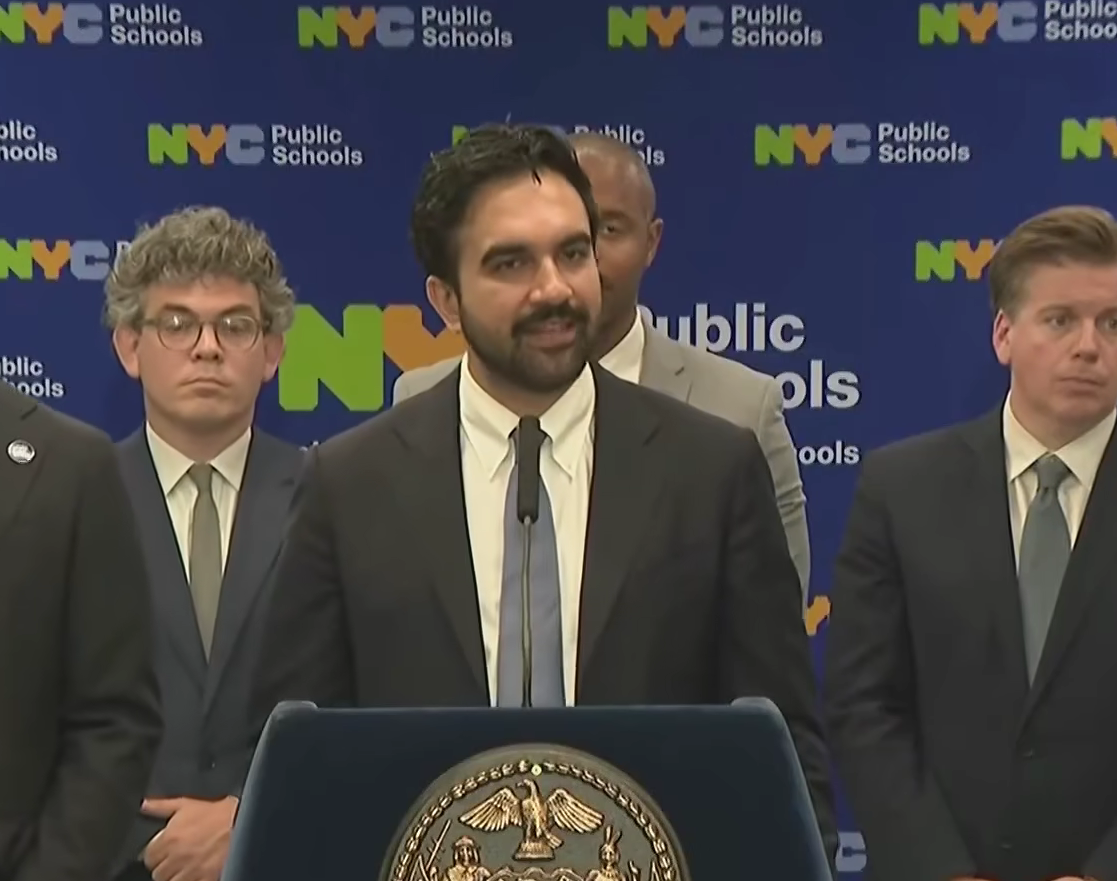
New York City has introduced one of the most restrictive artificial intelligence policies in American public education, announcing a one year moratorium on student facing generative AI tools for children from pre kindergarten through eighth grade. The ban, unveiled by Mayor Zohran Mamdani and Schools Chancellor Kamar Samuels, will affect roughly 600,000 students, or about two thirds of the city’s public school enrollment, when classes resume next week.
Under the new rules, generative AI software, including chatbots and AI tutors, will be prohibited for younger students, while companion chatbots will be banned across all grades. High school students will have more limited access, alongside twice yearly AI literacy classes and several closely monitored pilot programs. The district will use the coming year to study how the technology affects learning and child development.
The policy represents a major reversal for a district that was once among the first to embrace AI in classrooms. In 2023, New York City schools briefly blocked ChatGPT before changing course and introducing a custom AI powered teaching assistant developed with Microsoft. The new approach instead emphasizes human interaction and independent learning.
Mayor Mamdani argued that children need teachers, relationships and opportunities to solve difficult problems independently. The moratorium removes roughly 40 educational AI tools currently in use and creates a Technology in Schools Coalition made up of educators, parents, students and experts who will evaluate the policy and recommend longer term guidelines.
New York Adds Strict Screen Time Limits
The NYC AI school ban comes alongside strict new limits on student screen time. Children in second grade and below will not use one to one devices, while students in grades three through five will face a recommended limit of 30 minutes of daily screen time on individual devices. Middle school students will have a recommended limit of 45 minutes.
Teachers will still be allowed to use approved AI tools for lesson planning, translation and administrative work. However, they will not be permitted to use the technology for grading assignments, monitoring behavior, counseling or developing special education plans. Exceptions will apply to assistive technology for students with disabilities and multilingual learners.
The city will also launch a limited AI pilot at a small number of high schools. The program will use vetted platforms such as Quill for English language support and Edia for mathematics, with built in safeguards and time limits intended to ensure students remain the primary thinkers and participants in the learning process.
New York City is not alone in reconsidering the rapid spread of AI in schools. The Los Angeles Unified School District, the nation’s second largest school system, has temporarily blocked generative AI tools on student devices while developing its own policy. Los Angeles also moved in June to restrict screen time before second grade. At least 37 states have issued some form of guidance on AI in schools, although New York’s moratorium for elementary and middle school students is among the most restrictive approaches.
The announcement follows months of pressure from parents and lawmakers. More than half of the New York City Council signed a letter urging Mamdani and Samuels to pause AI use in schools, citing concerns about learning outcomes and mental health. In July, principals were also instructed to halt software purchases while the administration finalized its policy, creating uncertainty for schools preparing for the new academic year.
For now, the nation’s largest school district is betting that less technology may be better for its youngest learners. The NYC AI school ban will give officials a year to assess whether restricting generative AI improves classroom engagement and learning, or whether the policy creates new challenges for schools trying to prepare students for an increasingly AI driven world.