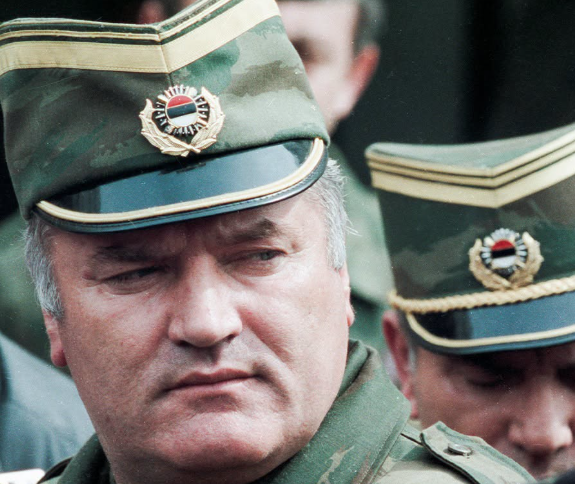
The planned funeral of former Bosnian Serb military commander Ratko Mladić has triggered a new wave of controversy across the region following his death in The Hague. Mladić, who was convicted of genocide, war crimes and crimes against humanity and sentenced to life imprisonment, died while in United Nations custody at the age of 84. Serbian authorities have said that his body will be returned to Serbia and that he will receive military and state honors, a decision that has generated strong reactions from neighboring countries, victims’ groups and political leaders. The Serbian Justice Minister Nenad Vujić said that the government is prepared to organize the return of the body and follow the relevant protocols, while the final decision on the burial location remains with Mladić’s family. The planned ceremony has already become a highly sensitive political issue because of Mladić’s role in the Bosnian War and the international court’s findings concerning some of the conflict’s worst atrocities.
Mladić became one of the most recognizable military figures of the Bosnian War, serving as commander of the Army of Republika Srpska between 1992 and 1995. His forces were responsible for the prolonged siege of Sarajevo, during which thousands of civilians were killed, while he was also convicted for his role in the Srebrenica genocide, where more than 8,000 Bosniak men and boys were killed in July 1995. The International Criminal Tribunal for the former Yugoslavia found him guilty in 2017, and his life sentence was upheld on appeal in 2021. He remained in detention in The Hague until his death, despite repeated requests from his legal team for compassionate release because of his deteriorating health. His death has reopened painful memories of the 1990s conflict and once again exposed the deep divisions that remain over how his legacy should be remembered.
The decision to give Mladić military and state honors has been particularly controversial outside Serbia. Croatian Prime Minister Andrej Plenković publicly condemned what he described as the glorification of a convicted war criminal, arguing that such actions demonstrate that Serbia has still not fully confronted the legacy of the wars of the 1990s. Meanwhile, political figures in Republika Srpska and Serbia have expressed a very different view, with some describing Mladić as a figure who defended Serbs during the war. Banja Luka Mayor Draško Stanivuković has announced that he intends to attend the funeral in Belgrade, adding to the political significance surrounding the planned ceremony. The contrasting reactions demonstrate how Mladić remains a deeply divisive figure more than three decades after the beginning of the Bosnian conflict.
The controversy surrounding the funeral is likely to continue as Serbia prepares to receive Mladić’s remains and his family decides where he will be buried. Serbian officials have emphasized that the government is ready to assist with the necessary procedures, while legal and political discussions continue over the exact nature of the ceremony. For many survivors and families of victims, however, the prospect of military and state honors for a man convicted of genocide represents a painful reminder of unresolved questions about the region’s past. For his supporters, the funeral is being viewed as an opportunity to honor a former military commander. The opposing interpretations are likely to make Mladić’s final farewell far more than a private family ceremony, turning it into another major political and symbolic moment in the Balkans.