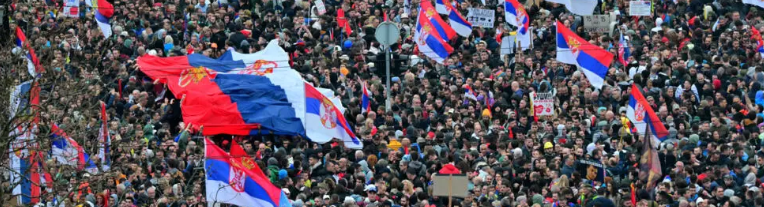
Serbia’s student movement is formally entering the country’s parliamentary election race, marking a major shift from months of protests and university blockades toward direct political participation. The group, known as “Students’ List, Students Are Winning,” was officially formed on September 9 ahead of the early parliamentary elections scheduled for October 25. The students have said they are taking responsibility for the country’s future after concluding that Serbia’s institutions have failed to adequately respond to their demands. The group has already established a citizens’ organization and is now moving toward the formal submission of its electoral list to the Republic Electoral Commission.
The students are expected to present the complete list of candidates as part of the formal electoral process, with 250 names ultimately expected to appear on the parliamentary list. Fourteen people have so far been publicly identified as signatories of the citizens’ group, including university professors, academics, educators and professionals from different fields. The students have emphasized that the people who will represent them are not necessarily students themselves, but individuals they consider qualified and experienced enough to contribute to solving the country’s problems. They have also said that they have prepared what they describe as a detailed social program and selected experts to represent the movement in the election.
The movement has now begun asking citizens across Serbia to support its participation by signing for the electoral list. Signing points have been announced in Belgrade and numerous other cities and municipalities, with long lines reported at some locations as citizens waited to provide their signatures. The students have thanked supporters for their patience, while organizers have said that the process is continuing across the country. Under the electoral rules, the citizens’ group needs to collect the required signatures before its list can formally enter the election process. The students have presented the upcoming vote as an opportunity for citizens to decide on the direction of Serbia after a period of intense political and social tension.
The student movement emerged from the large anti government protests that followed the November 2024 collapse of the railway station canopy in Novi Sad, which killed 16 people. Students subsequently organized faculty blockades and protests, demanding accountability, transparency and institutional responsibility, eventually calling for early parliamentary elections. President Aleksandar Vučić has now scheduled those elections for October 25, bringing the students’ movement directly into the electoral contest. Their decision to form their own list could significantly reshape the political landscape, particularly because several opposition groups have expressed support for the students and some have indicated that they will not compete separately. For a movement that spent nearly two years applying pressure from outside the political system, the coming weeks will now represent its first major test at the ballot box.