One of Dubrovnik’s most historic public parks has reopened after its first complete and systematic restoration since it was established in 1898. Gradac Park, the city’s largest and oldest existing public park, has now returned to full use following a major project aimed at preserving its cultural and historical character while creating a safer, more functional space for residents and visitors. The reopening on September 16 was marked by performances and activities for different generations.
The restoration is significant because previous interventions at Gradac were carried out at different times but never covered the entire park. The city says the latest project represents the first comprehensive renovation since the park’s opening more than 120 years ago. Earlier works took place during the period between the two world wars and after the Second World War, with a major intervention recorded in 1929.
Preserving the park’s historic appearance was one of the central goals of the project. Gradac is not simply a recreational area but part of Dubrovnik’s urban and cultural landscape. The park was created through the efforts of the citizens’ association “Dub,” which contributed to the development of several green spaces in the city around the turn of the 20th century. Its cultural importance was formally recognized in 1966, when the entire park was declared a cultural monument.
Gradac Park Restoration Preserves Historic Greenery
The restoration also included a major renewal of Gradac’s greenery. According to the City of Dubrovnik, the completed project preserved hundreds of existing trees while introducing hundreds of new ones representing more than 30 species. More than 13,000 additional plants and perennials were also incorporated into the landscape. The aim was to improve the park’s green character without losing the appearance and identity that have made it recognizable over generations.
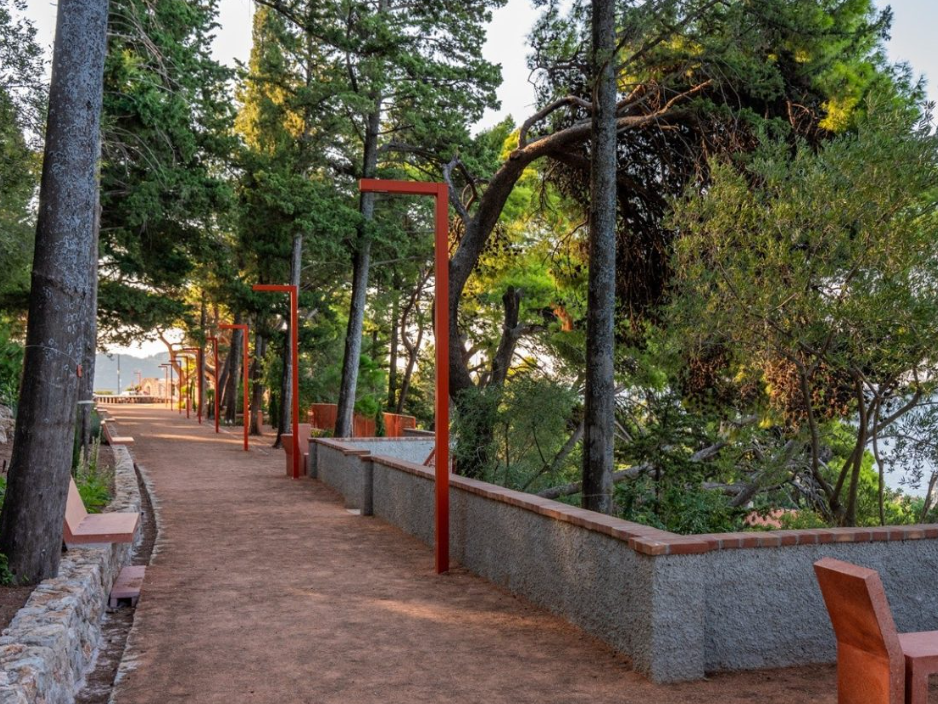
Walking routes were also renewed, including the creation of a new pedestrian path through a previously unused part of the park. The project included improvements to the existing fountain, public lighting and park furniture, while new viewpoints provide visitors with additional places to experience the surroundings. These changes are intended to make the park easier to use as an everyday public space rather than simply a historic site.
The facilities for families and community activities have also been expanded. The children’s playground was refurbished, while a small auditorium was created in the northern part of Gradac for gatherings, cultural events and outdoor activities. An accessible public toilet, new hydrant network and irrigation system were also installed as part of the infrastructure improvements.
The new irrigation system is particularly relevant to the long term maintenance of the park’s extensive vegetation. The project was designed not only to improve the appearance of Gradac immediately after its reopening but also to provide infrastructure that can support the green areas over time. The new hydrant network additionally strengthens the park’s fire protection infrastructure.
The restoration forms part of Dubrovnik’s wider Green Infrastructure Network project, which includes improvements to other public green spaces in the city. The program covers Gradac as well as the park in Pile and the park below the plane tree in the Brsalje area. The wider initiative is being supported through grants provided through the Integrated Territorial Investments mechanism, with €5.56 million in grant funding allocated for the projects.
Dubrovnik Expands Urban Green Infrastructure
The Gradac project itself represents a substantial municipal investment. The City of Dubrovnik said the final contracted value of the restoration works was €3.72 million excluding VAT, or approximately €4.65 million including VAT. The works were carried out by Texo Molior, while professional supervision was provided by Empora. Earlier project documentation had placed the total investment at around €4.41 million including VAT, showing how the project’s financial framework developed during implementation.
The restoration also reflects a broader effort by Dubrovnik to expand and improve its urban green infrastructure. In 2026, the city continued work on the park below the plane tree in Pile, while another project focused on creating a greener corridor around the historic city area through additional tree planting and landscaping. These projects are intended to increase the quality and resilience of public spaces while improving their everyday use.
The reopening itself was designed as a public celebration rather than simply an infrastructure milestone. The program included performances by TRIKO Circus Theatre for children and families, followed by an official ceremony and performances by young Dubrovnik musicians from the bands Bakula and New Noise. The groups operate under the Dubrovnik Centre for Children, Youth and Family, with mentoring from the Podroom TUP association.
With the restoration now complete, Gradac is expected to once again serve as a place for recreation, relaxation, social activities and everyday community life. The project combines the preservation of a historic landscape with new facilities intended to make the park more useful to residents and visitors. For a city where historic architecture and tourism are central to its identity, maintaining accessible green spaces also provides an important complement to the heavily visited historic core.
The reopening therefore marks more than the return of one of Dubrovnik’s parks to public use. After decades of partial interventions, Gradac has undergone its first full restoration in more than a century, with its historic character preserved alongside new infrastructure, improved greenery and additional public facilities. The challenge now will be maintaining the restored landscape and ensuring that the park remains both a protected part of Dubrovnik’s heritage and an active public space for future generations.