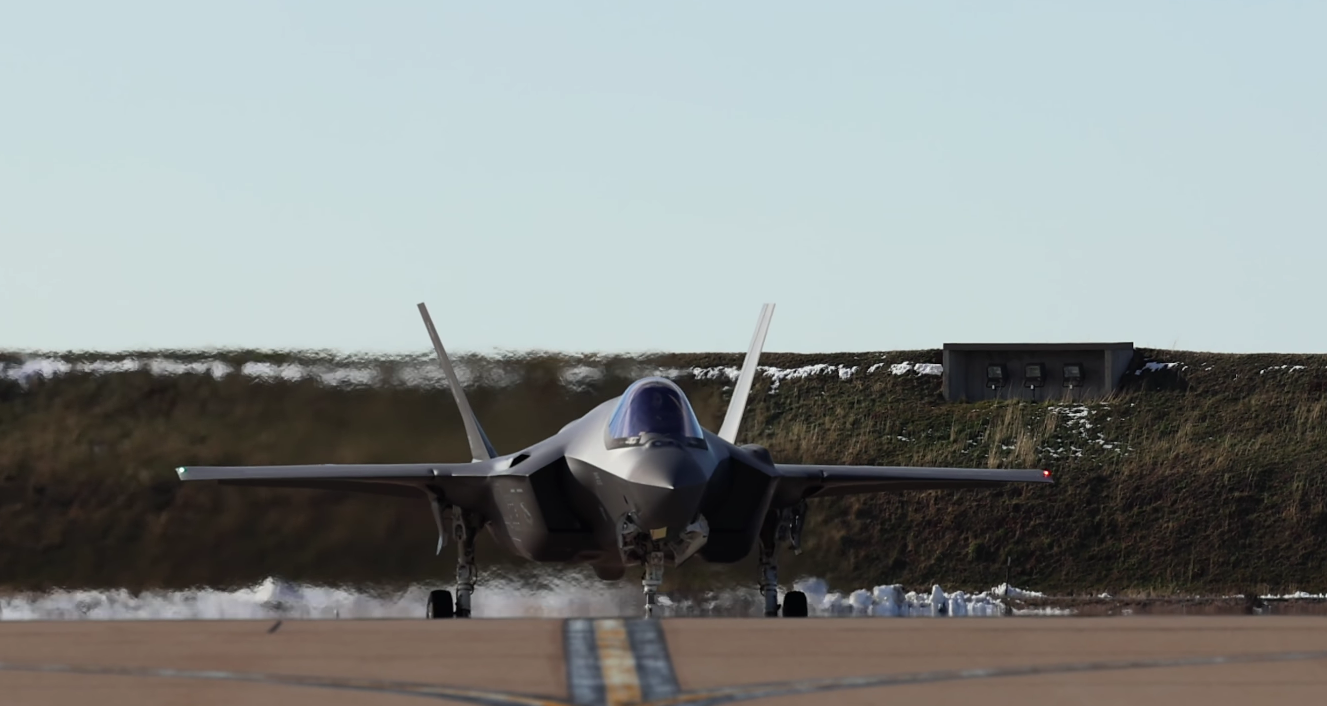
The United States has taken a major step toward expanding its defense relationship with Saudi Arabia by approving a potential $24.3 billion sale of 48 F-35 fighter aircraft and associated equipment to the kingdom. The State Department announced the decision on September 17, saying the proposed package would include aircraft, engines, communications equipment, spare parts and other support. The agreement still requires congressional review, meaning the announcement does not yet represent a completed sale.
The proposed deal comes at a particularly sensitive moment for the Middle East, with Saudi Arabia facing heightened regional security pressures and the United States seeking to manage several overlapping conflicts and partnerships. Riyadh has been interested in acquiring the F-35 for years, and Saudi officials made a direct request for the aircraft during the first Trump administration in 2025. The latest approval signals that Washington is prepared to consider giving Saudi Arabia access to one of its most advanced military platforms.
The F-35 is a fifth generation aircraft developed by Lockheed Martin and used by the United States and several international partners. Israel has operated the aircraft for years and remains the only Middle Eastern country currently flying the system. A Saudi acquisition would therefore represent a significant change in the regional military landscape and would make Riyadh the first Arab country to move toward operating the aircraft.
Saudi F-35 Deal Raises Regional Security Questions
One of the central issues surrounding the proposed Saudi F-35 deal is the longstanding U.S. policy of protecting Israel’s “qualitative military edge.” American arms transfers to Middle Eastern countries are generally examined with that principle in mind, meaning Washington must consider how new weapons supplied to regional partners could affect Israel’s military capabilities. Any eventual Saudi arrangement would therefore be closely watched for the measures and conditions attached to the transfer.
The package announced by the State Department includes 48 aircraft and 49 associated engines, as well as equipment and services intended to support the potential fleet. The estimated value is $24.3 billion. The figure represents the possible value of the full package rather than an indication that Saudi Arabia has already paid that amount, since the proposed transaction remains subject to the U.S. arms sales process and congressional review.
Saudi Arabia welcomed the announcement, describing it as another step in the long running defense partnership between Riyadh and Washington. The kingdom has been one of the largest purchasers of American military equipment and has sought to modernize its armed forces while maintaining close security ties with the United States. At the same time, Saudi Arabia has also pursued relationships with other international suppliers as part of its broader effort to diversify its defense partnerships.
The timing of the proposed sale is especially significant because Saudi Arabia is facing growing security challenges connected to the wider regional conflict. Recent fighting involving Yemen’s Iran aligned Houthi movement has affected Saudi security concerns, while attacks and disruptions involving regional infrastructure and shipping have increased pressure on Gulf states. U.S. officials have recently discussed security developments with Saudi leadership, including cooperation involving intelligence and support.
The broader U.S.-Saudi relationship has also expanded beyond military cooperation. Saudi Crown Prince Mohammed bin Salman has pursued Vision 2030, an ambitious program designed to diversify the kingdom’s economy, develop new industries and reduce its dependence on oil revenues. Military modernization forms part of that broader national strategy, while Washington views its relationship with Riyadh through the lenses of regional security, energy markets, trade and diplomacy.
The F-35 question has also been connected to previous diplomatic discussions between Saudi Arabia, Israel and the United States. During the Biden administration, American officials explored the possibility of a wider agreement that could have included Saudi normalization of relations with Israel alongside security and economic commitments. Those negotiations did not produce a final agreement, but the issue demonstrated how major weapons transfers can become linked to broader diplomatic arrangements in the Middle East.
U.S.-Saudi Defense Ties Enter New Phase
The Trump administration has placed a strong emphasis on expanding defense and economic ties with Saudi Arabia. In 2025, Washington announced a much larger framework of proposed defense cooperation with Riyadh, described by the White House as worth nearly $142 billion. The potential Saudi F-35 deal would add another major element to that relationship and could become part of Washington’s wider strategy for maintaining partnerships with Gulf countries during a period of regional instability.
Congress now has an important role in determining what happens next. Major U.S. arms sales to foreign governments can face scrutiny from lawmakers, who may examine the strategic, legal and human rights implications of a proposed transfer. Saudi Arabia’s record has previously generated congressional criticism, particularly following the 2018 killing of journalist Jamal Khashoggi. Those earlier disputes remain part of the political background surrounding U.S.-Saudi relations.
The proposed sale also highlights the difficult balance Washington faces in the region. The United States is simultaneously trying to strengthen relationships with Arab partners, maintain its security commitment to Israel and respond to threats involving Iran and other regional actors. Providing advanced military equipment to Saudi Arabia could deepen cooperation with Riyadh, while also requiring Washington to address questions about regional military balance and the protection of sensitive technology.
For Saudi Arabia, the proposed acquisition would represent another stage in its effort to modernize its armed forces and strengthen its relationship with Washington. For the United States, the decision demonstrates the continuing importance of Saudi Arabia as a strategic partner at a time when security conditions across the Middle East are changing rapidly. However, the proposal is not yet final, and congressional review could still affect the transaction.
The State Department’s approval therefore marks the beginning of another stage rather than the conclusion of the deal. Whether the proposed $24.3 billion package ultimately moves forward will depend on the remaining U.S. approval process and discussions between Washington and Riyadh. Regardless of the final outcome, the announcement has placed U.S.-Saudi defense cooperation, Israel’s regional military position and the wider Middle East security environment back at the center of international attention.