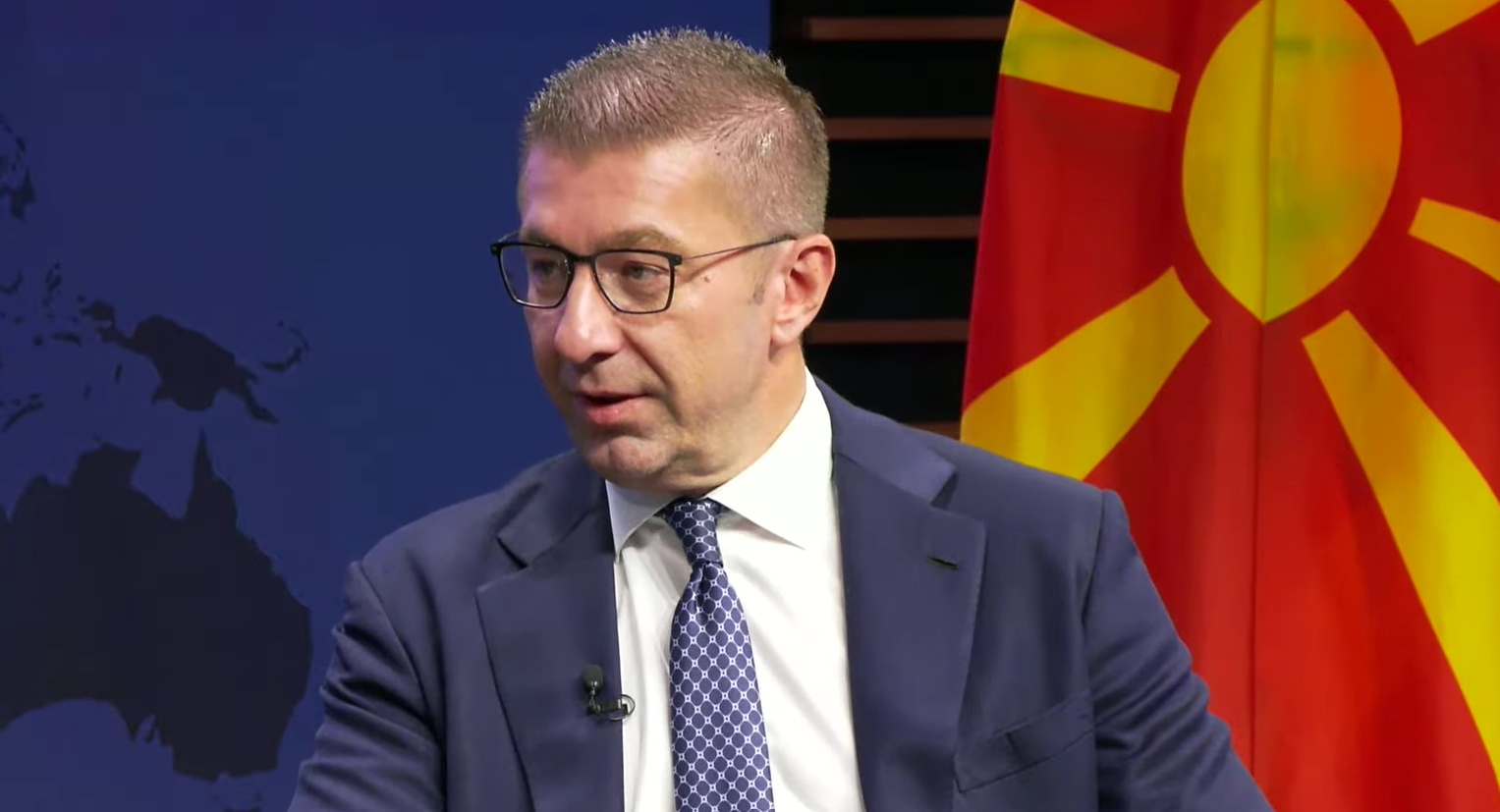
Prime Minister Hristijan Mickoski used his visit to Washington to reaffirm Macedonia’s commitment to European Union membership while arguing that the country’s economic development should continue regardless of the pace of accession. Speaking at the Atlantic Council, Mickoski said European integration should be based on reforms, merit and a predictable process, while his government would continue working on infrastructure, energy, digitalization and high technology.
The visit placed Macedonia’s relationship with both the European Union and the United States at the center of the government’s strategic agenda. Mickoski described the partnership with Washington as one that has developed over decades and said his government wants to strengthen it further. He also presented the country’s geographical position in the Balkans as an opportunity to expand its role in transport, energy and regional connectivity.
European integration remains a central objective for Macedonia, which began accession negotiations with the EU in 2022 after years of political and institutional preparation. The European Commission continues to describe enlargement as a merit based process, with progress depending on reforms and alignment with EU standards. In its latest enlargement assessments, the Commission emphasized the importance of progress in areas including democracy, the rule of law and fundamental rights across the candidate countries.
Mickoski argued that Macedonia needs a more predictable accession process and said the country should be assessed according to the reforms it implements. He also said that Skopje would continue discussions with European partners over the challenges surrounding its path toward membership. The European Parliament, meanwhile, has also stated that Macedonia’s progress toward accession remains dependent on continued reforms and the fulfillment of conditions connected to the negotiating process.
Macedonia EU Reforms and Economic Development
At the same time, the government is presenting economic development as a priority that should move forward independently of the timetable for EU membership. Mickoski pointed to Macedonia’s 4.3% year on year GDP growth in the second quarter of 2026 as evidence of economic expansion. Official data from the State Statistical Office confirms that GDP increased by 4.3% compared with the same quarter of 2025, while gross fixed capital formation also increased during the period.
Infrastructure is one of the main areas highlighted by the government. Mickoski pointed to continued investment in roads, railways and energy transmission networks, arguing that better connections could strengthen Macedonia’s position within regional supply and transport routes. The government has also emphasized the strategic importance of Corridors 8 and 10, which connect the country with neighboring states and wider European transportation networks.
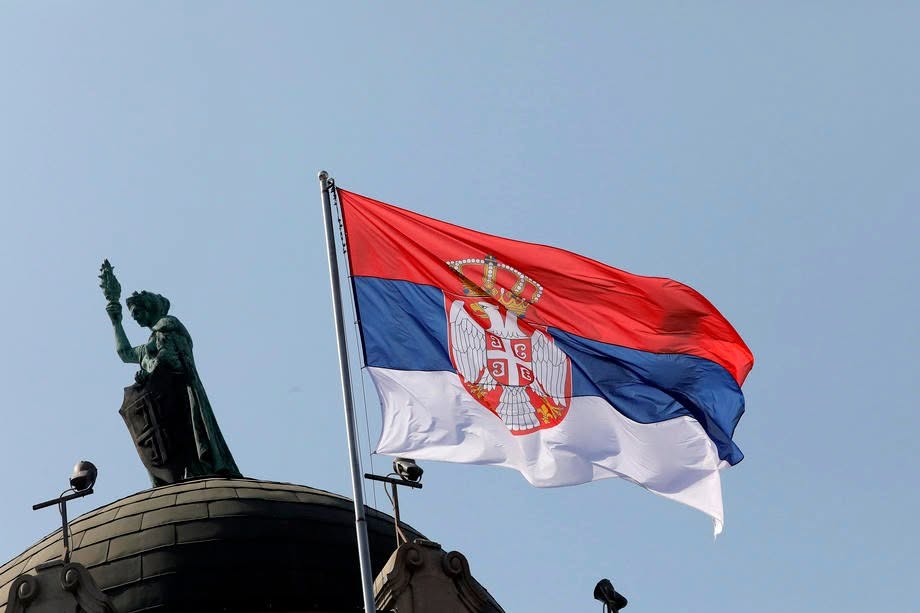
Energy connectivity is another major component of the development strategy. Macedonia is working on gas links with Greece and Serbia that are intended to provide additional routes for energy supplies and connect the country’s system more closely with regional infrastructure. The Greece connection is expected to provide access to gas infrastructure linked to the Alexandroupolis LNG terminal, while the planned Serbia interconnector would create another route toward Central Europe.
The Serbia connection has also moved forward, with an agreement signed in August 2026 covering the design and construction of the Macedonian section of the gas interconnector. These projects are part of a broader effort to diversify energy routes and strengthen regional connectivity. For Macedonia, expanding connections with neighboring countries could also reduce dependence on individual supply routes and give the country a greater role in regional energy networks.
Digital infrastructure and cybersecurity were another focus of Mickoski’s Washington presentation. The government plans to establish a primary data center that would connect public institutions and work alongside an existing secondary facility designed for data recovery. The planned system would also make use of cloud infrastructure, reflecting the government’s broader emphasis on digital public services and the protection of government information.
Artificial intelligence and high technology were presented as a third major element of the country’s development strategy, alongside infrastructure and energy. Macedonia has already been included in the EU’s wider AI development initiatives, including the planned establishment of an AI Factory Antenna. The government has increasingly presented digitalization and technology investment as areas that could attract new businesses and create higher value economic activity.
Macedonia Strengthens U.S. and European Partnerships
The country’s economic agenda also intersects with its European integration process. In May 2026, the European Commission released €65.7 million to Macedonia under the EU’s Reform and Growth Facility after assessing reform measures in areas including education and digitalization. The funding is part of a wider EU program designed to support reforms and economic convergence in the Western Balkans while countries work toward closer integration with the European market.
Mickoski also reaffirmed Macedonia’s commitments as a NATO member, including continued implementation of its defense obligations and gradual increases in defense spending. He presented NATO membership and the strategic partnership with the United States as complementary to the country’s European ambitions, rather than alternatives to them.
The prime minister also connected infrastructure development with wider regional stability. He argued that improved transport links could eventually contribute to reconstruction efforts in Ukraine, while stronger energy and transportation connections could make Macedonia more important within European regional networks. These ambitions depend on long term investment, coordination with neighboring countries and continued access to European and international financing.
The overall message from Washington was therefore built around two parallel objectives: maintaining Macedonia’s long term commitment to EU membership while pursuing domestic economic development without waiting for the accession process to reach its final stages. The government says reforms, investment and European integration can move forward simultaneously, with infrastructure, energy security, technology and digitalization serving as major components of that approach.
For Macedonia, the challenge will be translating these priorities into measurable reforms and completed projects while maintaining cooperation with both European and American partners. The EU’s existing framework makes clear that accession depends on progress against established criteria, while the country’s economic indicators and investment plans will continue to shape its development independently of the final membership timetable.
Mickoski’s Washington appearance therefore presented a strategy in which European integration remains a stated long term objective, but economic and institutional development is treated as an immediate priority. The government is seeking to strengthen ties with the United States, advance its EU related reforms and use its geographic position to develop infrastructure, energy connections and technology capacity. How successfully these plans are implemented will determine the extent to which Macedonia can turn its strategic ambitions into longer term economic and institutional gains.