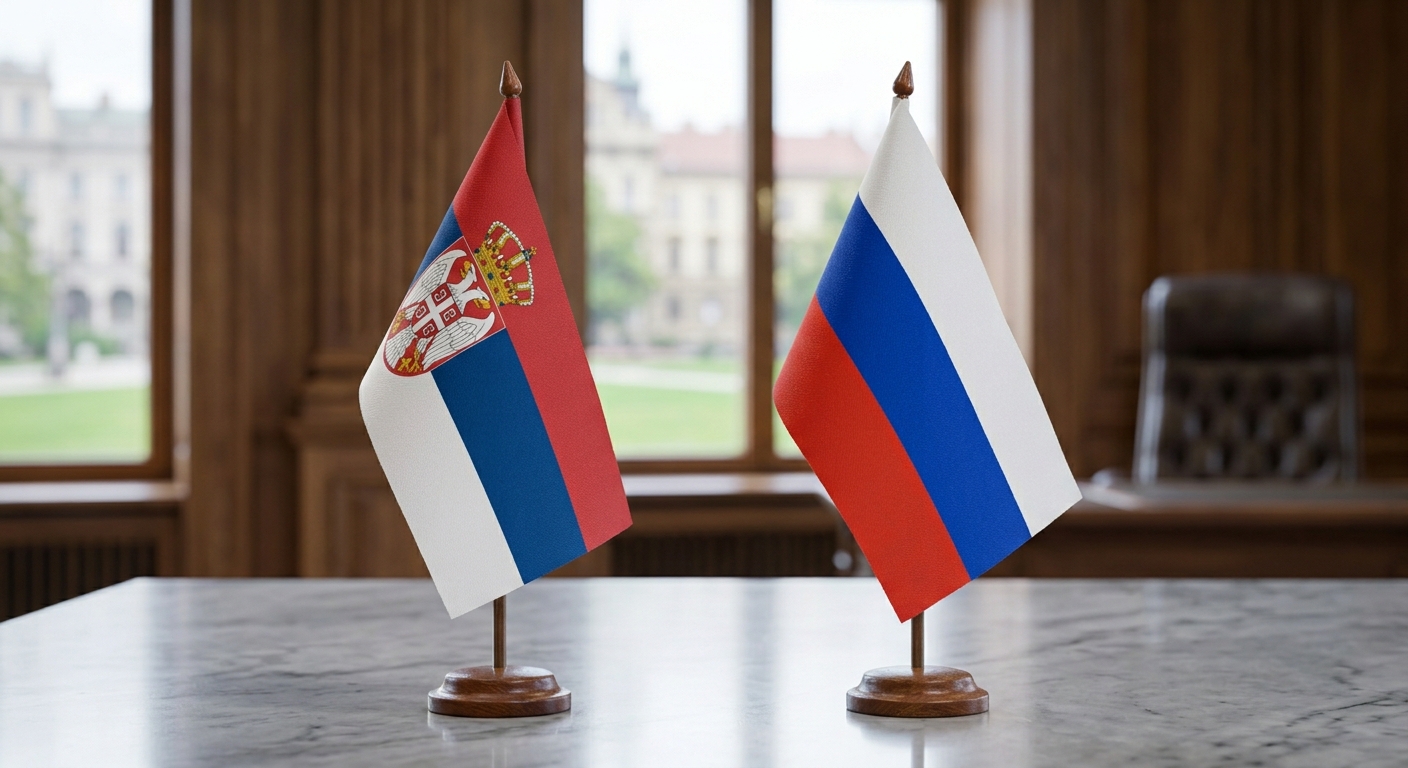
Serbia’s newly formed student backed political list says that, if it enters government, it would maintain the country’s current position against introducing restrictive measures on Russia. The statement places foreign policy and Serbia’s relationship with Moscow among the issues expected to feature in the parliamentary election campaign, while also highlighting the challenge of balancing Serbia’s European integration process with its position on the war in Ukraine.
The position was published by the “Students in Blockade” movement, which is entering the election under the “Students Win” list. In its foreign policy program, the group said Serbia should continue to view sanctions as a political decision rather than an effective instrument for resolving political and security disputes. The students also referred to Serbia’s historical experience with international sanctions and argued that such measures can have consequences for ordinary citizens.
The announcement came after repeated questions from President Aleksandar Vučić about whether the student movement would introduce sanctions against Russia if it gained political power. Ilija Srdanović, the first candidate on the student list, has been invited to participate in a televised election debate with Vučić. The student list has also clarified that Srdanović is its first candidate rather than its formal “leader” under Serbia’s electoral rules.
Serbia’s Russia Sanctions Position and EU Membership
The issue is significant because Serbia has maintained a different position from most European Union members over sanctions connected to Russia’s war against Ukraine. The European Commission’s latest country assessment states that Serbia has not aligned itself with EU restrictive measures against Russia, although Belgrade has continued cooperation with the EU on preventing sanctions circumvention. Serbia has also condemned Russia’s invasion at the United Nations and supported Ukraine’s territorial integrity, creating a foreign policy position that combines condemnation of the war with a refusal to join the EU sanctions regime.
Serbia’s position is particularly important because the country remains an EU candidate and its foreign policy alignment is part of the accession process. EU institutions assess candidate countries on their alignment with the Union’s common foreign and security policy, including positions on restrictive measures. An EU parliamentary document published in February 2026 noted that Serbia had not imposed sanctions on Russia and that its overall alignment rate with EU foreign and security policy had fallen in previous years.
The question of sanctions is therefore connected to a wider discussion about Serbia’s strategic direction. Belgrade continues to pursue EU membership while maintaining longstanding political, economic and cultural ties with Russia. This creates pressure for Serbia to navigate between its European integration ambitions and its existing foreign policy choices.
Recent analysis by the ISAC Fund found that Serbia’s alignment with EU foreign policy declarations and measures was around 60% during the first half of 2026. The organization said the figure should be treated as a descriptive indicator rather than a definitive measure of the country’s overall progress, but identified Russia related restrictive measures as one of the areas where Serbia continues to differ from the EU.
At the same time, Serbia has aligned itself with some EU restrictive measures during 2026. EU statements show that Belgrade joined several decisions concerning restrictive measures on issues other than the central Russia sanctions regime. This illustrates that Serbia’s relationship with EU foreign policy is not simply a complete rejection of European sanctions policy, but rather a selective approach in which the government has chosen not to follow the EU’s main sanctions regime against Russia.
The student movement’s statement brings that existing policy into the election campaign and presents it as a principle it would maintain if it gained political influence. Its program therefore gives voters a clearer indication of where the group stands on one of the most sensitive questions in Serbian foreign policy. Whether the position remains unchanged would ultimately depend on the political program and decisions of any future government formed after the election.
Student List Takes Russia Policy Into Election Campaign
The debate also comes as Serbia prepares for an early parliamentary vote on October 25, 2026. The student movement emerged from the nationwide protests that followed the 2024 Novi Sad railway station disaster and has since moved from street demonstrations into electoral politics. Its participation has introduced a new political platform built around students, professionals and supporters of institutional and political reforms.
For the election campaign, the Russia sanctions question provides a clear issue for voters considering Serbia’s foreign policy direction. The student list has now publicly stated that it would not introduce sanctions, while Vučić has repeatedly pressed its representatives to explain how that position would translate into government policy. The discussion is likely to remain connected to the larger question of how Serbia intends to pursue EU membership while maintaining its current approach toward Russia.
The student list’s declaration does not by itself change Serbia’s existing foreign policy. It does, however, establish a specific position that the movement says it would carry into government if given the opportunity. With EU accession, relations with Russia and foreign policy alignment already central to Serbia’s international agenda, the election will provide voters with competing positions on how the country should approach those issues in the future.