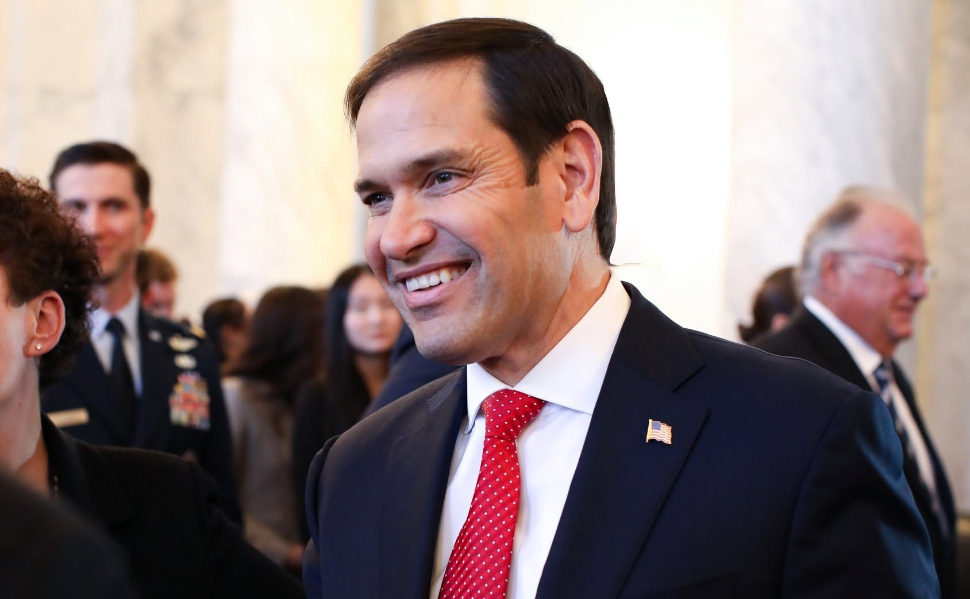
U.S. Secretary of State Marco Rubio praised Greece as a model for Europe during a speech in Athens on October 7. Speaking at the historic Pnyx, he urged European allies to strengthen defense, energy security and cooperation with the United States.
With the Acropolis behind him, Rubio highlighted Greece’s growing role in regional security. He also called for stronger transatlantic relations as Western countries face new economic and geopolitical challenges.
Rubio delivered his address at one of the most important sites in the history of democracy. The Pnyx served as the meeting place of the popular assembly in ancient Athens.
The location reinforced his message about the political and cultural ties between Europe and the United States.
Marco Rubio Praises Greece’s Defense and Energy Cooperation
Earlier in the day, Rubio met Greek Foreign Minister Giorgos Gerapetritis during the sixth U.S.-Greece Strategic Dialogue.
Their discussions focused on defense, energy, technology and regional security.
Rubio praised Greece for its cooperation with Washington. He also presented the country as an example for other European allies.
In particular, he encouraged European governments to take greater responsibility for their own defense.
Meanwhile, energy security remained a central topic during the talks.
Rubio supported increased imports of American liquefied natural gas. He also highlighted the importance of expanding gas and electricity connections across southeastern Europe.
These projects could strengthen Greece’s position as a regional energy hub.
Furthermore, existing pipelines and port facilities help connect Greece with energy markets across eastern Europe, including Ukraine.
The discussions also covered counterterrorism cooperation and information-sharing.
Despite occasional disagreements between Washington and European governments, Rubio emphasized the importance of maintaining strong alliances.
Rubio Links Ancient Greek Democracy to the West’s Future
During his speech, Rubio highlighted the influence of ancient Greek civilization on American political institutions.
He referred to the democratic traditions of Athens and the ideas of philosophers Plato and Aristotle.
According to Rubio, these intellectual foundations helped shape the political thinking of America’s founders.
He also mentioned Plutarch, whose historical writings influenced generations of Western political thinkers.
However, Rubio did not focus only on history.
Instead, he used Greece’s democratic heritage to discuss the challenges facing Western countries today.
He called for stronger national industries, technological innovation and greater control over critical supply chains.
Rubio also argued that Western governments must invest in defense and protect their economic interests.
Looking ahead, he described the coming decade as a defining period for the international order.
“The next decade will write the story of the next century,” Rubio said in remarks released ahead of the speech.
His message reflected Washington’s push for stronger European defense capabilities and closer economic cooperation.
At the same time, Rubio presented Greece as an important partner in America’s regional strategy.
The Athens visit highlighted the growing significance of U.S.-Greece relations, particularly in defense and energy.
By choosing the Pnyx for his address, Rubio connected modern foreign policy with the democratic traditions that emerged in ancient Athens.