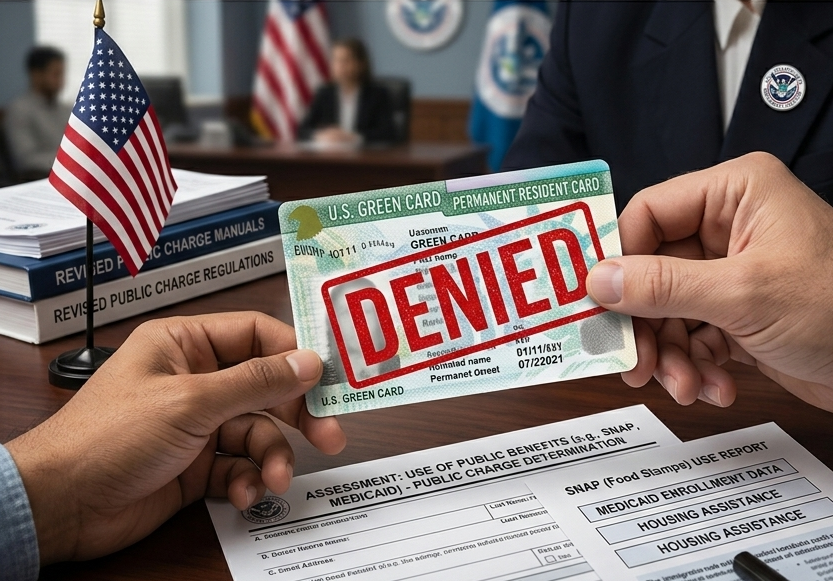
The U.S. Department of Homeland Security (DHS) has finalized a rule ending automatic extensions of employment authorization for many immigrants whose work permits expire while renewal applications are pending.
The measure, released Tuesday, makes permanent an interim final rule introduced last year that eliminated the automatic extension of work permits for up to 540 days, a policy established under the Biden administration.
According to DHS, the change is intended to allow more frequent screening and vetting of applicants. It affects several categories of immigrants, including asylum seekers and certain spouses of H-1B visa holders who hold H-4 status and qualify for employment authorization.
Processing Delays Raise Concerns
The previous 540-day extension was designed to help immigrants maintain employment while U.S. Citizenship and Immigration Services (USCIS) processed their renewal applications. Without the automatic extension, eligible workers may lose their authorization to work if their existing permits expire before their renewals are approved.
USCIS data showed that, as of June 30, more than 432,000 work permit renewal applications had been pending for at least six months. More than 91,000 had been pending for over 18 months, highlighting the potential consequences of processing delays.
Under the rules, foreign workers generally cannot submit renewal applications more than 180 days before their current employment authorization expires.
Legal Challenges to the Policy
The policy has also faced legal challenges. In January, a group of H-4 visa holders filed a lawsuit against DHS, arguing that ending automatic extensions violated the Administrative Procedure Act.
Last month, a federal judge in California blocked implementation of the interim final rule for the plaintiffs in that case, finding that the government had failed to meet certain procedural requirements and adequately consider the plaintiffs’ reliance on the previous policy.
The scope of that court order is limited to the plaintiffs covered by the case and does not necessarily apply to all affected immigrants.
When Does the Rule Take Effect?
The final rule is scheduled to take effect upon publication in the Federal Register on October 14, 2026.
Immigrants with pending work permit renewals should carefully check whether they qualify for an exception and whether any separate court order applies to their situation. Losing employment authorization can affect a person’s ability to continue working legally in the United States.
Important: The elimination of automatic extensions does not mean every immigrant’s work authorization ends immediately. The impact depends on the individual’s immigration category, renewal filing date, current authorization, and any applicable exceptions or court protections.