First Lady Melania Trump champions initiative to expand research, improve diagnosis and treatment, and address gaps in women’s healthcare.
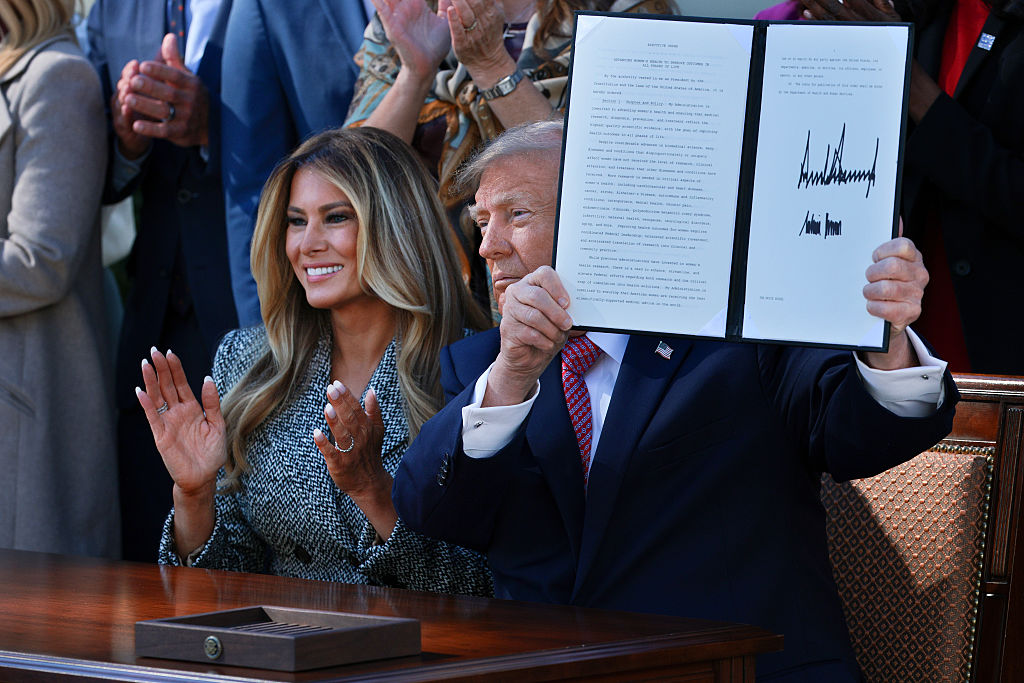
U.S. President Donald Trump has signed an executive order aimed at advancing women’s health, directing the Department of Health and Human Services (HHS) to establish a new Women’s Health Division within the National Institutes of Health (NIH).
The order, titled Advancing Women’s Health to Improve Outcomes in All Phases of Life, calls for the division to be established within 90 days. The initiative is intended to strengthen scientific research, accelerate medical discoveries, and improve health outcomes for women and girls across the United States.
First Lady Melania Trump played a key role in championing the initiative, which also establishes the White House Women’s Health Task Force. The task force will coordinate federal efforts to address women’s health needs throughout life, from infancy and adolescence to reproductive health, menopause, and healthy aging.
HHS Secretary Robert F. Kennedy Jr. and White House Chief of Staff Susie Wiles will co-chair the task force.
“For generations, women have faced unanswered questions about conditions that uniquely or disproportionately affect them,” Kennedy said, emphasizing the need for stronger scientific research and improved prevention and treatment.
Expanding Research Into Conditions Affecting Women
The new NIH division will focus on a broad range of health conditions, including cardiovascular disease, cancer, autoimmune disorders, chronic pain, endometriosis, uterine fibroids, infertility, maternal health, menopause, Alzheimer’s disease, and osteoporosis.
According to the announcement, the division will work to address gaps in medical evidence, expand the inclusion of women and girls in clinical trials, strengthen research into biological sex differences, and translate scientific discoveries into improved clinical care.
NIH Director Jay Bhattacharya said the initiative would help address longstanding gaps in research and bring scientific advances closer to patients.
Centers for Disease Control and Prevention Director Dr. Erica Schwartz also highlighted the importance of earlier diagnosis, expanded treatment options, and the use of proven interventions to prevent disease.
Building on Broader Women’s Health Initiatives
The executive order builds on a series of initiatives introduced by HHS since January 2025, covering research, reproductive health, fertility, menopause, breast cancer screening, and maternal care.
Among the measures cited by the department are expanded NIH research programs, new treatment options for menopausal symptoms, initiatives to improve breast cancer screening and diagnostic follow-up, and efforts to strengthen infertility education and reproductive healthcare.
HHS has also announced investments of more than $525 million in evidence-based home-visiting services and launched Moms.gov as part of its broader maternal health efforts.
In March 2026, the department convened the National Conference on Women’s Health, bringing together researchers, healthcare professionals, policymakers, and advocates to discuss persistent gaps in research and medical care.
The administration says the new division and White House task force are intended to strengthen coordination between research and healthcare delivery, helping ensure that scientific findings lead to practical improvements in prevention, diagnosis, and treatment.
The initiative places women’s health across all stages of life at the center of a broader federal research effort, with the stated goal of providing women and their healthcare providers with better evidence and more informed treatment options.