Serbia faces growing political tensions ahead of its parliamentary elections on Sunday, October 25. Police have launched operations against suspects accused of planning election-day violence. Meanwhile, President Aleksandar Vučić is involved in a dispute with independent broadcaster N1.
The developments come during the final days of a closely watched election campaign.
Authorities are investigating alleged plans for violent disturbances in Belgrade. At the same time, the ruling Serbian Progressive Party (SNS) has criticized N1 for refusing to host Vučić before the vote.
The two developments are separate, and no established connection between them has been reported.
Serbian Police Investigate Alleged Election-Day Violence Plot
Serbian authorities launched an operation in the Novi Sad area on Wednesday, October 21.
According to Serbian media reports, investigators suspect a criminal group planned to travel to Belgrade on election day.
The alleged organizer reportedly intended to bring approximately 80 men to the capital.
Investigators suspect the group planned to set vehicles on fire and attack civilians. Reports also describe alleged plans to throw Molotov cocktails and confront police officers.
The Higher Public Prosecutor’s Office in Belgrade and Serbia’s Special Anti-Terrorist Unit were reportedly involved in the operation.
Authorities also searched properties connected to the suspects.
Separately, police arrested a man identified by his initials, M. A., from Vrnjačka Banja.
According to Serbian public broadcaster RTS, he is suspected of calling for a violent change to the constitutional order. Investigators also suspect he intended to participate in election-day unrest.
In another operation, police arrested a Belgrade resident identified as S. I.
He is suspected of organizing and training people to carry out violence during or after the elections.
Meanwhile, the pro-government tabloid Kurir claimed that two suspects possessed Croatian passports.
The outlet also alleged that one suspect discussed recruiting criminals and acquiring weapons.
However, those additional allegations have not been independently verified. No evidence establishing a connection between the suspects and the student-backed electoral list has been presented in the cited reports.
The suspects remain under investigation, and the allegations should not be treated as proven criminal conduct.
Vučić and N1 Clash Over Election Coverage
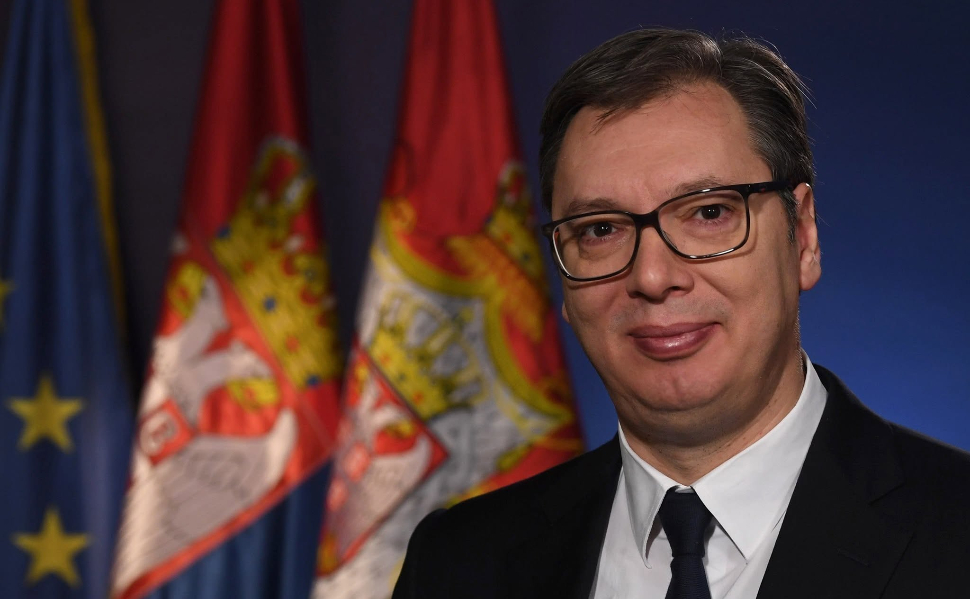
The arrests come amid a separate dispute involving President Aleksandar Vučić and television network N1.
N1’s editorial staff unanimously rejected a request for Vučić to represent the ruling coalition’s United Serbia electoral list during a scheduled campaign appearance.
The broadcaster cited years of insults and accusations directed at its journalists by Vučić and government officials.
However, N1 said the Serbian Progressive Party could send another representative for the scheduled appearance.
The network also offered to interview Vučić after the elections.
Vučić criticized the decision during a campaign rally in Čačak.
He accused N1 of spreading false information about him and his family for years. He also argued that the broadcaster was unwilling to allow him to present his political views.
Ana Brnabić, a senior SNS figure and candidate on the United Serbia list, strongly condemned the decision.
She accused N1 of using “Nazi methods” and compared its refusal to discriminatory treatment.
N1 journalist Mladen Savatović defended the editorial decision in comments to Nova.rs.
He said the network had repeatedly faced insults from government officials without receiving an apology.
Savatović also noted that Vučić had previously declined invitations to appear on N1.
The broadcaster maintains that refusing this particular campaign appearance does not amount to banning the president from its coverage.
The dispute has renewed debate over media access and political pressure in Serbia.
Meanwhile, the arrests have raised separate concerns about security during the parliamentary vote.
Serbia’s elections are scheduled for October 25, with the ruling coalition facing the student-backed electoral list and other political competitors.
The coming days will test how authorities manage election security and how political leaders respond to disputes over media coverage.