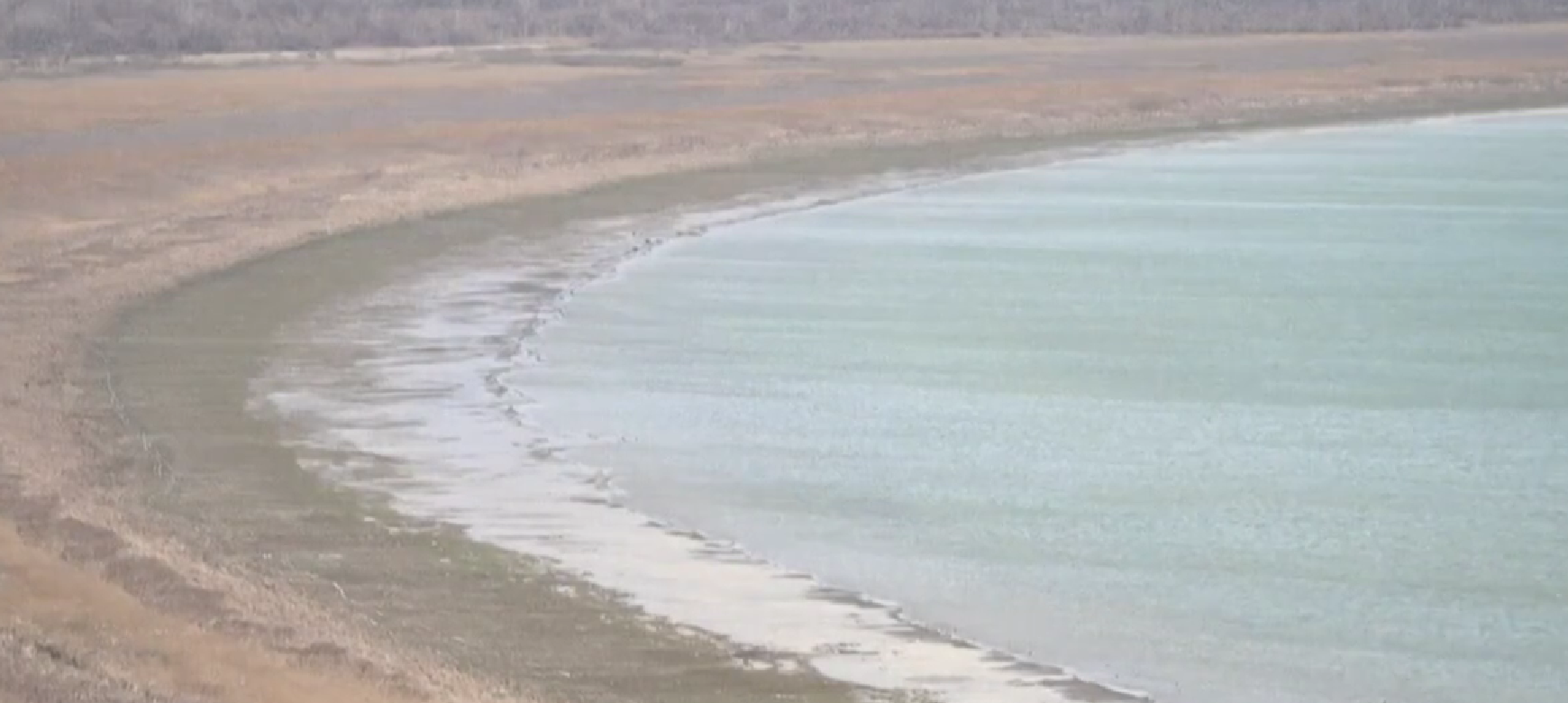
Lake Prespa, one of the Balkans’ most important transboundary freshwater ecosystems, has been losing water for decades, and scientists say the main causes are linked to changing climate conditions and growing pressure from agriculture rather than tectonic activity. A review of scientific research cited in the latest assessment points to declining rainfall and snowfall, combined with water abstraction for irrigation, as the key factors behind the lake’s long term decline. The findings are significant for Macedonia, Albania and Greece, which share the Prespa basin and depend on its fragile ecosystems and water resources.
The scale of the change has been documented by scientific studies using hydrological measurements and satellite observations. One 2022 study found that Lake Prespa’s water level fell by almost 10 meters between 1950 and 2009, while its surface area decreased by nearly 19 square kilometers between 1984 and 2020. Researchers linked the decline to reduced precipitation and increased water abstraction for agriculture, reinforcing the conclusion that the lake is highly sensitive to changes in both climate and human water use.
Climate is particularly important because the lake depends heavily on rainfall, snowfall and river inflows to maintain its water balance. More recent research has found that evaporation losses relative to inflows have become considerably higher than they were in the 1980s, while reduced inflows associated with climate change and water abstraction have contributed to the falling water level. This means that even periods of heavy rainfall may not necessarily reverse the longer term trend if dry conditions and high water demand continue.
Agriculture adds another layer of pressure. Water taken from the basin for irrigation reduces the amount available to the lake and surrounding wetlands, while incomplete or inconsistent records can make the true scale of water use difficult to determine. This is especially important because Prespa is not an isolated national resource, its hydrological system crosses three borders, meaning that decisions about water use in one part of the basin can affect the wider ecosystem.
The consequences extend far beyond the lake’s appearance. Falling water levels can alter fish spawning areas, wetlands and shoreline habitats while placing pressure on species that depend on shallow water and wet meadow environments. Prespa is internationally recognized for its exceptional biodiversity, including important wetland habitats and endemic species. The Ramsar Convention has identified the region as an area requiring coordinated protection, while recent conservation work has focused on maintaining wet meadows and other habitats that are important for both wildlife and local communities.
The latest findings also challenge explanations that attribute the decline primarily to geological changes or the operation of the Kula dam. According to the scientific assessment described in the original report, there is not convincing evidence that tectonic processes or the dam are responsible for the scale of the water loss. Instead, the evidence points toward a combination of changing precipitation patterns, evaporation and human water consumption. This distinction matters because it shifts attention toward factors that can potentially be addressed through better water management and climate adaptation.
One of the biggest challenges, however, is that the Prespa basin is divided among three countries with different monitoring systems and data practices. Scientific research has often focused on individual national sections instead of treating the lake and its catchment as one interconnected system. Researchers and conservation groups have therefore emphasized the need for shared measurements, better long-term hydrological modelling and more transparent exchange of information between Albania, Greece and Macedonia. PrespaNet III, a cross border conservation project running from 2024 to 2027, is specifically working on water and wetland conservation alongside broader biodiversity and local engagement efforts.
There is also evidence that the lake can respond strongly to short term changes in weather. Recent UNDP reporting noted that unusually heavy rainfall during late 2025 and early 2026 produced increased river runoff and significantly raised Prespa’s water levels during the spring period. While such events can temporarily improve the situation, they do not erase the longer term concerns surrounding climate variability, evaporation and water abstraction.
The future of Lake Prespa will therefore depend not only on rainfall but on how effectively the three countries manage the entire basin together. Protecting the lake means balancing agricultural needs with the ecological requirements of wetlands and wildlife while improving monitoring and sharing reliable data. The scientific evidence suggests that the water decline is primarily connected to climate and human pressure, making coordinated management increasingly important. Prespa’s shrinking water reserves are not simply an environmental warning, they are a reminder that a shared ecosystem requires shared responsibility.