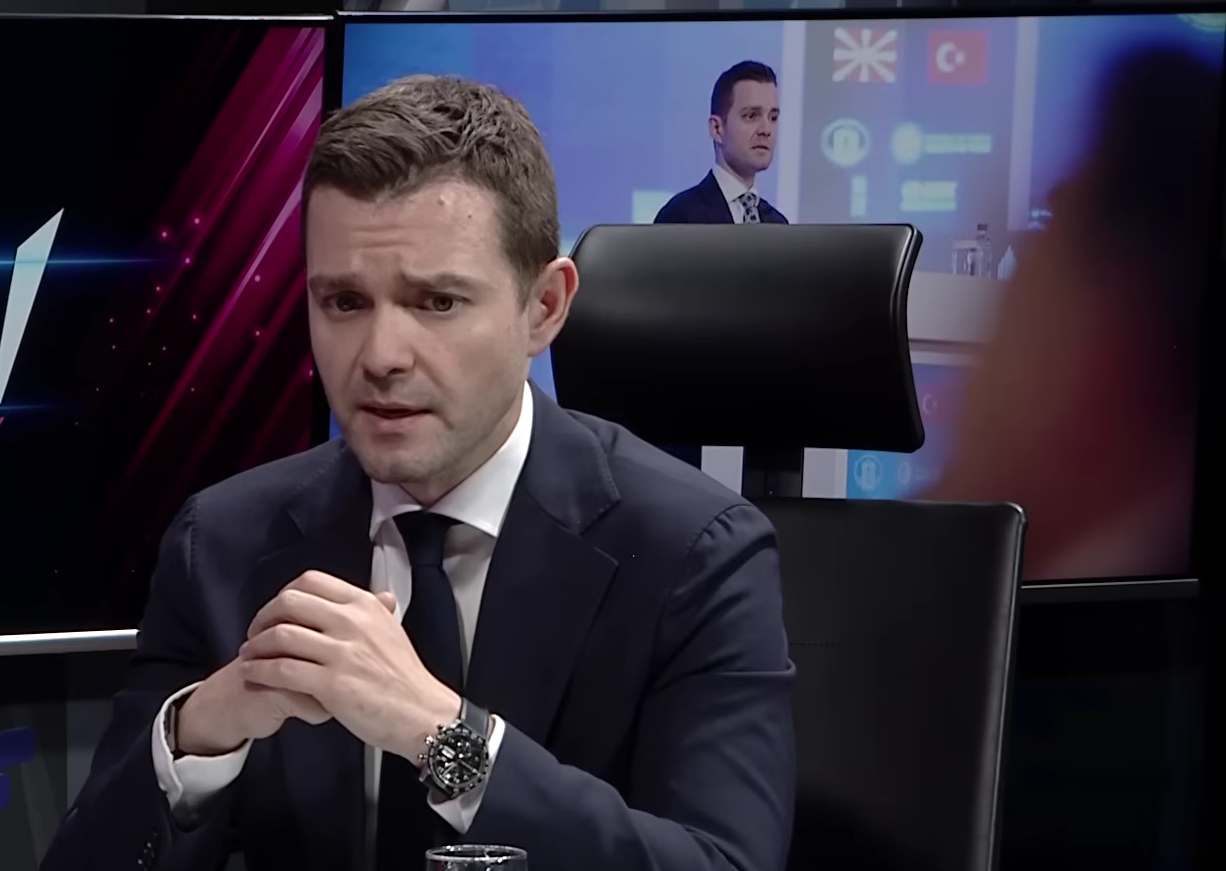
Macedonia’s path toward European Union membership remains a central priority for the government, Foreign Minister Timcho Mucunski said, stressing that the country intends to continue implementing reforms while maintaining what he described as its key national positions. Mucunski said the government is seeking a predictable and dignified path toward European integration while continuing dialogue with EU member states, European institutions and Bulgaria.
According to the minister, no agreement has yet been reached that would resolve the outstanding political issues surrounding the country’s EU path. He said the government is not prepared to negotiate on questions it considers connected to identity and history, while arguing that domestic reforms should continue regardless of the political difficulties surrounding the accession process.
Macedonia Balances EU Reforms With National Positions
Mucunski also highlighted the idea of gradual integration, saying the model should allow candidate countries to gain greater access to European opportunities and funding while continuing to progress toward full membership. The government’s position is that gradual integration should complement, rather than replace, the accession process, with full EU membership remaining the ultimate objective.
The issue is particularly significant because Macedonia’s EU accession process has already gone through several important stages. The European Commission says the country completed its screening process in December 2023, while the EU has continued to emphasize reforms in areas including the rule of law and public administration. European Council President António Costa said during his June visit to Skopje that adopting the agreed constitutional amendments remains the necessary next step for formally moving accession negotiations forward.
At the same time, Brussels has continued to recognize progress in the implementation of reforms. European Enlargement Commissioner Marta Kos visited Skopje in July to discuss the country’s EU path and the Reform Agenda under the Western Balkans Growth Plan. The European Commission said Macedonia had received €142.1 million under the Reform and Growth Facility following progress in implementing reforms, showing that European support is already producing financial benefits before full membership.
The government argues that reforms should therefore be pursued primarily because they benefit citizens and businesses, rather than simply to satisfy external deadlines. Mucunski said the country should focus on measurable results and demonstrate its commitment through concrete actions, pointing to the Reform Agenda as an example of this approach.
The minister also criticized the opposition, accusing it of supporting European integration rhetorically while blocking legislation needed to implement reforms in parliament. His comments reflect the broader domestic political debate over how quickly the country should move toward EU membership and what compromises, if any, should be made to unblock the process.
The debate over relations with Bulgaria remains one of the most sensitive elements of that discussion. While the government maintains that national positions must be protected, EU officials continue to emphasize that the agreed constitutional amendments are necessary for the accession process to advance. This leaves Macedonia balancing two parallel priorities: preserving its stated political positions while making the institutional and legislative changes required for closer integration with the EU.
For citizens, the reform process also has a practical dimension. European integration is linked not only to membership negotiations but also to access to funding, education, healthcare, investment and other programs. In June, the EU announced that Macedonia would gain access to the EU4Health program, while funding under the Growth Plan has already supported reforms in areas such as education and digitalization.
The government’s message is therefore that the EU path should continue through reforms and closer cooperation with European institutions, but without accepting every political demand simply to accelerate the timetable. The EU, meanwhile, continues to stress that progress depends on both domestic reforms and fulfillment of the conditions already agreed within the accession framework.
Ultimately, Mucunski’s remarks underline the government’s attempt to combine a firm position on sensitive national issues with continued progress toward European integration. While political disagreements remain and the next steps depend on decisions at both the domestic and EU level, the stated long term objective remains unchanged, advancing reforms, strengthening the country’s position and eventually achieving full membership in the European Union.