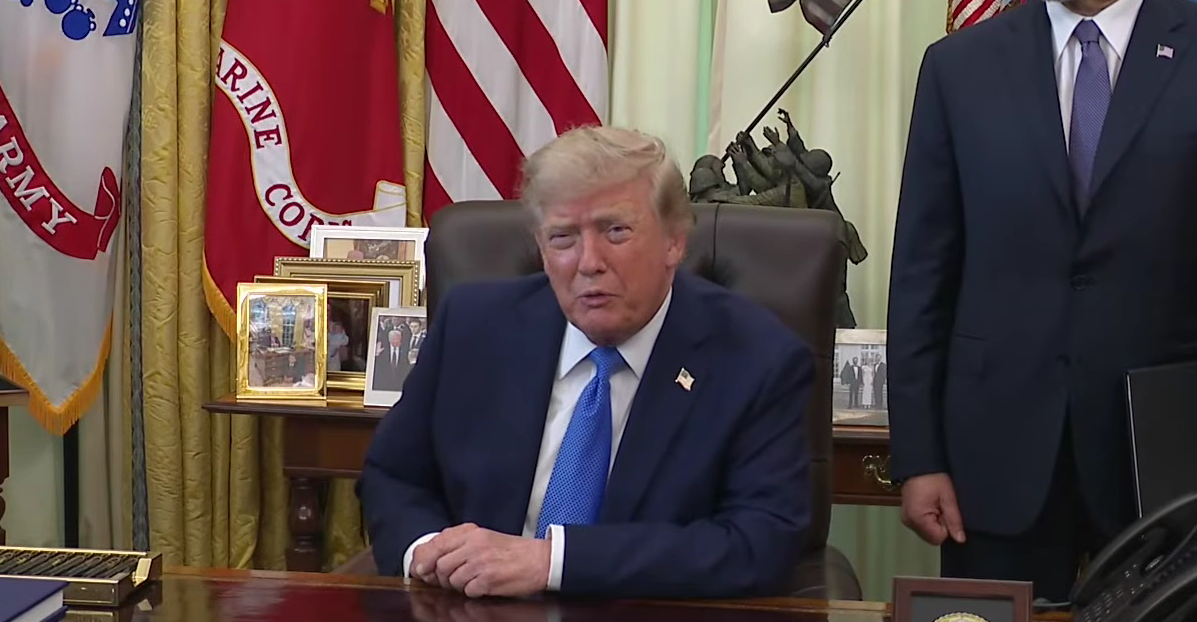
President Donald Trump has signed two new executive orders aimed at restricting birthright citizenship, renewing a legal fight over the 14th Amendment just weeks after the Supreme Court rejected his broader attempt to end automatic citizenship for many children born in the United States. The new directives focus on what the administration describes as “birth tourism,” involving foreign nationals who travel to the U.S. to give birth, while also seeking to limit citizenship protections for certain children of foreign government employees and people classified as “alien enemies.”
The administration argues that the narrower orders address issues that were not fully resolved by the Supreme Court’s June 30 ruling in Trump v. Barbara. That decision rejected Trump’s earlier executive order, which would have denied citizenship to certain U.S.-born children of undocumented immigrants and temporary visa holders. Trump has criticized the ruling and continued to argue that birth tourism has created an unfair system in which foreign nationals can obtain U.S. citizenship for their children by traveling to the country.
The new approach represents a significant shift from Trump’s January 2025 executive order, which sought to broadly restrict birthright citizenship. That earlier policy could have affected an estimated 255,000 babies born each year. The revised orders instead focus on narrower interpretations of historical exceptions to citizenship at birth, including children of certain foreign government employees and individuals considered alien enemies.
The administration is also targeting birth tourism specifically. Supporters of the policy argue that the practice takes advantage of the U.S. citizenship system, while opponents say the executive orders improperly attempt to change constitutional protections through presidential action. White House aide Stephen Miller, a leading architect of Trump’s immigration policies, said the administration considers birth tourism banned under the new order.
Legal Challenges Could Shape Birthright Citizenship
The new birthright citizenship orders are expected to face immediate legal challenges from immigrant advocacy groups and civil rights organizations. Critics argue that the president cannot unilaterally redefine the Citizenship Clause of the 14th Amendment, which states that people born or naturalized in the United States and subject to its jurisdiction are citizens.
The constitutional provision was ratified in 1868 and was designed in part to establish citizenship protections after the Civil War and reject the racial exclusions associated with the Dred Scott decision. The Supreme Court has historically interpreted the provision as granting citizenship to nearly all children born on U.S. soil, with narrow exceptions involving groups such as children of foreign diplomats.
Legal experts and immigrant advocates have therefore questioned whether Trump’s latest orders can withstand judicial scrutiny. The American Civil Liberties Union described the effort as unlikely to survive in court, while other advocacy groups argued that the administration is attempting to circumvent the Supreme Court’s recent decision rather than accept its limits.
The June Supreme Court ruling was especially significant because it directly addressed Trump’s attempt to alter birthright citizenship through executive action. Although the court’s decision focused on the legal dispute before it, the administration has now adopted a narrower strategy that could force courts to consider the historical exceptions to the Citizenship Clause in greater detail.
The dispute could ultimately determine how broadly the constitutional guarantee applies to children born in the United States. For the Trump administration, the new orders represent an attempt to continue its immigration agenda through a more limited legal theory after the broader policy encountered major constitutional obstacles. For opponents, the effort raises fundamental questions about whether a president can alter long-established citizenship protections without a constitutional amendment or congressional action.