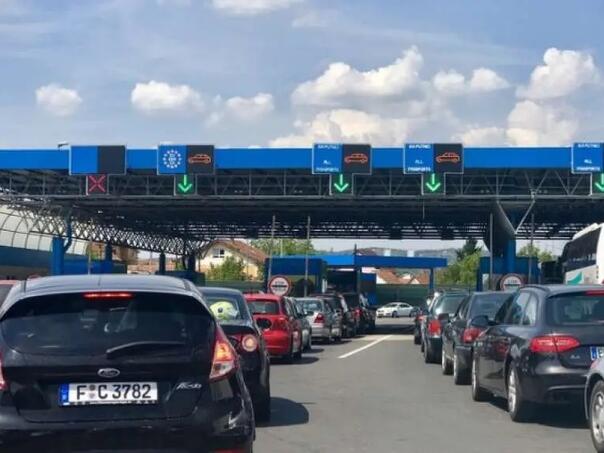
Croatia’s electronic toll system is expected to begin operating on March 1, 2027, bringing major changes for domestic drivers and motorists arriving from Bosnia and Herzegovina.
Traditional toll booths will disappear, meaning drivers will no longer stop to collect a ticket or pay before continuing their journey. Instead, cameras, electronic toll devices and automatic vehicle-recognition technology will record highway use and calculate the appropriate charge.
How Croatia’s Electronic Toll System Will Work
The new free-flow tolling system will use two primary technologies: electronic toll collection devices, known as ENC, and automatic license plate recognition.
Drivers of passenger cars and other light vehicles will be able to use either an ENC device or the automatic license plate recognition model. Heavy vehicles, however, will be required to use an ENC device.
Vehicles will be able to travel without stopping at toll stations. Nevertheless, drivers must register their vehicles correctly in the system and provide a valid payment method before using Croatia’s highways.
Cameras Will Record More Than License Plates
Cameras installed at tolling points will not record only a vehicle’s license plate. The system may also process images showing the vehicle itself, including its type, model, color and other identifying features.
Additionally, the system will record the date, time and location of each image. It will also process information about the highway sections traveled and the corresponding toll amount.
These details will help connect a specific vehicle to its journey, determine its toll category and verify whether an appropriate payment method is available.
The system may also process a user’s email address, telephone number and the IP address of the device used to register or update account information.
Vehicle Photos May Be Stored for 12 Months
Photos collected through Croatia’s electronic toll system may be stored for 12 months from the date the toll or another required fee is charged.
Authorities may use the images to handle customer complaints, review billing disputes and confirm whether a toll was calculated correctly.
These photographs are different from standard highway surveillance footage. Regular video surveillance recordings may generally be retained for no longer than 30 days.
However, authorities may keep video footage longer when it is required as evidence in court, administrative, arbitration or other official proceedings.
Why the System Records Vehicle Color and Model
Automatic license plate recognition is not always accurate. A plate may be dirty, damaged or incorrectly read by the system.
Information about a vehicle’s color, model and other visible characteristics can therefore help authorities confirm its identity.
When necessary, the system may also access information from the vehicle ownership registry. Authorities can use those records to collect unpaid tolls, impose additional charges or conduct misdemeanor proceedings.
The system will also record when and where a payment violation occurred, along with information about notices, enforcement actions and related proceedings.
Although traditional toll booths will disappear, highway controls will remain in place. Therefore, drivers from Bosnia and Herzegovina and other countries should ensure that their vehicles are properly registered and connected to a valid payment method before entering Croatia’s toll highways.