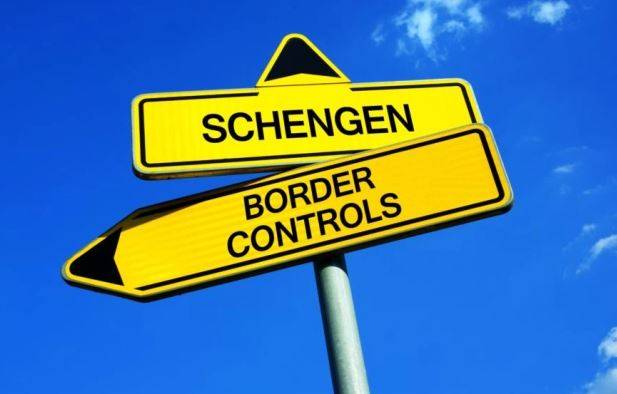
A growing dispute between the governments of Italian Prime Minister Giorgia Meloni and Spanish Prime Minister Pedro Sánchez over migration policy has resulted in reciprocal border controls between Italy and Spain. The measures have disrupted passport-free travel and created delays for millions of people travelling between the two countries.
Rome introduced checks on travellers arriving from Spain on August 1 following the mass arrival of around 72,000 migrants in the Spanish enclave of Ceuta. Madrid responded on Saturday by introducing controls on ships and flights arriving from Italian ports and airports.
Italy Cites Migration and Security Concerns
Italy justified its decision by citing concerns that migrants arriving in Ceuta could subsequently move through Spain and use the Schengen area to reach Italy or other EU countries.
Rome also referred to possible security risks, including the movement of radicalised individuals and warnings of further mass attempts to cross the border.
Italian Foreign Minister Antonio Tajani said the measures had been adopted in accordance with European rules following the extraordinary developments in Ceuta. He also rejected Sánchez’s reaction to the temporary suspension of Schengen arrangements as “completely unacceptable.”
Tajani dismissed arguments that the Italian response was merely symbolic because Ceuta itself is outside the Schengen area. Although Ceuta is not part of Schengen, he stressed that it remains Spanish territory and that Spain is a Schengen member.
According to Tajani, the main concern was the possibility of secondary movements by migrants who were not Moroccan nationals after reaching Spain. He argued that Italy was particularly exposed as a potential destination. Around 15 irregular migrants who had previously arrived from Spain had already been intercepted in Italy, he said.
Tajani insisted that Italy was not acting against Spain but had an obligation to protect its borders. He described arrivals from sub-Saharan Africa as a threat and referred to suspected individuals who had been detained by Spanish police.
The Italian controls apply at ports and airports and are directed at third-country nationals. However, Tajani said Italy would restore normal Schengen arrangements with Spain once the threat of a new migration influx from Africa had passed.
Spain Rejects Italy’s Justification
Madrid strongly rejected Italy’s reasoning. Spanish authorities said the situation in Ceuta had been brought under control and that the majority of those who entered had been returned to Morocco.
Spain also argued that migrants in Ceuta could not simply continue to mainland Europe because they lacked the valid identification required to travel by ferry.
Furthermore, Spanish authorities and the European Commission confirmed that none of the approximately 72,000 people who headed towards Ceuta had crossed the Strait of Gibraltar.
Spanish Foreign Minister José Manuel Albares described the Italian measures as an attack on the dignity of citizens. He also said they undermined the principle of European Union unity.
Madrid subsequently imposed reciprocal controls. Spanish authorities presented the measures as necessary to protect citizens from what they described as continuing irregular migration pressure affecting Italy.
Meloni and Sánchez Clash Over European Migration Policy
The border dispute reflects a broader political disagreement between Meloni and Sánchez over European migration policy.
Meloni has advocated tougher controls at the EU’s external borders. Sánchez, meanwhile, has argued that Europe needs additional foreign workers to preserve economic growth, remain competitive and respond to demographic decline.
Italy has also criticised Madrid’s plan to grant legal status to more than one million migrants. Rome argues that such policies could send the wrong signal and encourage further migration.
Sánchez has rejected those accusations. He has argued that Spain needs additional workers to sustain economic growth and pointed out that Italy has recorded significantly higher numbers of irregular arrivals than Spain.
Madrid has also stressed that migrants who entered Ceuta could not automatically benefit from Spain’s legalisation programme because the scheme contains specific eligibility requirements.
EU Leaders Raise Concerns Over Spain’s Migration Policies
As the Ceuta crisis developed, Meloni led the preparation of a letter addressed to European Commission President Ursula von der Leyen and European Council President António Costa.
In the letter, 22 EU leaders argued that Madrid’s migration policies had weakened the security of the bloc’s external borders. Spain rejected the accusation.
Travellers Face Delays as Border Checks Return
The reciprocal controls are already affecting travellers between Italy and Spain.
Passengers arriving in Italy from Spanish airports reported significant delays as Italian Carabinieri checked identification documents. Since Spain introduced its own controls, passengers arriving on Italian flights have faced similar checks by Spanish police.
Travellers unable to provide official identification have been held for additional checks.
Travel between the two countries is substantial. Around 3.2 million Spaniards travelled to Italy in 2024, while 5.4 million Italians visited Spain. Therefore, more than eight million passengers could potentially be affected by the deterioration in relations and the renewed checks.
Dispute Puts Schengen Rules in Focus
The dispute has also highlighted the vulnerability of Europe’s passport-free Schengen area.
Under the current rules cited in the reports, member states can temporarily restore border checks for an initial period of up to six months in response to security threats.
Extensions are possible for additional six-month periods for up to two years. In exceptional circumstances, controls can remain in place for up to three years.
European Commissioner for Migration Magnus Brunner said he was maintaining contact with the interior ministers of both countries.
The European Commission had received assurances that the measures were temporary. Meanwhile, indications emerged that the controls could soon be removed to prevent deeper consequences for the functioning of the Schengen system.
Tajani has similarly indicated that Rome intends to restore normal arrangements once it considers the migration threat to have passed.