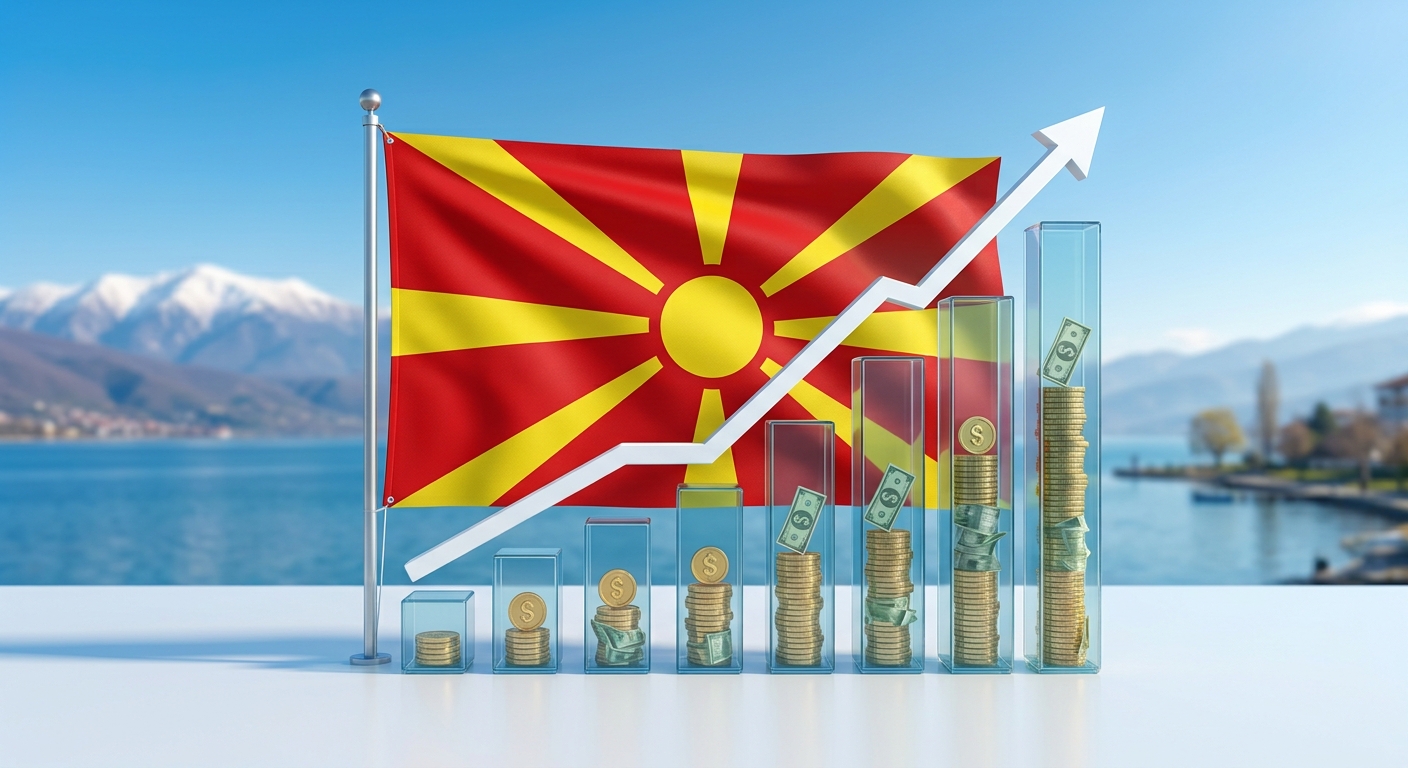
Macedonia’s economy is gaining momentum, with Prime Minister Hristijan Mickoski claiming that GDP increased by €120 million more in two years than during the previous government’s six year period. Mickoski presented the comparison while discussing economic growth and public debt, arguing that the latest results show faster economic expansion in a significantly shorter period. His figures compare the performance of the current government with the previous administration led by SDSM and DUI. The comparison has also placed economic growth and public finances at the center of the political debate.
Mickoski said the relationship between economic growth and public debt is particularly important. According to his figures, public debt increased by somewhat less than three times, while GDP recorded an additional €120 million in growth despite the period being three times shorter. He described the comparison as roughly a three to one relationship. The government has used these figures to argue that Macedonia is achieving stronger economic results while continuing to manage its public finances. Official statistics also point to continued economic expansion. The State Statistical Office reported that real GDP grew by 3.8 percent in the fourth quarter of 2025 compared with the same period a year earlier. Growth in the third quarter was also recorded at 3.8 percent. These figures indicate that Macedonia has maintained several consecutive quarters of economic growth, providing further support for the government’s argument that economic activity is accelerating.
Macedonia also recorded strong nominal GDP growth in 2024. Preliminary official data put the country’s GDP at 964.087 billion denars, representing a nominal increase of 6.8 percent compared with 2023. Mickoski has previously pointed to government investment and financing available to businesses as factors supporting economic activity. He has also argued that Macedonia’s recent growth rate has exceeded the average recorded across the European Union. However, stronger GDP figures do not automatically mean that every household is better off. Economic growth can occur alongside higher prices, increased living costs and significant differences between sectors and income groups. For ordinary citizens, the more important question is whether stronger economic activity translates into higher wages, more employment and improved living standards. The government will therefore face pressure to ensure that economic growth produces benefits that can be felt beyond headline GDP figures.
The latest data nevertheless give the government a basis for arguing that Macedonia’s economy is gaining speed. With several quarters of growth and Mickoski highlighting a €120 million difference in his comparison with the previous government, economic performance is likely to remain an important political issue. The challenge now will be maintaining that growth while keeping public finances sustainable. Ensuring that the benefits of economic expansion reach businesses, workers and households across Macedonia will be crucial in determining how meaningful the recovery ultimately becomes.