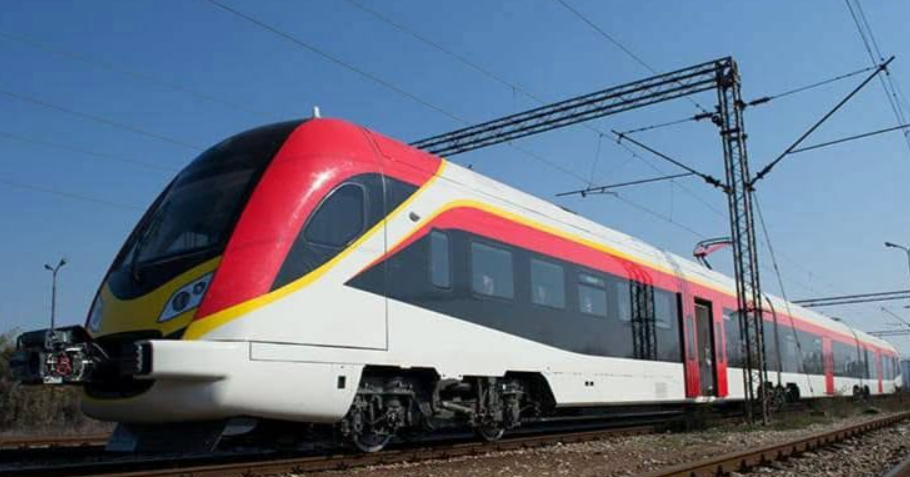
A new free city train service has officially started operating between Zelenikovo and Skopje, creating another public transportation option for people who regularly travel toward the capital. The first train made its journey with only four passengers on board, but the launch represents a new attempt to improve connections between Skopje and the surrounding municipalities. The service is particularly aimed at residents who travel to Skopje for work, education, appointments and other daily activities. By offering free transportation, authorities are also hoping to encourage more people to leave their cars at home and choose public transport instead. The new rail connection could become especially useful for residents of Zelenikovo and nearby settlements who depend on Skopje for many of their everyday needs. Traveling into the capital by car can become increasingly difficult during peak hours, when roads are crowded and finding parking can also be a challenge. A train service provides an alternative that allows passengers to avoid road congestion and potentially make their journeys more predictable.
The fact that passengers can initially use the service free of charge could also encourage people to try the train and determine whether it is a practical option for their regular trips. The introduction of the city train comes at a time when traffic congestion and public transportation are major concerns around Skopje. Thousands of people commute toward the capital from surrounding municipalities every day, adding significant pressure to the existing road network. Encouraging greater use of rail transportation could help reduce the number of private vehicles entering Skopje, particularly if the service eventually attracts a larger number of regular passengers. Beyond reducing congestion, increased use of public transportation could also bring environmental benefits by lowering fuel consumption and emissions associated with individual car journeys. However, the long term success of the new service will depend on more than simply making the train free. Passengers will likely consider factors such as departure times, frequency, travel duration and how easily the train connects with other forms of transportation once they arrive in Skopje. If the timetable matches the needs of commuters, students and other passengers, the service could gradually become a regular part of their daily routines.
The first journey with four passengers may therefore be only the beginning, rather than a reflection of the service’s future potential. For many residents, the biggest advantage of the new connection is the possibility of having a reliable alternative to driving. People who currently spend money on fuel, parking and vehicle maintenance could potentially reduce those costs by using the train, particularly while the service remains free. Families may also benefit if students and other younger passengers can travel independently between Zelenikovo and Skopje without relying on private vehicles. The new service could also have a wider impact on the relationship between Skopje and the municipalities surrounding the capital. Better transportation links can make it easier for people to access jobs, schools, universities, healthcare services, shops and other opportunities in the city. At the same time, improved connections can help people living outside Skopje maintain stronger links with the capital without necessarily having to move closer to the city.
Although the first train attracted only a small number of passengers, interest could increase as more people become aware of the service and understand how it fits into their daily schedules. Public transportation projects often require time before residents change established travel habits, especially when many people have become accustomed to using their own cars. A free introductory period could provide an opportunity for passengers to test the service without financial risk. The launch of the Zelenikovo to Skopje train therefore represents more than the departure of a single train. It is an attempt to create a more accessible connection between the capital and one of the surrounding municipalities while addressing some of the transportation challenges faced by daily commuters. If the service proves reliable and convenient, it could encourage more residents to choose rail travel and potentially contribute to less traffic on the roads leading into Skopje.
For now, attention will turn to how many passengers begin using the service in the coming weeks and whether the new connection can become a regular part of the region’s transportation system. The first journey may have started with just four passengers, but the broader goal is to make traveling between Zelenikovo and Skopje easier, cheaper and more convenient for everyone who depends on the capital each day.