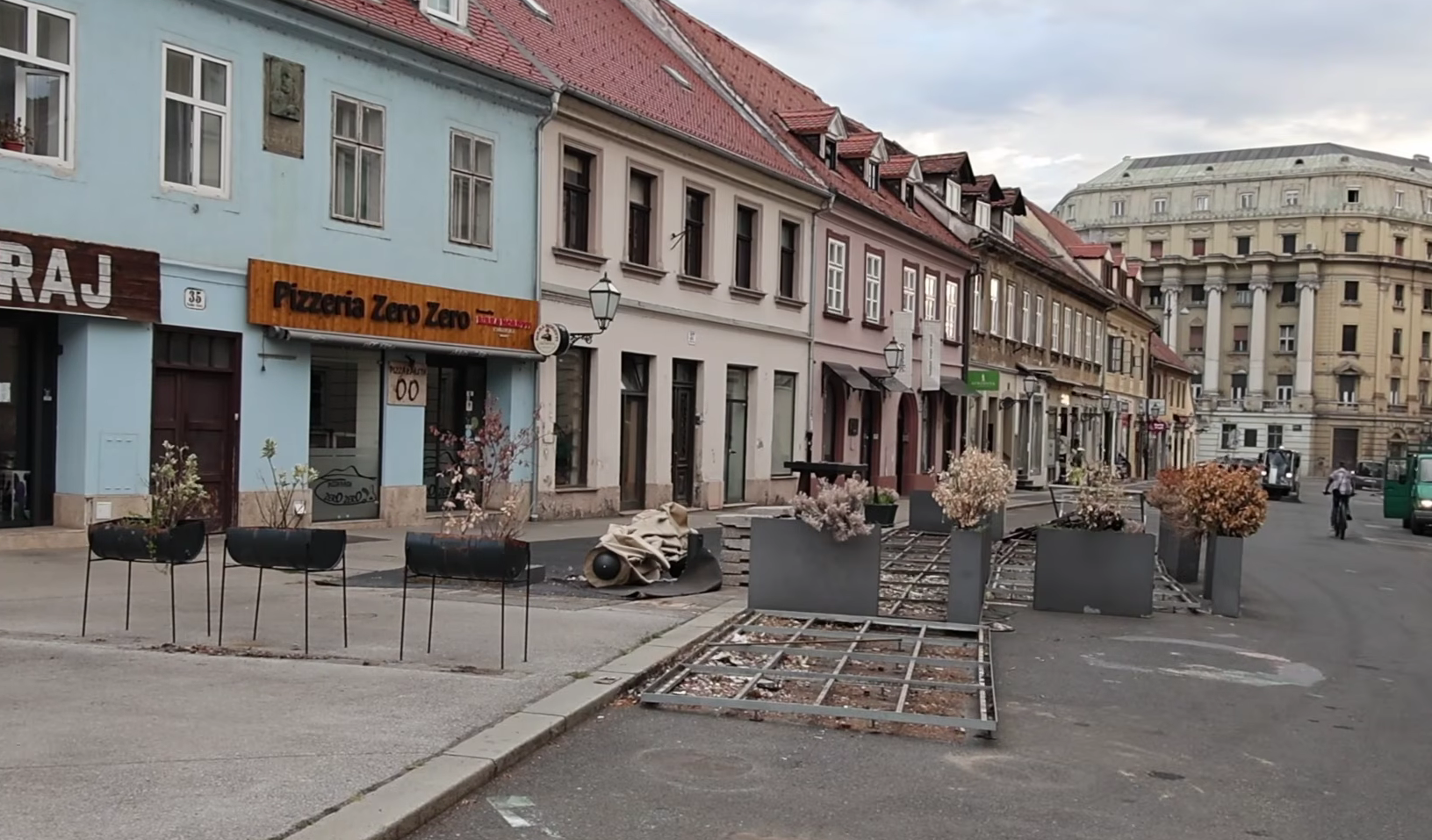
Construction has officially begun on the permanent transformation of Stara Vlaška, one of Zagreb’s historic downtown streets, as the Croatian capital moves ahead with a €3.4 million project to create a more pedestrian focused public space. Work on the section between Palmotićeva and Draškovićeva streets began after a construction contract was signed in August, with completion targeted for the end of 2026. The redesign, created by Zagreb based studio Atmosfera d.o.o. after winning an urban architectural competition, will divide the 4,050 square meter area into three zones: a southern promenade primarily for pedestrians, a central green square for recreation and socializing, and a northern strip dedicated to hospitality and retail.
The project builds on an experiment that began in May 2022, when Mayor Tomislav Tomašević’s administration temporarily closed the same stretch to traffic and introduced planters, benches, magnolias and Japanese plums. The pilot project, designed by a Danish-Croatian team, proved popular enough to support a permanent transformation. The new design will replace asphalt with stone paving, add more greenery and urban furniture, improve rainwater drainage and install new public lighting, including decorative illumination around the monument to Croatian writer August Šenoa on the Vlaška Street plateau.
The southern pedestrian area is designed for everyday walking and relaxation while also providing space for occasional festivals, markets and fairs. This combination of pedestrian use and public events is intended to make the street a more active part of Zagreb’s city center throughout the year, rather than simply a route for passing traffic.
Stara Vlaška Reconstruction Expands Zagreb’s Pedestrian Network
Zagreb officials are presenting the Stara Vlaška reconstruction as part of a wider effort to reclaim central streets for pedestrians. The area already functions as an important walking route, and the project is intended to connect with recently completed improvements such as the refurbished Schlosser Stairs and the redeveloped Trg svibanjskih žrtava 1995, creating a more continuous pedestrian network through the historic center.
A second phase is planned for Branjugova Street between Langov Trg and Palmotićeva, further strengthening the connection between the upper and lower parts of the city. Tomašević has made pedestrian friendly urban planning a signature policy of his administration, arguing that reducing vehicle traffic, expanding green areas and creating more space for public life can improve quality of life while helping reduce pollution.
The €3.4 million price tag, excluding VAT, reflects the scale of the work required to turn the temporary 2022 arrangement into permanent infrastructure. Unlike the pilot project, which relied heavily on temporary planters and recycled materials, the current construction involves extensive civil engineering, including drainage, lighting, paving and other permanent improvements.
For a city that has long faced parking pressure and car oriented planning, the Stara Vlaška project represents both a practical experiment and a broader urban planning statement. If the new pedestrian zone succeeds in attracting residents and visitors while supporting surrounding businesses, it could provide a model for similar transformations elsewhere in Zagreb.
With construction now underway and completion expected by the end of 2026, Zagreb is betting that a greener and more pedestrian friendly Stara Vlaška will create greater long term value for the city than the vehicle space it replaces.