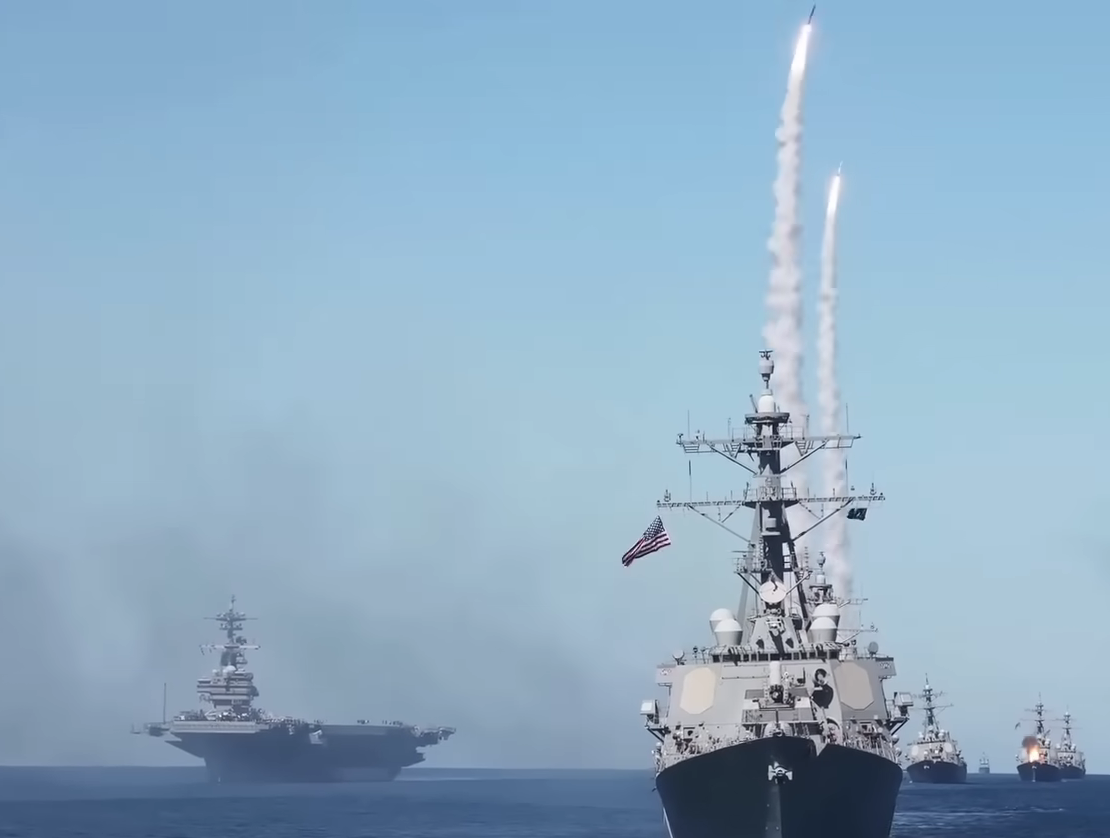
The United States military has conducted its most ambitious maritime operation of the six month war with Iran, escorting 40 commercial vessels carrying approximately 18 million barrels of crude oil through the Strait of Hormuz in a single day while simultaneously striking nearly 60 Iranian military targets along the coastline. The convoy moved on Tuesday under the protection of American air, naval and space based assets, representing roughly 90% of a normal pre war day’s oil flow through the critical chokepoint and marking the highest one day wartime transit since the conflict began in February.
The operation came as U.S. forces intercepted waves of Iranian drones and at least one anti ship cruise missile, highlighting the extraordinary risks surrounding one of the world’s most important energy corridors. The record convoy demonstrated the scale of military resources required to keep commercial traffic moving through the strait during an active conflict.
U.S. Forces Protect Shipping as Strikes Hit Iranian Defenses
The maritime mission was paired with a major barrage against Iranian coastal defenses. U.S. Central Command said strikes targeted air defense systems, radar networks, maritime assets, mine laying capabilities and communications facilities, with the stated objective of reducing Tehran’s ability to track and threaten commercial shipping.
President Donald Trump, speaking from the Oval Office, said the primary objective was to disable Iran’s military surveillance capabilities by destroying radar systems. The strategy represents a dual track approach in which the United States seeks to maintain pressure on Iranian oil exports while protecting commercial vessels belonging to other countries.
Despite the record transit, global energy markets remain on edge. Before the war, roughly 20 million barrels of oil and petroleum products passed through the Strait of Hormuz each day, meaning Tuesday’s achievement represents a one day peak rather than a sustained restoration of normal traffic. Tanker charter rates for voyages through the waterway have climbed above $500,000 per day, while war risk insurance premiums have reached levels that threaten the commercial viability of some shipments.
Many of the vessels in the convoy reportedly switched off their transponders to reduce the risk of detection, underscoring the continued fear of retaliation even under American protection. LNG traders have been particularly cautious because an attack on a liquefied natural gas carrier could have serious consequences for maritime traffic and regional energy supplies.
Oil Markets Remain Vulnerable as Conflict Continues
The broader situation remains one of escalating rather than declining hostilities. On the same day as the U.S. forces escort through Hormuz, a U.S. strike on a home in Kuhestak, Iran, reportedly killed five people and wounded dozens at a wedding, according to local officials. Iran subsequently launched ballistic missiles at U.S. bases in Jordan, adding to concerns that the conflict could expand across the region.
Oil prices climbed back above $90 per barrel as traders responded to renewed uncertainty. Although the successful convoy temporarily demonstrated that substantial quantities of energy can move through the strait under military protection, officials acknowledge that Iran could rebuild damaged military capabilities and continue threatening commercial traffic.
U.S. Central Command has announced plans to gradually expand the cleared maritime corridor over the coming month. However, until commercial shipping can move without depending heavily on military escorts, energy flows through Hormuz are likely to remain vulnerable to further disruptions, leaving consumers and businesses around the world exposed to elevated fuel and energy costs.