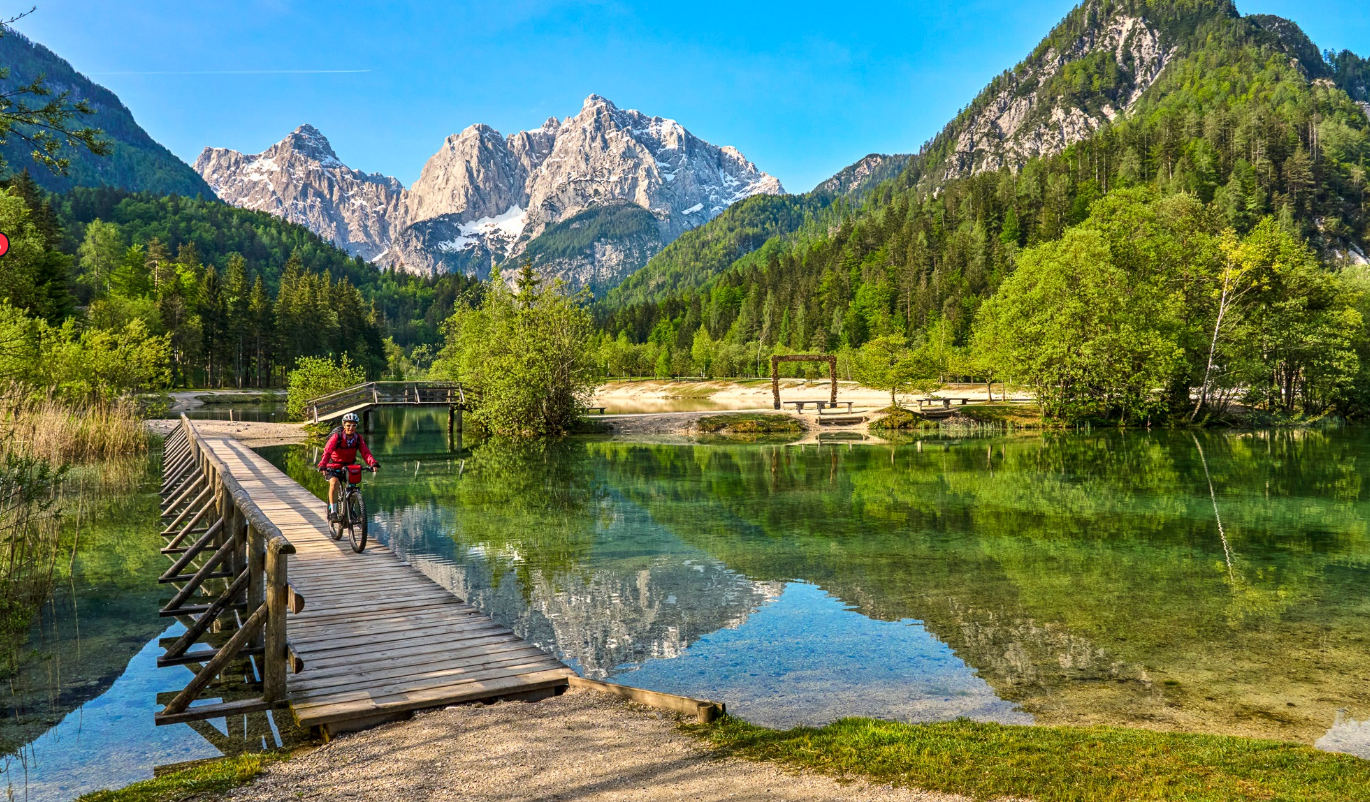
Visitors to Slovenia’s Triglav National Park will not have to pay an entrance fee for now, despite recent discussions about whether charging visitors could help manage growing pressure on the country’s most visited mountain areas. The public institution managing the park has clarified that general admission remains free and that there is currently no timetable for introducing a park wide entrance charge. The discussion emerged after an exceptionally busy summer, when some of the most popular parts of the park faced heavy visitor numbers, traffic congestion and increasing pressure on the surrounding environment. Park officials say the priority is not simply to reduce the number of visitors through fees, but to protect nature while ensuring that people can continue to experience the park safely and responsibly.
Under Slovenia’s nature conservation legislation, authorities can charge for visiting certain natural attractions or for parking vehicles in designated areas, but only under specific conditions. According to the Triglav National Park administration, these possibilities do not mean that a general entrance fee is being introduced. Any payment for access to an individual natural attraction would have to be justified by circumstances such as the need for special infrastructure to allow safe and environmentally responsible visits or the need to control visitor numbers when an area reaches its capacity. For now, the park says no new visitor charges are planned. Officials have also indicated that they would prefer alternative sources of funding to cover the costs of managing heavily visited natural areas wherever possible.
The growing number of visitors has nevertheless made traffic and tourism management an increasingly important issue. Park officials say the goal is to reduce traffic pressure in the most crowded locations, improve parking arrangements and strengthen public transportation and other forms of sustainable mobility. Some measures are already being implemented in certain Alpine valleys and on high mountain roads, where seasonal congestion has become a recurring problem. The park says these measures are not only important for protecting the natural environment, but also for preserving the quality of the visitor experience and the everyday lives of people who live in communities inside or near the park. In areas where visitor numbers approach the capacity of the landscape, authorities can also introduce measures to regulate or limit access.
For now, therefore, travelers planning to visit Triglav National Park can continue to enter without paying a general admission fee. The debate over possible charges is part of a wider discussion about how Slovenia can manage growing tourism without damaging sensitive natural areas. Rather than treating an entrance fee as the main solution, the park administration says visitor management should focus on monitoring pressure on individual locations, improving infrastructure, reducing traffic and encouraging more sustainable ways of reaching popular destinations. Whether additional measures will be introduced in the future will depend on conditions in the park and the resources available for protecting and managing its natural attractions.