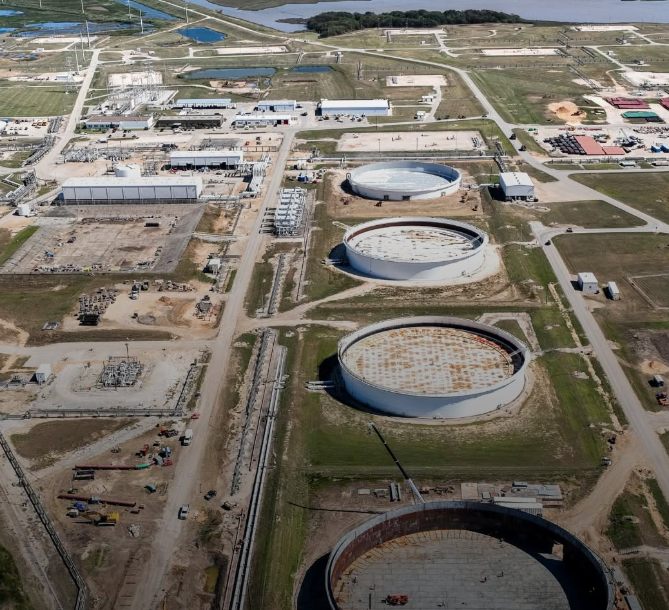
The United States’ Strategic Petroleum Reserve has fallen below 300 million barrels for the first time since the reserve was initially filled in the early 1980s, raising concerns about both America’s emergency energy security and the condition of the underground facilities storing the oil. The reserve is held in 60 massive underground salt caverns located across four sites in Texas and Louisiana, where the unique geology allows crude oil to be stored thousands of feet below the surface. Experts are now warning that continued withdrawals could put additional pressure on the aging system and increase the risk of structural problems inside the caverns. The concern comes at a particularly sensitive moment for American consumers, with gasoline prices remaining unusually high and the country using its emergency oil stockpile during the conflict with Iran. According to AAA figures cited in the report, regular gasoline had reached about $4.07 per gallon in the United States in mid August, adding further pressure on drivers and households.
The main concern comes from the way oil is removed from the underground caverns. Operators inject fresh water into the bottom of a cavern, pushing the crude oil toward pipelines where it can be extracted. While this method is essential to operating the reserve, repeated withdrawals and water injection can gradually change the internal conditions of the salt formations. Siddharth Misra, a petroleum engineering professor at Texas A&M University, warned that rapid and repeated reductions in the amount of oil can contribute to the erosion of salt along the cavern walls. According to his assessment, this can create flatter and potentially less stable roofs while also thinning important salt pillars separating neighboring caverns. Those changes could increase the geological risks associated with the facilities over time. Misra said that while approximately 70 million barrels represents an absolute threshold needed to keep intake pipes under oil rather than water, the more practical operating floor for the crude inventory is believed to be between 250 million and 300 million barrels.
Falling below that range could create additional operational problems as well as structural concerns. As the oil layer becomes thinner, rising sediment can reach higher levels of the stored crude, potentially making rapid extraction more difficult. The reserve was originally designed to handle five complete drawdowns during its lifetime, but it has experienced dozens of withdrawal cycles over roughly four decades. Misra argues that the repeated use of the system has contributed to deformation inside the caverns, accelerated the collapse of salt from their ceilings and weakened parts of the overall structure. The Strategic Petroleum Reserve was built specifically to provide the United States with an emergency supply of crude oil during major disruptions, meaning its ability to rapidly release large quantities is one of its most important functions. However, the more frequently the system is used, the greater the challenge becomes of maintaining both the infrastructure and the geological formations that make the reserve possible.
Recent data from the U.S. Department of Energy showed that the SPR had dropped below 300 million barrels, a level not seen since the reserve was being filled during the early 1980s. The latest planned release of 172 million barrels would bring the inventory down to approximately 243 million barrels once completed. Market analysts at Rapidan Energy estimate that the reserve’s functional minimum is around 170 million barrels, below which the physical integrity of the caverns and limitations of the pumping infrastructure could begin to prevent further effective withdrawals. The situation therefore presents Washington with a difficult balancing act: using the reserve to respond to an immediate energy crisis while ensuring that the underground facilities remain safe and capable of operating in the future. As inventories move deeper into historically low territory, concerns about the SPR are no longer limited to how much oil remains underground, but also whether the aging caverns can continue to withstand repeated cycles of extraction and water injection.