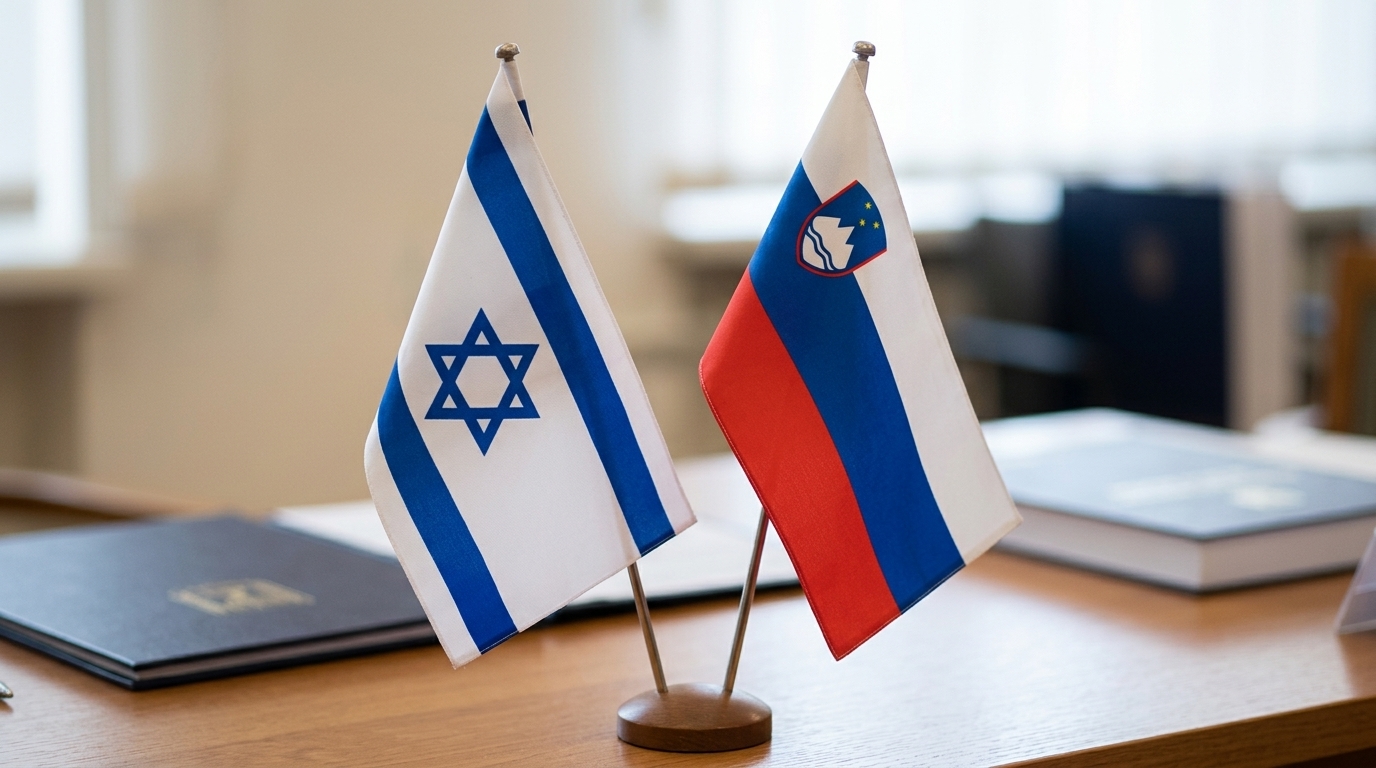
Israel has opened its first resident embassy in Slovenia, marking a major change in relations between the two countries after years of relatively limited political engagement. Israeli Foreign Minister Gideon Sa’ar officially inaugurated the embassy in Ljubljana on September 9 alongside Slovenian Foreign Minister Tone Kajzer, with both sides presenting the move as a new beginning for political, economic, scientific and cultural cooperation.
The opening comes only months after Janez Janša’s return to power and reflects a significant shift in Slovenia’s approach to Israel. The new government has moved quickly to rebuild diplomatic ties, reversing several measures introduced by the previous center left administration, which had taken a strongly critical position toward Israel during the Gaza war. The permanent Israeli diplomatic presence in Ljubljana is now expected to provide a much closer channel for communication between the two governments.
Israel-Slovenia Relations Enter a New Phase
Slovenia and Israel established diplomatic relations in 1992, but political ties became increasingly strained following the Hamas led attack on Israel on October 7, 2023, and Israel’s subsequent military campaign in Gaza. While Slovenia condemned the Hamas attack, its previous government was also highly critical of Israel’s conduct of the war and became one of the more outspoken European supporters of Palestinian statehood.
In June 2024, Slovenia formally recognized Palestine, with its parliament approving the decision by 52 votes to none. The move reflected the previous government’s support for a two state solution and its belief that international pressure was necessary to address the conflict. Slovenian officials at the time also stressed that recognizing Palestine did not amount to support for Hamas and that Slovenia continued to recognize Israel’s right to security.
Relations with Israel deteriorated further as Slovenia introduced several measures against the Israeli government. These included an entry ban affecting Prime Minister Benjamin Netanyahu and two senior ministers, restrictions on imports connected to Israeli settlements and a ban on arms trade with Israel. Those measures were subsequently reversed by Janša’s government after it took office earlier this year, signaling a clear change in foreign policy direction.
The embassy opening is therefore more than a routine diplomatic development. It represents a reversal of policies that had placed Slovenia among Israel’s stronger critics inside the European Union. Janša’s government has argued that restoring direct political communication is important for Slovenia’s international position and that engagement with Israel can create opportunities for cooperation while allowing Ljubljana to pursue its own foreign policy priorities.
Economic and technological cooperation is also an important part of the new relationship. A Slovenian-Israeli business forum held in Ljubljana alongside the embassy opening brought together companies from both countries, with technology, healthcare and agriculture identified as areas offering potential for closer cooperation. Bilateral goods trade has also continued despite the political tensions of recent years, giving both governments an existing economic foundation on which to build.
The two foreign ministers also signed a cooperation program covering education, science, culture, youth and sport through 2030. Israeli officials have highlighted opportunities in areas such as medicine, artificial intelligence and technology, while Slovenia sees the renewed relationship as a way to expand connections between businesses, universities and institutions. The opening of a resident embassy should make such cooperation easier by giving both governments a permanent diplomatic presence dedicated to developing these ties.
Diplomatic Thaw Faces Domestic Political Opposition
At the same time, the diplomatic thaw is controversial inside Slovenia. The country remains politically divided over Israel’s actions in Gaza and the West Bank, with opposition parties accusing the government of abandoning positions that Slovenia had adopted under the previous administration. Pro Palestinian protesters demonstrated around Sa’ar’s visit, while opposition politicians have criticized the government’s decision to reverse restrictions on Israel and deepen bilateral cooperation.
The disagreement has already moved into parliament. Opposition parties have announced an impeachment initiative targeting Janša and a no confidence motion against Kajzer, arguing that the government’s new Israel policy undermines Slovenia’s independent foreign policy position. The government, however, has presented its approach as an attempt to restore diplomatic channels and pursue a more pragmatic relationship rather than abandoning Slovenia’s wider international commitments.
The situation is particularly notable because Slovenia has not completely abandoned its previous positions on the Israeli-Palestinian conflict. Earlier this year, the Slovenian government continued to criticize Israeli settlement expansion in the occupied West Bank and said such policies threaten the possibility of a two state solution. This means the new relationship with Israel is likely to involve a combination of closer bilateral cooperation and continued disagreement over some of the most sensitive issues in the Middle East.
The embassy opening also comes at a time when Israel is facing increasing diplomatic pressure from several European countries over its policies toward the West Bank and the war in Gaza. Against that background, establishing a permanent embassy in Ljubljana gives Israel a strengthened diplomatic relationship with an EU member state at a time when its relations with parts of Europe remain highly contentious.
Ultimately, Israel’s new embassy in Slovenia marks one of the clearest signs yet of Ljubljana’s foreign policy shift under Janša’s government. The two countries are moving toward closer political, economic and technological cooperation after a period of serious disagreement, but the change is unlikely to go uncontested. For Israel, the embassy represents a stronger diplomatic presence in an EU country; for Slovenia, it creates new opportunities for cooperation while forcing the government to navigate intense domestic debate over its position on the Israeli-Palestinian conflict. How the relationship develops will depend on whether the two sides can expand their cooperation while managing the major political disagreements that remain.