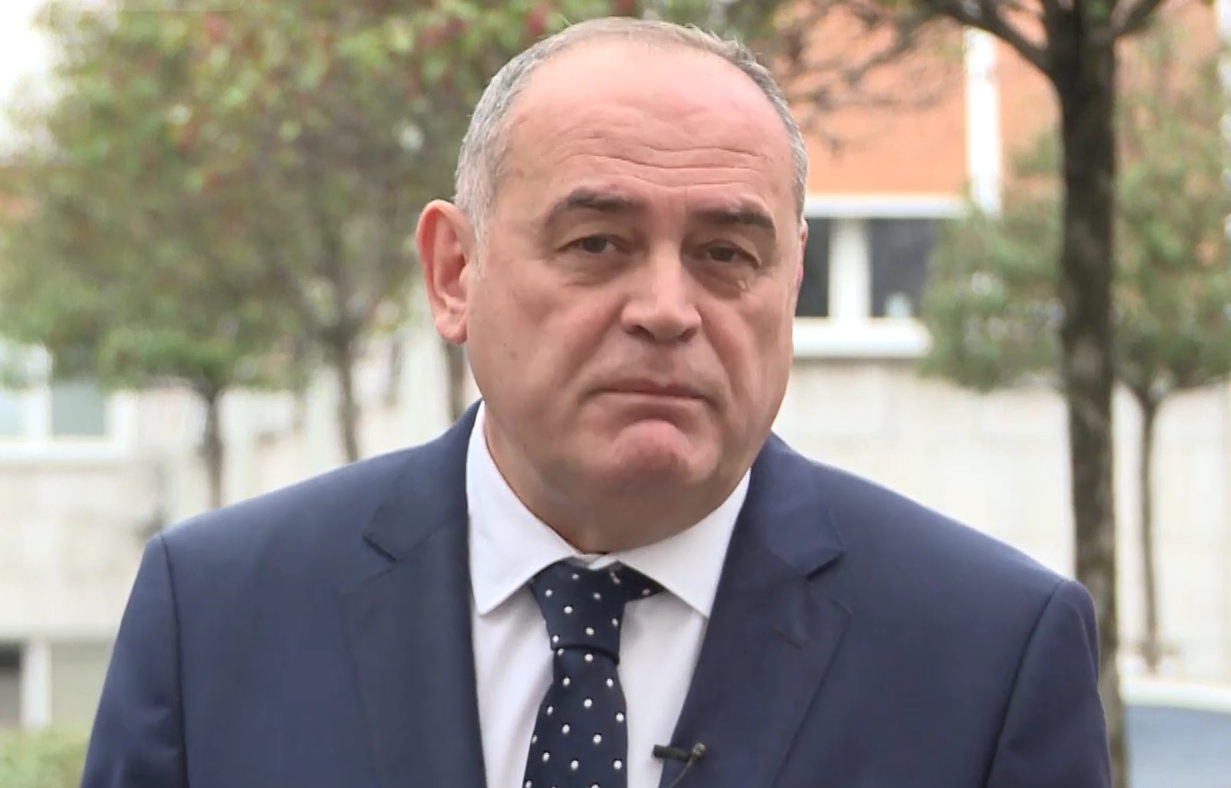
Former Montenegrin Minister of Agriculture and Rural Development Milutin Simović has been sentenced to six months of house arrest after the Higher Court in Podgorica found him guilty of abusing his official position. The court found that Simović improperly presented private expenses as official costs and obtained an unlawful material benefit of €1,535.30. The ruling is a first instance decision, meaning it is not yet legally final, and Simović’s defense has announced an appeal.
Judge Veljko Radovanović said the court established that Simović had abused his position over an extended period while serving as agriculture minister. According to the ruling, private expenses connected to stays at the Splendid Hotel in Bečići, the Bianca Hotel in Kolašin and a hotel in Rome were submitted as official representation expenses and reimbursed from public funds. The judge also noted that Simović had no previous convictions, which the court considered a mitigating circumstance.
Simović Case Centers on Misuse of Public Funds
The case stems from allegations covering the period between June 2017 and August 2020, when Simović was one of Montenegro’s senior government officials. The Special State Prosecutor’s Office accused him of repeatedly using ministry funds to cover expenses involving himself, his wife, family members and other people close to him. Prosecutors said the alleged conduct consisted of 16 separate acts, with the total amount originally under investigation estimated at around €5,000.
The difference between the prosecution’s allegations and the amount reflected in the first instance judgment is significant. While prosecutors argued that approximately €5,000 in private expenses had been improperly charged to the ministry, the court found Simović criminally liable for obtaining an unlawful benefit of €1,535.30. The ruling therefore establishes the amount for which he was convicted, while the broader allegations formed part of the prosecution’s case during the proceedings.
Among the expenses examined were hotel stays and restaurant bills that prosecutors argued had no connection to Simović’s official duties. The Special State Prosecutor’s Office previously alleged that invoices were submitted to the ministry treasury and reimbursed in cash as representation expenses, even though the spending involved private activities. Prosecutors also pointed to the absence of travel orders that could demonstrate that some of the disputed trips, including the stay in Rome, were official business.
Simović rejected the accusations during the trial and asked the court for an acquittal. In his closing statement in July, he said that spending state money was neither his lifestyle nor his way of exercising public office. He argued that representation funds had been used where he believed they were required by his work. Earlier in the proceedings, however, he acknowledged that he had presented his wife’s stay at the Splendid Hotel and in Rome as business related and said he was prepared to accept the consequences for that part of the case.
The defense has now indicated that it will challenge the verdict before Montenegro’s Court of Appeal. The six month house arrest sentence is therefore not necessarily the final outcome. The appeals process will give the defense another opportunity to challenge the first instance court’s findings, while the judicial system will have the opportunity to review the decision before it becomes final.
Simović’s Political Record and Wider Corruption Concerns
The case has attracted attention because of Simović’s previous position as one of Montenegro’s senior political figures. He served as Minister of Agriculture and Rural Development and Deputy Prime Minister during the government of Prime Minister Duško Marković. During his time in office, he represented Montenegro in international and regional initiatives involving agriculture and economic cooperation, including policy discussions connected to the country’s agricultural sector and European integration efforts.
The prosecution had argued that a prison sentence was appropriate because Simović was a high ranking public official and that punishment should deter other officials from misusing public funds. The court ultimately imposed house arrest rather than an immediate prison sentence, while taking his lack of previous convictions into account. The decision therefore reflects both the finding of criminal responsibility and the circumstances considered when determining the punishment.
The case is also part of a wider effort by Montenegro’s institutions to investigate alleged corruption and misuse of public resources involving former officials. Simović was previously questioned in connection with another investigation involving agricultural funds, although the indictment in the present case focused specifically on the alleged misuse of representation expenses. The current verdict should therefore be considered separately from those earlier allegations and investigations.
Ultimately, the Simović case highlights continuing scrutiny over how public officials use state resources. The first instance court has determined that private expenses were improperly presented as official and imposed a six month house arrest sentence, but the legal process is not finished. With the defense preparing an appeal, the Court of Appeal will have the next opportunity to review the ruling. Beyond the individual case, the proceedings underscore the importance of financial accountability for public officials and the broader challenge of strengthening confidence in Montenegro’s institutions when public money is involved.