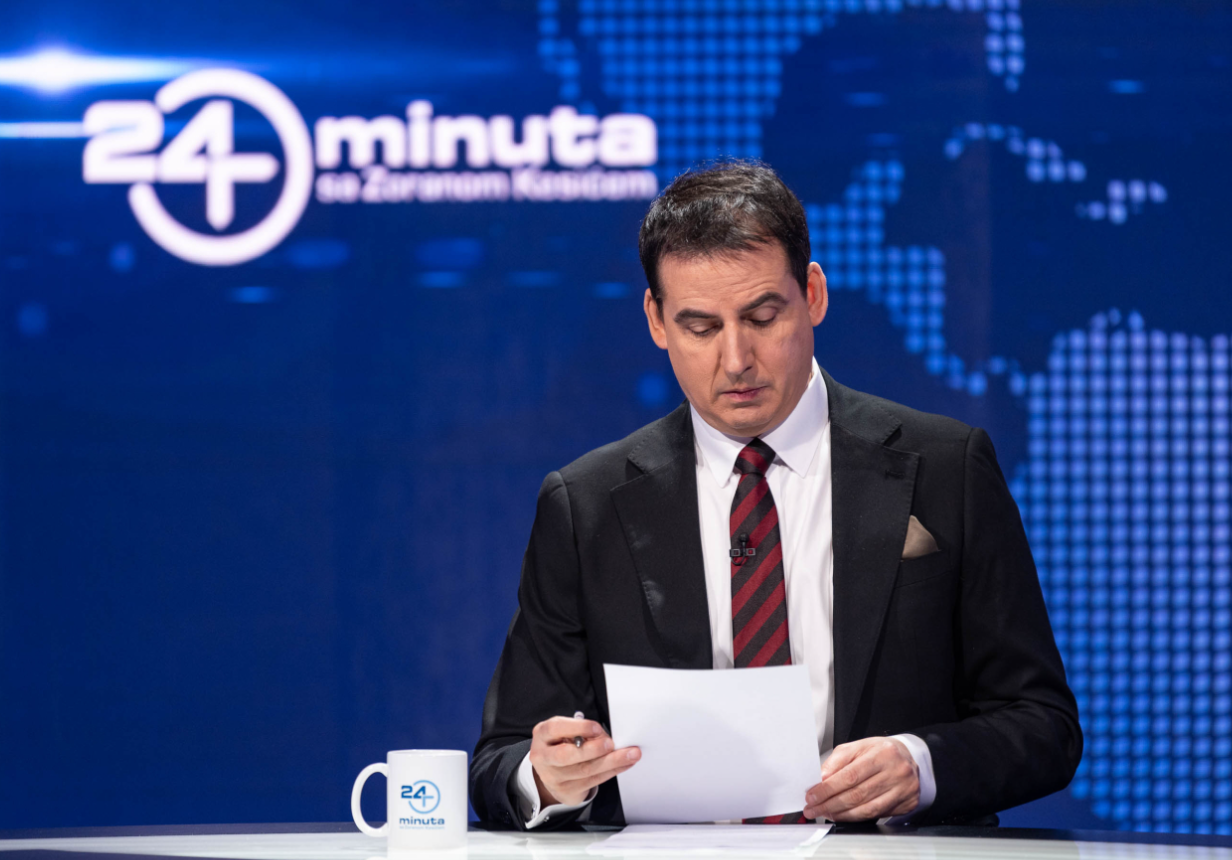
Hundreds of people gathered in Belgrade to show their support for Serbian television host and satirist Zoran Kesić after his popular program “24 Minutes with Zoran Kesić” was removed from the schedule of Nova TV. The march brought together citizens who wanted to express solidarity with Kesić and raise broader concerns about media freedom and political pressure in Serbia. Kesić has been known for his satirical political commentary and has frequently criticized the country’s political leadership, making the decision surrounding his program particularly sensitive at a time when Serbia is already experiencing intense political tensions and months of protests.
“24 Minutes with Zoran Kesić” has been one of the best known political satire programs in Serbia, combining humor, commentary and criticism of current political events. Kesić has built his career around television programs that use satire to examine political and social developments, and his work has often included sharp criticism of President Aleksandar Vučić and the ruling Serbian Progressive Party. The program has been broadcast on Nova S, a Serbian television channel operated by United Media, and has become particularly recognizable among viewers who follow the country’s independent and opposition oriented media scene.
The removal of the program has therefore triggered a reaction that goes beyond the fate of one television show. Those who marched in Belgrade argued that the decision should be viewed in the wider context of the media environment in Serbia, where journalists, television hosts and media organizations have faced growing political pressure and criticism. Kesić has also become associated with the broader wave of public dissatisfaction that has developed around Serbia’s political situation. His name has appeared among public figures who have expressed support for the student movement, which has organized large demonstrations and demanded political and institutional changes following the Novi Sad railway station tragedy.
For supporters who took part in the Belgrade march, the issue is therefore not simply whether one television program remains on air, but whether satirical and critical voices can continue to operate freely in the country’s media space. Kesić’s program has been part of Serbian television for more than a decade, making the decision particularly significant for its audience and supporters. The demonstration also reflects the broader atmosphere in Serbia, where questions about political accountability, media freedom and the relationship between citizens and institutions have become central to public debate. As political tensions continue and early parliamentary elections are now scheduled for October 25, 2026, the controversy surrounding Kesić is likely to remain part of a much larger discussion about the role of independent media and criticism in Serbia.