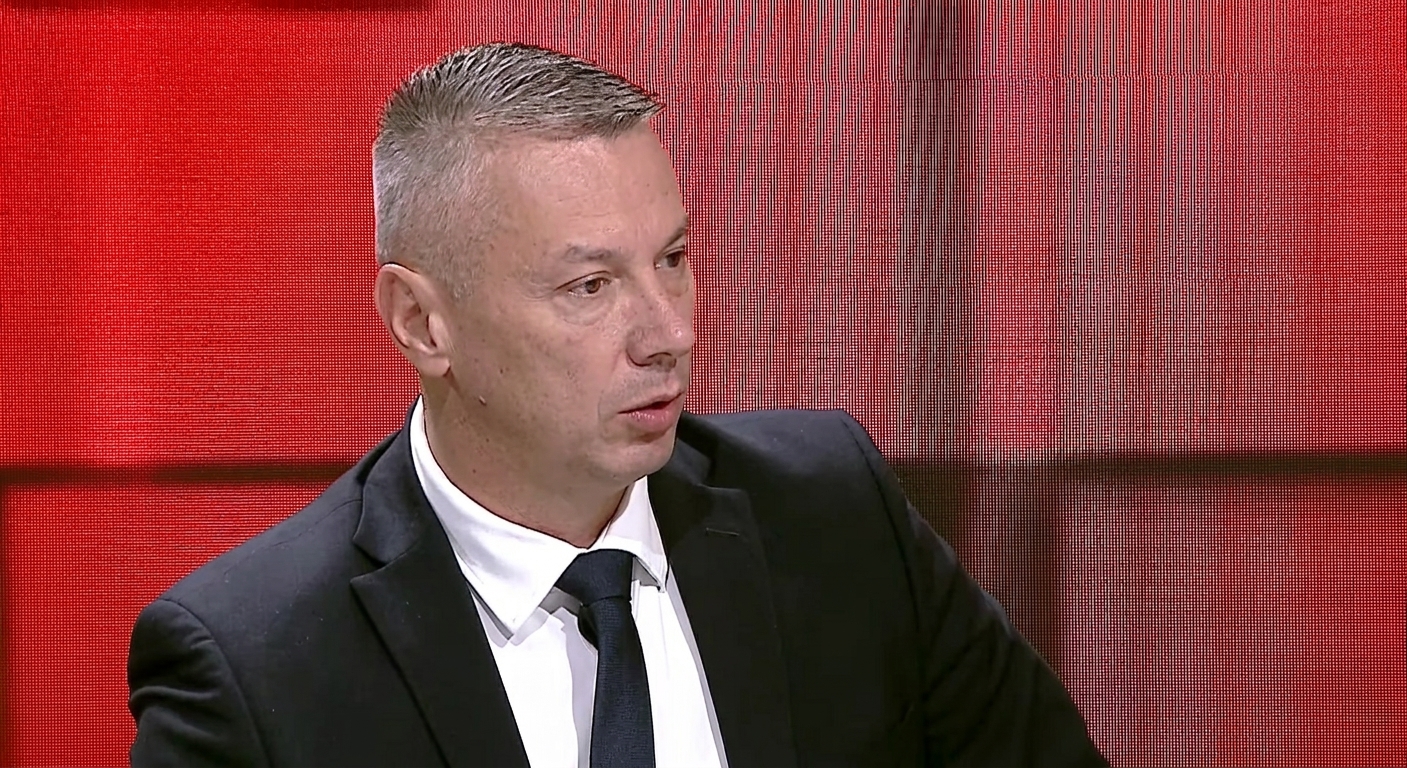
A new political confrontation has erupted in Bosnia and Herzegovina following the funeral of convicted war criminal Ratko Mladić, with Democratic People’s Alliance (DNS) President Nenad Nešić calling for legal action against Defense Minister Zukan Helez. Nešić accused Helez of violating the law after the minister called on the international community to reconsider its role in establishing Republika Srpska and described the entity in extremely critical terms. The exchange has added another layer to already tense relations between Bosnia and Herzegovina, Republika Srpska and Serbia.
Nešić rejected Helez’s remarks and argued that Republika Srpska is a permanent part of Bosnia and Herzegovina’s political structure. He said the entity’s future does not depend on individual politicians and accused Helez of making statements that could contribute to ethnic and religious tensions. Nešić called on Republika Srpska’s Interior Ministry and Prosecutor’s Office to respond to what he described as a criminal offense.
Helez made his comments in the aftermath of Mladić’s funeral in Belgrade, which attracted thousands of people and included military style honors and the participation of several Serbian officials. Mladić died in August while serving a life sentence after being convicted by a UN tribunal of genocide, war crimes and crimes against humanity. His funeral triggered strong reactions across the region and renewed debates over how the legacy of the Bosnian war is remembered.
Bosnia Political Clash Deepens Over Republika Srpska
For Helez, the funeral was evidence of a broader political problem rather than simply a private ceremony. He called for stronger international measures against Serbia and argued that the treatment of Mladić demonstrated the need to reconsider the international framework surrounding Bosnia and Herzegovina. His remarks about Republika Srpska were particularly provocative because the entity is one of the two constituent entities of Bosnia and Herzegovina established under the 1995 Dayton Peace Agreement.
Nešić’s response reflects the sharp divide that continues to exist over the constitutional structure created by Dayton. Republika Srpska leaders have repeatedly defended the entity’s autonomy and political position within Bosnia and Herzegovina, while politicians from other parts of the country have frequently accused its leadership of undermining state institutions and threatening the country’s stability. These disagreements have made constitutional reform and the distribution of powers among Bosnia’s institutions some of the most sensitive political issues in the country.
The dispute also comes at a particularly delicate moment in relations between Bosnia and Serbia. Mladić’s funeral was widely criticized internationally because of the public honors surrounding a figure convicted of some of the most serious crimes committed during the Bosnian war. European Union officials condemned the glorification of convicted war criminals, while Serbian authorities and supporters of Mladić defended the ceremony as a matter of remembrance and personal respect. The controversy has once again placed the region’s unresolved wartime divisions in the international spotlight.
Bosnia has already taken diplomatic steps in response to the funeral. Its authorities announced measures affecting Serbian diplomatic personnel and cooperation with Serbia, arguing that the events surrounding Mladić’s burial represented a serious political provocation. The dispute has therefore moved beyond statements between individual politicians and begun affecting relations between institutions and neighboring governments.
The controversy is also significant because of the wider international role in maintaining Bosnia and Herzegovina’s post war political order. The Dayton Agreement ended the Bosnian war in 1995 and established the country’s current constitutional framework. Republika Srpska was created as one of the two entities within Bosnia and Herzegovina, alongside the Federation of Bosnia and Herzegovina. Any proposal to fundamentally change that arrangement therefore carries major political and constitutional implications.
Mladić Funeral Reopens Bosnia’s Political Divisions
At the same time, the exchange demonstrates how quickly historical issues can become part of contemporary political battles. The legacy of the 1990s war remains deeply sensitive across Bosnia and Herzegovina and the wider Balkans, with different communities holding sharply different views of wartime leaders, victims and political institutions. Mladić’s funeral brought many of those unresolved disagreements back into public view, while the statements from Helez and Nešić have extended the dispute into questions about Bosnia’s future political structure.
Neither side appears willing to back away from its position. Helez has framed the issue around accountability, international pressure and opposition to the glorification of wartime figures, while Nešić has emphasized the constitutional status and continued existence of Republika Srpska. Their competing messages reflect a much broader disagreement over whether Bosnia’s political system should remain based on the existing Dayton structure or undergo significant changes.
The latest confrontation is therefore unlikely to remain limited to a dispute between two politicians. It comes as Bosnia and Herzegovina continues to face disagreements over constitutional reform, the authority of state institutions and relations between its different political communities. The reaction to Mladić’s funeral has shown once again that events connected to the wars of the 1990s can still have immediate consequences for politics and diplomacy more than three decades later.
Ultimately, the dispute between Nešić and Helez illustrates how fragile political relations remain in Bosnia and Herzegovina. The arguments surrounding Mladić’s funeral have reopened questions about wartime accountability, Serbia’s relationship with Bosnia and the future of Republika Srpska. Unless political leaders find ways to address these issues without further escalating ethnic and constitutional tensions, the latest confrontation could become another example of how the unresolved legacy of the past continues to shape Bosnia’s present.