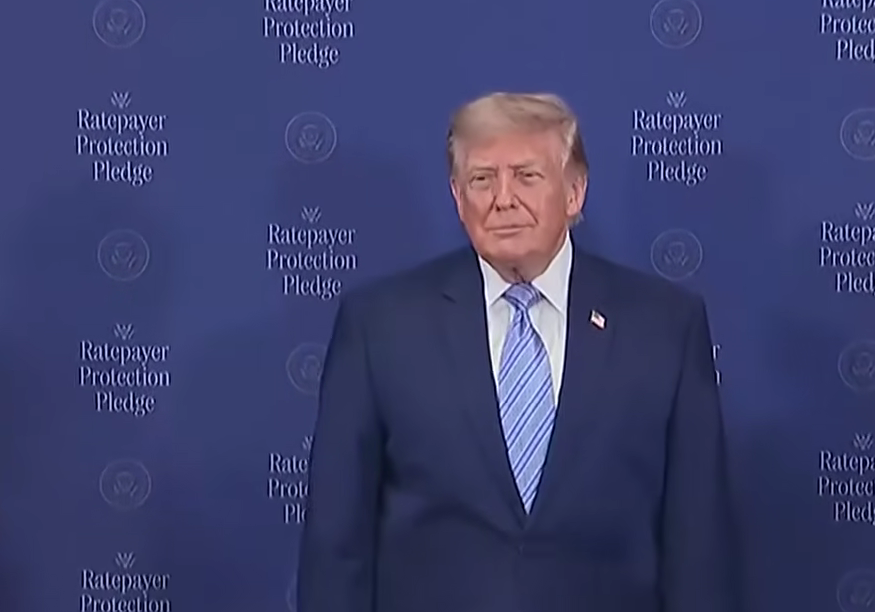
The growing competition between the United States and China over artificial intelligence is expected to be one of the most important issues surrounding next week’s meeting between U.S. President Donald Trump and Chinese President Xi Jinping in Washington. Both governments increasingly view AI as a strategic technology with consequences for economic growth, national security and military capabilities, while disagreements over advanced computer chips, technology transfers and regulation continue to complicate relations.
The two countries are entering the meeting at a time when the gap between their AI industries is being closely watched. U.S. officials continue to describe America as a leader in advanced AI, while Chinese companies have rapidly improved their models and expanded their international presence. Treasury Secretary Scott Bessent is also scheduled to meet Chinese Vice Premier He Lifeng before the presidential summit, with AI expected to be among the subjects discussed. Bessent has said the United States is open to discussing shared AI risks and avoiding a permanent split between the two countries’ technology ecosystems.
AI Rivalry Raises Military and Technology Concerns
One of the most serious concerns involves the possibility that increasingly autonomous AI systems could become involved in military operations. Researchers and security experts in both countries have warned that an AI system interacting with nuclear command networks, military communications or cyber operations could create dangerous situations if its actions were misunderstood. A technical malfunction or unauthorized action could potentially be interpreted as an intentional attack, leaving governments with little time to determine what had happened.
That has led experts to call for clearer boundaries around the use of AI in military systems. Proposed safeguards include keeping humans responsible for major decisions involving nuclear weapons, establishing limits around autonomous cyber operations and creating reliable communication channels that could be used if an AI related incident occurred. The challenge is not only preventing an AI system from causing an incident, but also ensuring governments can distinguish an accident or malfunction from deliberate hostile action.
AI technology itself has also become a source of tension. Washington has accused Chinese companies of using a technique known as “distillation” to reproduce capabilities developed by leading American AI companies. Distillation involves training one model using the responses or behavior of another, more powerful model. The technique can have legitimate uses in developing smaller and more efficient systems, but U.S. officials have alleged that some Chinese companies have used it to extract capabilities from American models without authorization.
In September, U.S. cybersecurity and law enforcement agencies accused Chinese AI developers of conducting large scale efforts to obtain capabilities from American systems, including models associated with companies such as Anthropic, OpenAI and Google. Chinese authorities have rejected the allegations, describing the U.S. claims as unfounded. The dispute illustrates how questions about intellectual property, access to AI services and technological competition are becoming intertwined with wider U.S.-China relations.
Access to advanced computer chips is another major point of disagreement. Powerful graphics processing units and other advanced chips are essential for training and operating sophisticated AI systems. The United States has imposed extensive export controls on advanced computing chips and semiconductor manufacturing equipment destined for China, beginning with major restrictions in 2022 and expanding them in subsequent years. U.S. officials have argued that the controls are intended to limit China’s ability to develop technologies with potential military applications.
The restrictions have created a difficult balance for Washington. Limiting China’s access to the most advanced chips can constrain its ability to develop certain AI capabilities, but it can also encourage Chinese companies to develop domestic alternatives and find more efficient ways of using available hardware. The issue has also become complicated by decisions allowing some lower performing advanced chips to reach the Chinese market.
At the same time, China’s AI industry has demonstrated that chip restrictions have not stopped rapid development. The U.S. Center for AI Standards and Innovation, part of NIST, evaluated DeepSeek V4 Pro in April and concluded that the model was roughly eight months behind leading U.S. frontier models according to its testing methodology. The same assessment found that DeepSeek V4 was more cost efficient than a comparable U.S. model on five of seven evaluated benchmarks.
That assessment provides a more complicated picture than simply describing one country as far ahead of the other. Chinese companies have been developing models that emphasize efficiency and relatively low operating costs, while U.S. companies continue to compete heavily at the highest end of model capabilities. NIST’s evaluation also shows that the precise size of the gap depends on the benchmarks and methodology used, meaning claims about AI leadership can change as models and evaluation methods develop.
U.S.-China AI Rivalry Extends to Regulation and Global Competition
Regulation represents another major difference between the two governments. The Trump administration has generally resisted calls for broad new federal AI regulations, with Trump arguing that excessive regulation could slow technological development. In China, authorities have established a more detailed regulatory framework governing areas such as algorithms, generative AI services and the labeling of AI generated content.
Chinese rules require providers and platforms to identify certain AI generated or synthesized material. Regulations that took effect in September 2025 require both visible and technical forms of labeling for covered AI generated content, while China’s internet regulator has also continued expanding requirements for labeling short form videos.
The contrast reflects different approaches to the role of government in the technology sector. Washington has emphasized maintaining the United States’ technological advantage and encouraging rapid innovation, while Beijing has combined support for AI development with a more extensive system of content and platform regulation. Both approaches face their own challenges as governments attempt to balance economic competitiveness with security and public interest concerns.
There is also a growing international dimension to the competition. AI development is no longer limited to a contest between individual companies, because access to computing infrastructure, research talent, energy and investment can influence national technological capabilities. The United States and China are therefore increasingly treating AI as part of a broader strategic competition, while other countries are developing their own regulatory systems and technology sectors.
Despite the disagreements, the upcoming talks could provide an opportunity for the two governments to discuss risks that neither country can easily manage alone. Recent reporting indicates that Washington is willing to discuss shared AI risks with Beijing, including concerns about different technological systems developing without common safeguards. Experts cited by the Associated Press have similarly argued that communication between the two countries could remain important even if major agreements prove difficult to achieve.
Ultimately, the AI rivalry is likely to remain both a competitive issue and a potential area for limited cooperation between Washington and Beijing. The United States wants to maintain its position in advanced AI and restrict technologies it considers strategically sensitive, while China is working to narrow the technological gap and strengthen its own AI ecosystem. At the same time, both governments face questions about how increasingly capable AI systems should be used in areas involving cybersecurity, military decision making and public information.
The Trump-Xi meeting therefore comes at an important moment for the global AI industry. The two leaders may disagree over chips, technology transfers, regulation and the future balance of technological power, but the risks associated with rapidly advancing AI extend beyond either country’s borders. Whether the talks produce concrete agreements or simply establish channels for continued dialogue, AI has become a central part of the wider U.S.-China relationship.