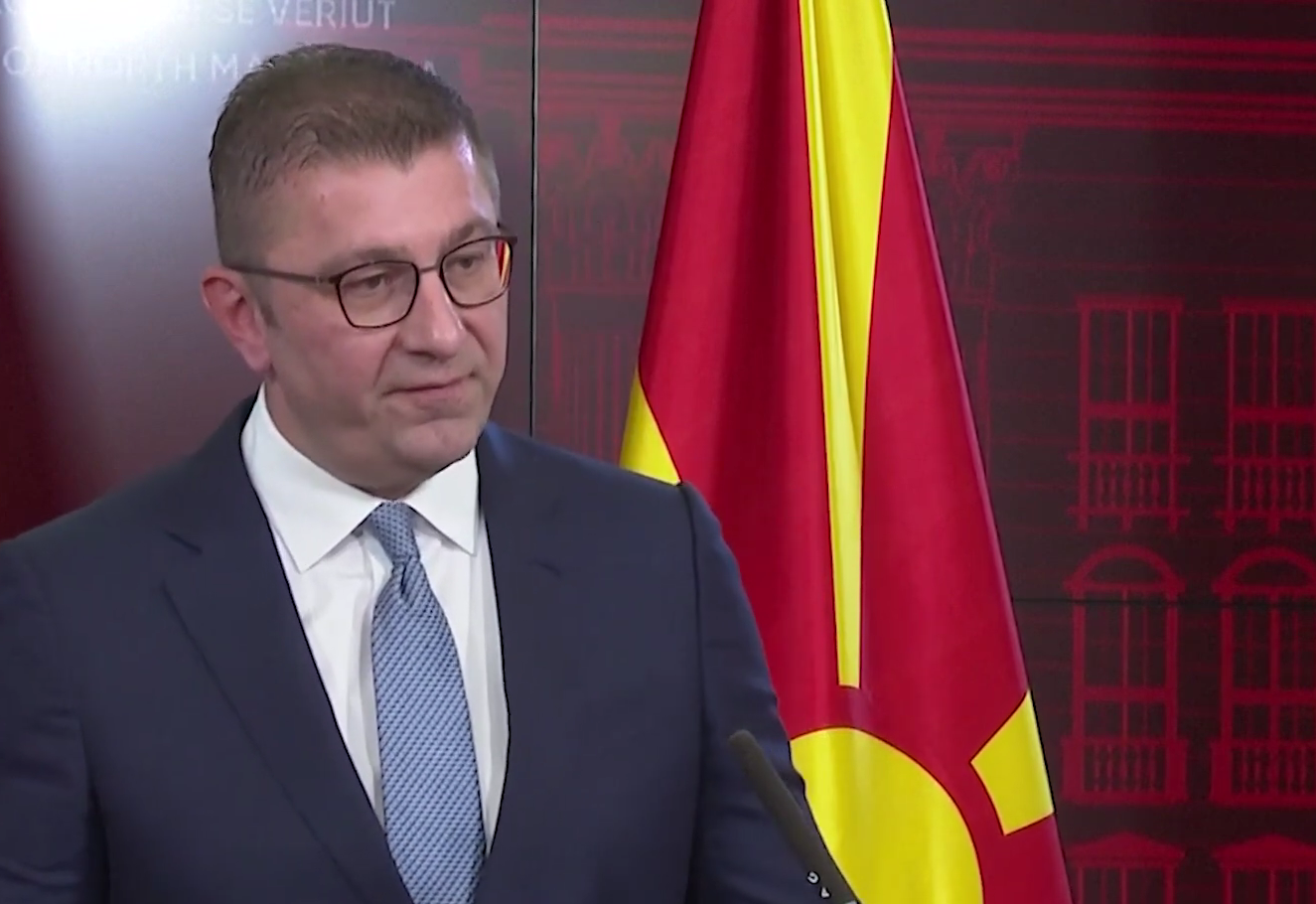
Macedonia is seeking to further strengthen its relationship with the United States during Prime Minister Hristijan Mickoski’s visit to Washington, where he has held meetings with members of the U.S. Congress. Mickoski said the discussions focused on the long standing partnership between the two countries, parliamentary cooperation and opportunities to expand bilateral relations in areas of mutual interest.
During his visit, Mickoski met with Republican Congresswoman Claudia Tenney, co chair of the Macedonia Friendship Caucus in the U.S. Congress, as well as Congressman Keith Self, chairman of the House Foreign Affairs Subcommittee on Europe. According to Mickoski’s statements following the meetings, the conversations addressed the strategic importance of the relationship between Macedonia and the United States and possible areas for deeper cooperation.
The meetings are part of a broader working visit by Mickoski and a government delegation to the United States. Before leaving for Washington, the prime minister said his schedule would include meetings at the Senate, House of Representatives and State Department, along with discussions with representatives of the U.S. International Development Finance Corporation and influential think tanks. He is also scheduled to travel to New York for the United Nations General Assembly and additional bilateral meetings.
Mickoski described the meetings in Congress as an opportunity to discuss what he called traditionally strong and friendly relations between the two countries. In his remarks about the meeting with Tenney, he highlighted parliamentary cooperation and the exchange of experience between Macedonia and the United States. He also said that maintaining shared values and stable relations would remain an important foundation for future cooperation.
The meeting with Keith Self placed additional emphasis on the strategic partnership. Self chairs the House Foreign Affairs Subcommittee on Europe, making his position relevant to U.S. congressional discussions concerning European and Western Balkan affairs. Mickoski said the two sides discussed common interests and opportunities to deepen cooperation in areas important to both countries.
Macedonia-US Strategic Partnership and Defense Cooperation
The relationship between Macedonia and the United States has developed over several decades. The countries established full diplomatic relations in 1995, following U.S. recognition of Macedonia the previous year. Washington has traditionally supported the country’s Euro Atlantic integration and cooperation in areas including security, economic development, democratic institutions and regional stability.
Security and defense are particularly important parts of the relationship because Macedonia became a NATO member in March 2020. The country has since participated in Alliance activities alongside other members, while continuing to develop its military capabilities and contribute to regional and wider security efforts. NATO Secretary General Mark Rutte highlighted those contributions during his visit to Skopje in March 2026, including Macedonian troops serving alongside allied forces in Bulgaria and Latvia and the country’s participation in the NATO led mission in Kosovo.
Defense cooperation is therefore likely to remain one of the practical areas in which the partnership can develop further. NATO reported that Macedonia spent more than 2% of its GDP on defense in 2025, while the Alliance continues to emphasize greater defense investment and military readiness among its members. These commitments form part of a wider effort to strengthen collective security across the Alliance.
Economic cooperation is another potential area for closer ties. Previous U.S. government assessments have identified economic development, energy security, cyber resilience and workforce development among areas of bilateral cooperation. The current visit also includes planned discussions with the U.S. International Development Finance Corporation, suggesting that investment and economic opportunities are among the broader subjects being explored during the delegation’s stay.
The visit is taking place as Macedonia continues to pursue closer integration with European institutions while maintaining its position as a NATO member. U.S. policy documents have historically linked support for Macedonia with strengthening democratic institutions, rule of law, economic development and Euro Atlantic integration. Those issues remain part of the wider context in which the country’s international partnerships are being developed.
Mickoski Visit Extends Beyond Washington
Mickoski’s trip also extends beyond Washington. In New York, he is expected to participate in the United Nations General Assembly and hold bilateral meetings with foreign leaders. Before the trip, he said the government was focusing particularly on relations with neighboring countries and was also seeking stronger partnerships with Gulf states. At the time, he said no meeting with the Bulgarian delegation had been planned.
For Macedonia, the Washington meetings provide an opportunity to maintain high level political contact with U.S. institutions while discussing practical areas of cooperation. The statements released after the congressional meetings did not announce a new bilateral agreement or specific financial package, but they emphasized continued engagement and the intention to explore additional opportunities.
The significance of the visit therefore lies partly in its broader diplomatic context. Macedonia and the United States already cooperate through NATO and maintain established bilateral relations, while both governments have interests in regional security and stability. Continued parliamentary contact can also provide a channel for discussing developments in the Western Balkans and strengthening institutional ties between the two countries.
The meetings in Washington are part of a larger diplomatic effort rather than a single policy announcement. Mickoski’s discussions with U.S. lawmakers have highlighted the existing strategic relationship, while the wider agenda of his American visit includes security, economic cooperation, international diplomacy and contacts with U.S. institutions.
Ultimately, the visit demonstrates that strengthening the relationship with the United States remains an important element of Macedonia’s foreign policy engagement. The immediate meetings have focused on partnership, shared interests and opportunities for closer cooperation, while future results will depend on whether those discussions lead to concrete projects, agreements or expanded cooperation in areas such as defense, investment, energy and regional security.